In the landscape of modern Japanese manufacturing and electronics, proximity sensors stand as silent, indispensable sentinels. These devices, known in Japanese as 近接センサー (Kinseki Sensā), are fundamental components that detect the presence or absence of an object without physical contact. Their application spans from the high-precision assembly lines of automotive giants like Toyota and Honda to the delicate production floors of consumer electronics leaders such as Sony and Panasonic.
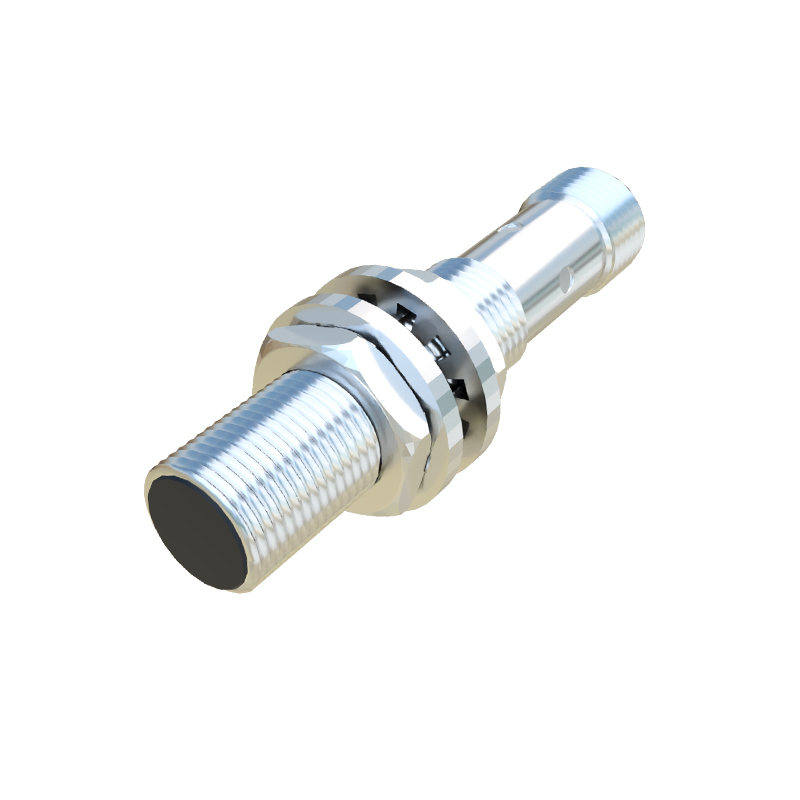
The Japanese approach to proximity sensor technology is characterized by an unwavering commitment to reliability, miniaturization, and seamless integration. Unlike simple switches, these sensors operate on various principles, with the most common types being inductive, capacitive, and photoelectric. Inductive sensors (誘導型近接センサー), for instance, are workhorses in metal detection within factory automation. They generate an electromagnetic field, and when a metallic object enters this field, it causes a change that the sensor detects. This principle is crucial in counting metal parts, controlling robotic arms, or ensuring safety by detecting machine door closures.
Capacitive sensors (静電容量型近接センサー) extend detection capabilities to non-metallic materials like plastics, wood, liquids, and granules. This makes them vital in food processing, packaging, and chemical industries prevalent in Japan. Meanwhile, photoelectric sensors (光電センサー), though sometimes categorized separately, function as non-contact proximity devices using light beams. Their use in precise positioning and transparent object detection is widespread in electronics assembly.
The terminology and specifications found in Japanese technical manuals and datasheets are precise. Key terms include:
検出距離 (Kensoku Kyori): Sensing distance, a critical specification.
応答周波数 (Ōtō Shūhasū): Response frequency, indicating how quickly the sensor can detect objects.
設定距離 (Settei Kyori): Set distance, often adjustable.
常開/常閉 (Jōkai/Jōhei): Normally open or normally closed output contacts.
Japanese manufacturers like Keyence, Omron, Panasonic, and SICK (with a strong presence in Japan) are global leaders. They continuously innovate, pushing the limits with features like background suppression in photoelectric sensors, ultra-miniature inductive models for compact machinery, and sensors with advanced diagnostics and IO-Link communication for Industry 4.0 readiness. The integration of these sensors into networked, smart factory environments—a concept deeply embedded in Japan's "Society 5.0" vision—is a key trend. Sensors no longer just provide an on/off signal; they feed data into systems for predictive maintenance, quality analysis, and process optimization.
Selecting the right 近接センサー for an application in a Japanese context requires careful consideration. The material of the target object is paramount. For ferrous metals, a standard inductive sensor suffices. For non-ferrous metals or non-metals, a capacitive or specialized inductive model is needed. The operating environment is equally critical; sensors in Japan are often built to withstand rigorous conditions common in manufacturing, including oil, coolant, dust, and vibration. Look for specifications like 耐油性 (Taiyusei - oil resistance) and 防塵構造 (Bōjin Kōzō - dust-proof construction).
Installation and wiring follow meticulous standards to ensure longevity and avoid interference. Japanese engineering emphasizes proper shielding, adequate separation from power lines, and the use of stable power supplies. Regular maintenance, though minimal for these solid-state devices, involves checking for physical damage, buildup of contaminants on the sensing face, and ensuring the sensing distance hasn't been compromised by misalignment.
In essence, the proficiency in proximity sensor technology reflects a broader philosophy in Japanese industry: achieving supreme efficiency and quality through automation, precision, and reliability. From enabling the flawless operation of a high-speed bottling line to ensuring the precise placement of a microchip on a circuit board, 近接センサー are a foundational technology. Understanding their types, principles, and the specific lexicon used by leading Japanese manufacturers is essential for anyone involved in industrial automation, machinery design, or technical procurement within sectors influenced by Japanese engineering excellence. Their evolution continues to be symbiotic with advancements in robotics, IoT, and intelligent manufacturing, solidifying their role as critical components in the automated systems that define modern production.