Introduction to Photoelectric Sensors
Photoelectric sensors are essential components in modern industrial automation, widely used for object detection, position sensing, and counting applications. As a professional electrical engineer, I emphasize that these sensors operate by emitting a beam of light and detecting changes in the received light intensity. The core principle relies on the interaction between light and objects, converting optical signals into electrical outputs. This article explores the fundamental working mechanisms of standard photoelectric sensors, focusing on their three primary configurations: through-beam, retro-reflective, and diffuse modes.
Basic Components and Light Source
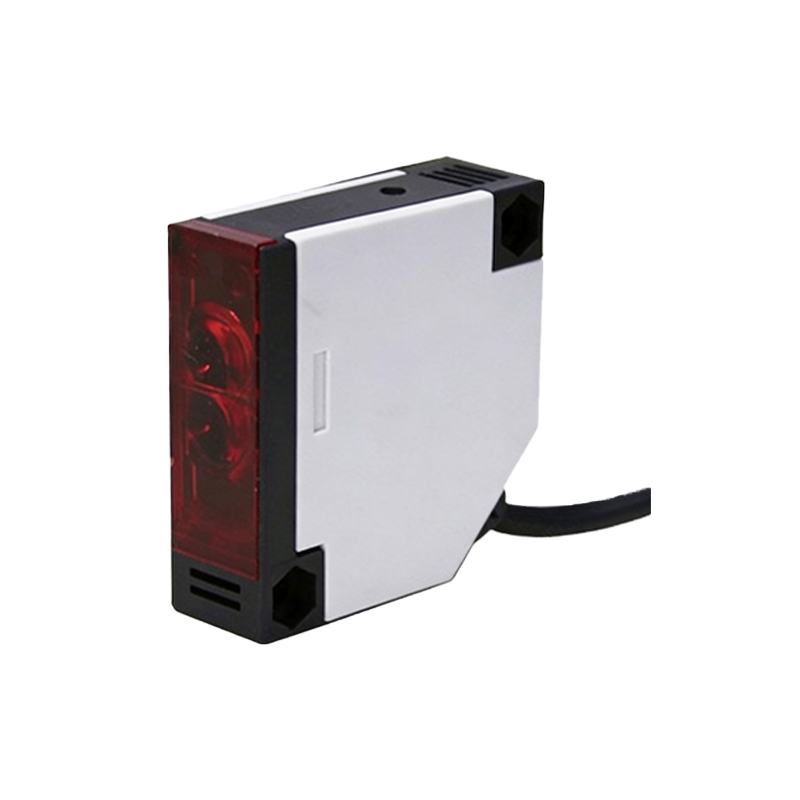
A standard photoelectric sensor consists of a light emitter, a light receiver, and a signal processing unit. The emitter typically uses a light-emitting diode (LED) or a laser diode, producing infrared, visible red, or ultraviolet light. The receiver is a photodiode or phototransistor that converts incoming light into an electrical current. The signal processing unit amplifies and filters this current, comparing it to a preset threshold to trigger an output. The choice of light source depends on the application: visible red light is common for general use, while laser provides high precision for small objects.
Through-Beam Sensing Mode
In through-beam mode, the emitter and receiver are housed in separate units, aligned directly opposite each other. The emitter continuously sends a light beam to the receiver. When an object interrupts the beam, the receiver detects a drop in light intensity, triggering a signal. This method offers the longest detection range, typically up to 30 meters, and high reliability because the light path is unobstructed by dust or background interference. However, it requires precise alignment and separate wiring for both units.
Retro-Reflective Sensing Mode
Retro-reflective sensors combine the emitter and receiver in a single housing, with a reflector placed opposite the sensor. The light beam travels from the emitter to the reflector and back to the receiver. When an object blocks the beam, the receiver registers a loss of light. This mode simplifies installation compared to through-beam, as only one unit needs wiring. The detection range is shorter, usually up to 10 meters. Polarized retro-reflective sensors are available to avoid false detection from shiny objects, using a filter to differentiate between reflected and direct light.
Diffuse Sensing Mode
Diffuse sensors also house the emitter and receiver in one unit, but they do not require a separate reflector. The emitter sends a beam toward the target object, and the receiver detects light reflected directly from the object’s surface. The detection range is limited, typically from a few centimeters to 2 meters, depending on the object’s reflectivity and color. This mode is ideal for applications where space is constrained or where the object’s surface is uneven. Background suppression variants use additional optics to ignore objects beyond a set distance.
Signal Processing and Output Types
The receiver’s photocurrent is converted into a voltage signal and compared to a reference threshold. For analog outputs, the voltage varies with light intensity. For digital outputs, a comparator triggers a logic high or low when the threshold is crossed. Common output types include NPN (sinking), PNP (sourcing), and relay contacts, each suited to different PLC or controller interfaces. Hysteresis is built in to prevent oscillation near the threshold, ensuring stable detection.
Environmental Factors and Best Practices
Performance of photoelectric sensors is affected by ambient light, dust, fog, and temperature. Engineers should select sensors with immunity to ambient light, such as modulated or pulsed light sources. Regular cleaning of lenses and reflectors is critical for maintaining reliability. For harsh environments, consider using fiber-optic extensions to separate the electronics from the sensing area. Calibration should be performed during installation to set the correct threshold for the specific target and background.
Conclusion
Photoelectric sensors are versatile tools in industrial automation, leveraging the interruption or reflection of light to detect objects. By understanding the through-beam, retro-reflective, and diffuse modes, engineers can choose the optimal configuration for their application. Proper installation and maintenance ensure long-term performance, making these sensors a cornerstone of modern manufacturing systems.