Introduction to Photoelectric Sensors in Precision Instrumentation
Photoelectric sensors are fundamental components in modern precision instrumentation, converting light signals into electrical outputs for measurement, detection, and control. In electrical engineering, these sensors are valued for their non-contact operation, high speed, and accuracy. This article explores the technical architecture, types, and applications of photoelectric sensors, focusing on their role in high-end instrumentation.
Operating Principles and Key Components
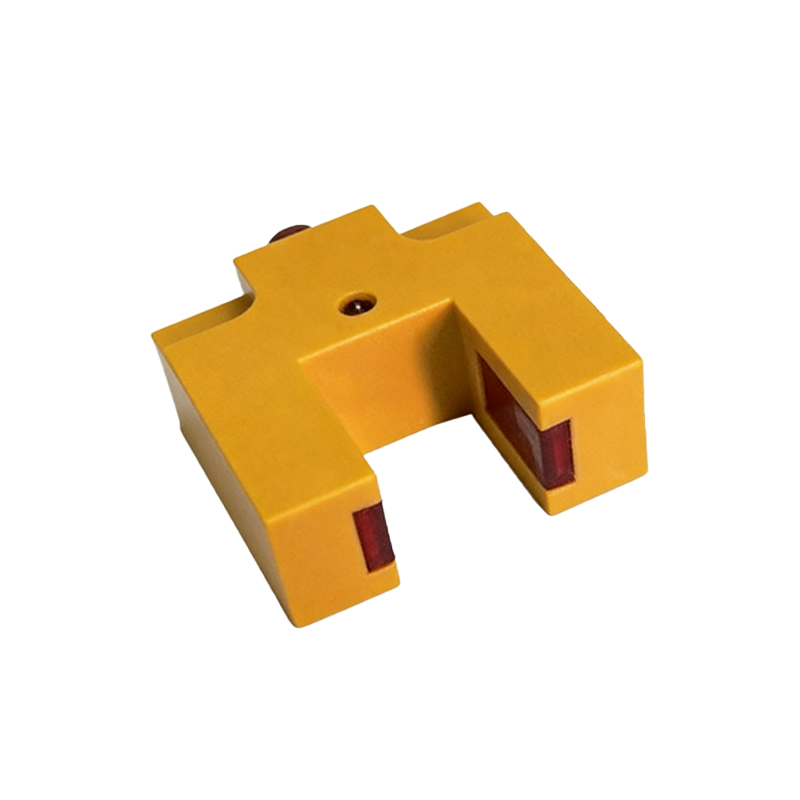
A photoelectric sensor typically consists of a light emitter (LED or laser), a photodetector (photodiode or phototransistor), and signal processing circuitry. The emitter projects a beam of light, which is modulated to reduce interference. The detector receives the light and generates an electrical signal. Precision instruments use advanced modulation techniques, such as pulse-width modulation or frequency hopping, to enhance noise immunity. The sensor’s response time, wavelength range, and sensitivity are critical parameters, often optimized for specific tasks.
Types of Photoelectric Sensors for Precision Applications
Three primary types are used: through-beam, retro-reflective, and diffuse reflective. Through-beam sensors offer the highest accuracy with separate emitter and receiver, ideal for long-range detection. Retro-reflective sensors use a reflector, simplifying alignment. Diffuse reflective sensors detect reflected light from the target, suitable for short-range detection. In precision instruments, laser-based sensors are preferred for their focused beam and high resolution, achieving sub-micrometer accuracy.
Selection Criteria for High-End Instrumentation
Selecting the right sensor requires evaluating factors like sensing distance, ambient light conditions, and target surface properties. For clean environments, through-beam sensors are optimal. In dusty or oily settings, retro-reflective sensors with polarized filters reduce false signals. Engineers must also consider output types (NPN/PNP, analog) and response speed. For instance, in semiconductor wafer alignment, sensors with microsecond response times are essential.
Application Case: Photoelectric Sensors in Precision Measurement
In coordinate measuring machines (CMMs), photoelectric sensors act as edge detectors. A laser-based through-beam sensor directs a beam across the measurement path. When an object interrupts the beam, the sensor triggers a signal, allowing precise edge location. This method achieves repeatability within 0.1 micrometers, critical for quality control in aerospace and medical device manufacturing.
Advanced Features and Signal Processing
Modern sensors integrate digital filtering, auto-calibration, and communication protocols like IO-Link. These features enable real-time diagnostics and remote parameter adjustment. For precision instruments, temperature compensation circuits stabilize output over varying ambient conditions. Additionally, redundant sensor arrays with cross-correlation algorithms reduce measurement uncertainty below 0.01% of full scale.
Future Trends and Integration Challenges
Emerging trends include miniaturization, multi-spectral detection, and AI-based signal interpretation. In the Industry 4.0 era, photoelectric sensors are merging with IoT platforms for predictive maintenance. However, challenges remain in managing electromagnetic interference and optical cross-talk in dense sensor arrays. Engineers must design robust shielding and use wavelength division multiplexing to maintain accuracy.
Conclusion
Photoelectric sensors remain indispensable for precision electrical instrumentation. Their evolution from simple light detectors to intelligent, networked devices continues to drive advancements in measurement science. By understanding key parameters and application requirements, engineers can leverage these sensors to achieve unparalleled accuracy in complex industrial environments.