1. Through-Beam Sensors: High Reliability and Long Range
Through-beam photoelectric sensors consist of a separate emitter and receiver. The emitter sends a continuous light beam directly to the receiver. When an object interrupts this beam, the sensor triggers a signal. This form offers the longest sensing range, often exceeding 30 meters, and provides high reliability in dusty or dirty environments since the light beam is focused and unobstructed by ambient conditions. It is ideal for applications requiring precise detection of opaque objects in conveyor systems, automatic doors, and safety barriers. However, installation requires alignment of both components, which can be challenging in confined spaces.
2. Retro-Reflective Sensors: Simple Alignment and Cost-Effectiveness
Retro-reflective sensors integrate the emitter and receiver in a single housing, using a reflector to bounce the light beam back. The sensor detects objects when the beam is broken. This design simplifies installation compared to through-beam systems, as only one electronic unit and a reflector need mounting. Sensing ranges typically reach up to 10 meters. Key advantages include ease of alignment and lower cost, but the sensor may struggle with highly reflective or transparent objects that reflect the beam back to the receiver, causing false readings. Common uses include packaging lines and warehouse automation.
3. Diffuse Reflective Sensors: Space-Saving and Versatile
Diffuse reflective sensors, also known as proximity photoelectric sensors, combine the emitter and receiver in one unit without a separate reflector. The sensor detects objects by measuring the light reflected directly off the target's surface. This form is compact and ideal for tight spaces where mounting separate components is impractical. Sensing range is shorter, typically up to 2 meters, and depends on the target's color, texture, and reflectivity. Diffuse sensors are widely used in robotic pick-and-place systems, part detection in assembly lines, and level sensing in containers. Background suppression models improve accuracy in demanding applications.
4. Fiber Optic Sensors: Extreme Precision and Harsh Environment Capability
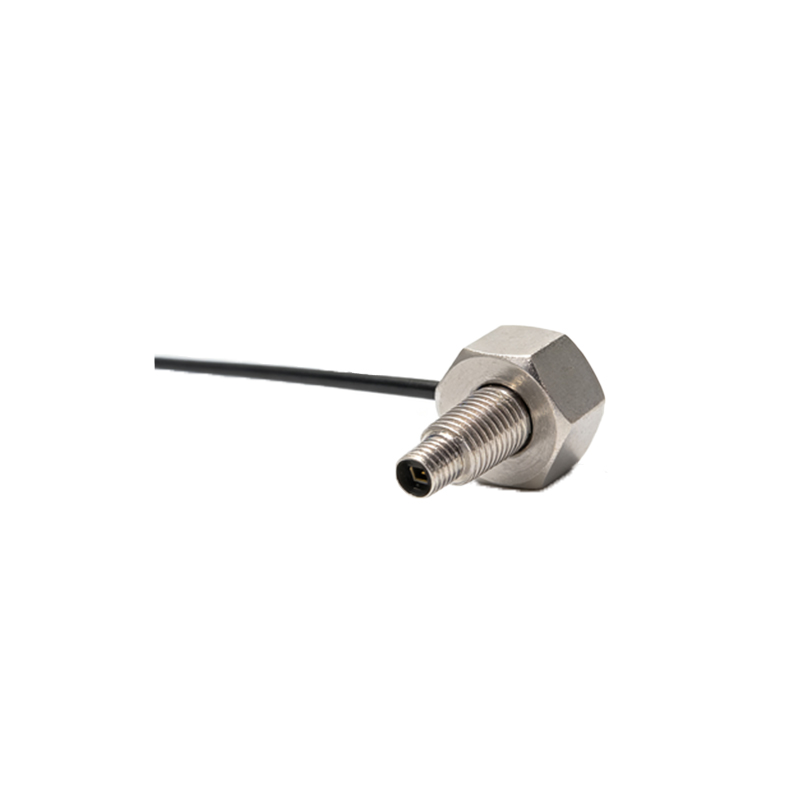
Fiber optic sensors use flexible fiber optic cables to transmit light from the emitter to the detection area and back to the receiver. This design allows the electronic components to be placed remotely, away from heat, vibration, or corrosive environments. The sensing heads can be extremely small, enabling detection of minute objects or in confined spaces. Fiber optic sensors excel in high-temperature zones, such as near furnaces, or in explosive atmospheres where electrical components must be isolated. They offer high precision for small parts, typically with range up to 1 meter, and are common in semiconductor manufacturing and medical device production.