In the world of industrial automation and safety systems, precision and reliability are non-negotiable. Among the various sensing technologies available, through-beam sensors, also known as opposed-mode or beam-break sensors, stand out for their exceptional performance in demanding environments. This guide delves into the core principles, advantages, and practical considerations of this robust technology.
At its heart, a through-beam sensor system consists of two separate units: a transmitter and a receiver. The transmitter continuously emits a beam of light, typically infrared or laser, across a defined distance. The receiver, positioned directly opposite the transmitter, is dedicated to detecting this specific beam. The fundamental operating principle is interruption. When an object passes between the two units, it breaks the light beam. The receiver detects this absence of light and triggers an electrical output signal. This simple "on/off" or "beam present/beam broken" logic forms the basis for detection.
This opposed arrangement is the key to its primary strengths. First, through-beam sensors offer the longest sensing ranges of any photoelectric sensor type, capable of reliably detecting objects over distances of tens or even hundreds of meters. Second, they possess high excess gain, meaning the emitted light signal is significantly stronger than the minimum required for detection. This provides exceptional immunity to environmental challenges such as dust, steam, ambient light interference, and dirt accumulation on the lenses. The system remains operational unless the object completely blocks the powerful, focused beam.
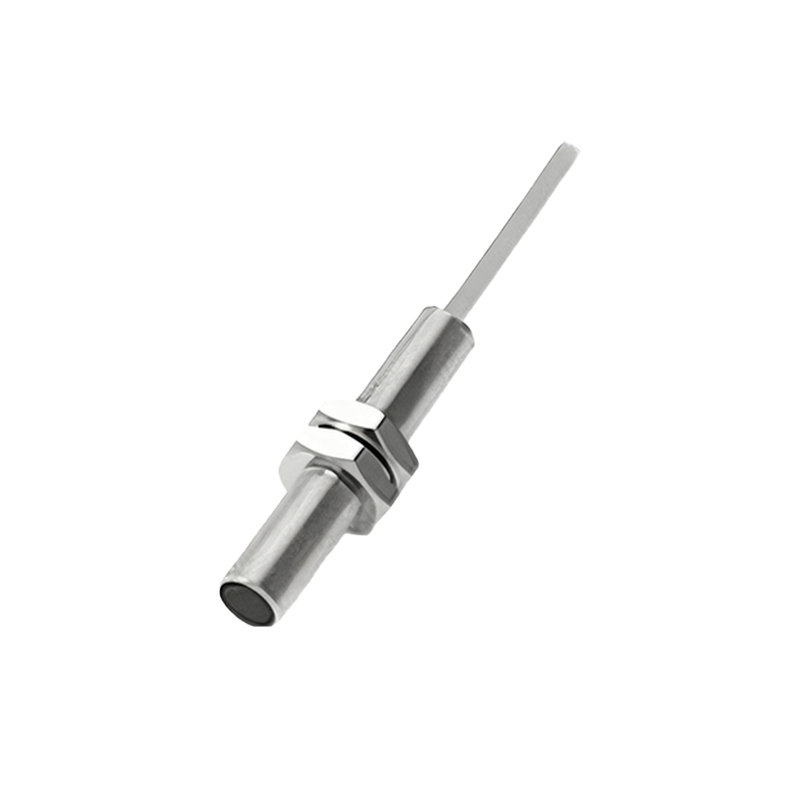
The applications for through-beam sensors are vast and critical. In material handling and packaging, they are indispensable for precise object counting, jam detection on conveyor belts, and monitoring fill levels in bottles or containers. In the automotive industry, they ensure precise positioning of parts on assembly lines. They form the backbone of safety light curtains, creating an invisible protective barrier around hazardous machinery—any intrusion by a person or object immediately breaks the beam and triggers a machine shutdown. Furthermore, they are used in registration control in printing, detecting small parts in electronics manufacturing, and monitoring door and gate positions.
Selecting the right through-beam sensor requires careful analysis of the application. The primary consideration is the required sensing range, which must be less than the sensor's published maximum. The size and opacity of the target object are also crucial; detecting a thin wire requires a more precise system than detecting a large cardboard box. Environmental factors like temperature extremes, heavy vibration, or the presence of corrosive chemicals will dictate the necessary housing material (often metal or high-grade plastic) and ingress protection (IP) rating. The choice between a modulated infrared LED light source (for general-purpose use) and a laser diode (for extreme precision or very small targets) is another key decision. Finally, the output type (e.g., NPN, PNP, relay) must be compatible with the control system, such as a PLC.
Installation and alignment, while straightforward, demand attention. The transmitter and receiver must be securely mounted and precisely aligned so that the beam is centered on the receiver's detection element. Many modern sensors feature alignment indicators, such as LED lights that change color or brightness when optimal alignment is achieved, simplifying setup. Regular maintenance involves keeping the lenses clean to maintain the system's high excess gain and ensuring mounting stability to prevent misalignment from vibration.
In comparison to other photoelectric modes like retro-reflective or diffuse sensors, through-beam sensors are the unequivocal choice for long-range, highly reliable detection in dirty or challenging conditions. While their two-component design requires more wiring and careful alignment, the performance benefits are unmatched for critical applications. When failure is not an option, and environmental factors are harsh, the through-beam sensor's simple, powerful beam-break principle delivers consistent, dependable operation, making it a cornerstone of modern industrial automation and safety.