Single point laser sensors represent a critical category of precision measurement devices widely utilized across industrial and scientific fields. These sensors operate by emitting a focused laser beam toward a target surface and analyzing the reflected light to determine specific parameters, most commonly distance or displacement. Unlike line lasers or area scanners that capture two-dimensional profiles, single point sensors concentrate their measurement capability on one precisely defined spot, offering exceptional accuracy and high-frequency response for dynamic applications.
The core working principle typically involves triangulation or time-of-flight (ToF) methods. In triangulation-based sensors, the emitted laser beam, the reflected light, and the detector form a geometric triangle. Any change in the target's distance causes a measurable shift in the position of the reflected light spot on the detector's photosensitive array, allowing for precise distance calculation. This method excels in short to medium-range measurements with micron-level resolution. Conversely, ToF-based sensors calculate distance by measuring the round-trip time of a laser pulse. They are suitable for longer ranges and can handle varying surface properties effectively, though sometimes with slightly lower resolution compared to triangulation at close quarters.
Key performance specifications include measuring range, resolution, linearity, spot size, and sampling rate. The spot size, often minuscule, enables measurements on small features or within confined spaces. High sampling rates, sometimes exceeding 100 kHz, allow these sensors to monitor rapid vibrations or fast-moving objects on production lines. Modern variants incorporate advanced features like automatic background suppression, programmable measurement windows, and robust housings with high ingress protection (IP) ratings for challenging environments involving dust, coolant, or extreme temperatures.
The application spectrum is vast. In industrial automation, they are indispensable for precise positioning control, thickness gauging of materials like paper or metal sheets, vibration analysis of machinery, and fill-level monitoring in containers. Robotics relies on them for accurate object detection and guidance. In electronics manufacturing, they measure component coplanarity, solder paste height, and PCB warpage. Automotive applications include gap and flush measurement during assembly. Furthermore, they serve in structural health monitoring, laboratory research, and even consumer electronics for features like autofocus enhancement.
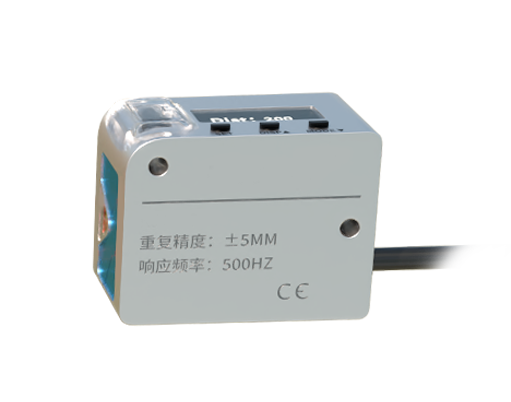
Selecting the appropriate single point laser sensor requires careful consideration of the target material (color, reflectivity, texture), environmental conditions (ambient light, temperature, contaminants), required accuracy, and necessary output interfaces (analog voltage/current, digital RS-232/422, Ethernet, IO-Link). For instance, a dark, matte surface may require a sensor with higher laser power or a specialized model designed for low reflectivity to ensure a stable signal.
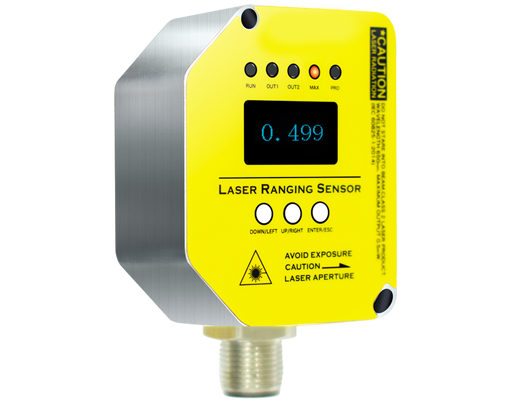
In summary, single point laser sensors provide a reliable, non-contact solution for high-precision, high-speed dimensional measurement and inspection tasks. Their continued evolution, integrating smarter onboard processing and connectivity, solidifies their role as fundamental components in advancing automation, quality control, and research capabilities across diverse sectors.
