In the world of industrial automation and smart devices, a small component plays an outsized role in enabling efficiency, safety, and precision: the proximity sensor switch. Unlike mechanical switches that require physical contact, proximity sensors detect the presence or absence of an object within a specific range without any touch. This non-contact operation is the cornerstone of their reliability and longevity, making them indispensable in modern systems.
At its core, a proximity sensor works by emitting an electromagnetic field, beam, or acoustic wave and then looking for changes in the return signal or field. The object being detected is often called the target. The key advantage is the elimination of wear and tear associated with physical contact, leading to virtually maintenance-free operation and a significantly longer operational life compared to mechanical limit switches.
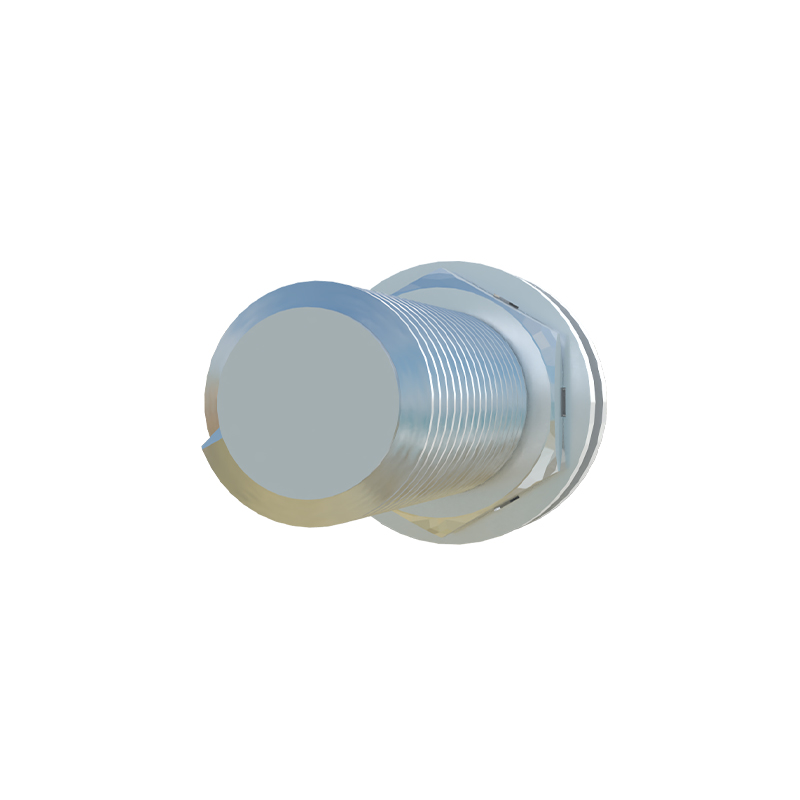
Several primary technologies dominate the proximity sensor landscape, each with distinct principles and ideal use cases.
Inductive Proximity Sensors are among the most common. They generate an oscillating electromagnetic field. When a metallic target enters this field, it induces eddy currents within the target, which causes a change in the sensor's oscillation amplitude. This change triggers the sensor's output switch. Inductive sensors are robust, cost-effective for metal detection, and excel in harsh industrial environments with oil, dust, or coolant. They are typically used for position sensing of machine parts, counting metal objects, or as end-of-travel limits in automated machinery.
Capacitive Proximity Sensors can detect both metallic and non-metallic targets—such as liquids, plastics, glass, and wood. They function by generating an electrostatic field. Any object that enters this field alters the capacitance of the sensor's circuit, prompting a change in output state. This makes them versatile for applications like liquid level detection, material handling of non-metallic goods, or touch-sensitive control panels. They are sensitive to environmental factors like humidity and require careful calibration.
Ultrasonic Proximity Sensors use sound waves beyond the human hearing range. They emit ultrasonic pulses and measure the time it takes for the echo to return. The time-of-flight calculation determines the distance to the target. These sensors are excellent for detecting objects of virtually any material, shape, or color, and are used in challenging conditions like fog or dusty environments. Common applications include pallet detection, distance measurement, and level monitoring in bulk material tanks.
Photoelectric Sensors, while sometimes categorized separately, function as proximity devices. They consist of a light emitter (usually LED) and a receiver. The presence of an object is detected either by the interruption of the light beam (through-beam), reflection from the object (diffuse reflective), or reflection from a dedicated reflector (retro-reflective). They offer long sensing ranges and can detect small objects precisely, making them perfect for packaging lines, object counting, and conveyor systems.
Magnetic Proximity Sensors, often called reed switches or Hall-effect sensors, detect the presence of a permanent magnet. They are simple, reliable, and often used in safety applications like door and window position sensing, or in cylinders for pneumatic piston position feedback.
Selecting the right proximity sensor requires careful consideration of several factors. First, identify the target material. Is it ferrous metal, non-ferrous metal, plastic, or liquid? This immediately narrows down the technology choice. Next, consider the required sensing distance, often specified as the nominal range. Always account for a safety margin, as real-world conditions like temperature or target size can affect performance. The operating environment is critical—will the sensor be exposed to washdowns, extreme temperatures, vibrations, or corrosive chemicals? Sensors with appropriate Ingress Protection (IP) ratings, such as IP67 or IP69K, are necessary for harsh conditions.
Electrical characteristics are equally important. Determine the required output type: a simple two-wire AC/DC switch, a three-wire DC PNP (sourcing) or NPN (sinking) transistor output, or an analog output for distance-proportional signals. The supply voltage must match the control system. Finally, physical characteristics like housing shape (barrel, rectangular), size, and connection type (pre-wired cable or quick-disconnect) must suit the mechanical installation.
The applications are vast. In automotive manufacturing, inductive sensors ensure robotic welders are in position. In food and beverage, capacitive sensors monitor liquid levels in stainless steel tanks. In consumer electronics, miniature sensors detect when a smartphone flip cover is closed. Their role in enabling Industry 4.0 and the Internet of Things (IoT) is growing, with smart sensors providing diagnostic data and networking capabilities for predictive maintenance.
In conclusion, proximity sensor switches are the silent, reliable sentinels of automation. Understanding their working principles, types, and selection criteria is essential for designing efficient, robust, and intelligent systems. By choosing the correct sensor for the application, engineers and technicians can ensure optimal performance