Introduction to Staud Photoelectric Sensors
Staud photoelectric sensors are widely used in industrial automation for object detection, position sensing, and material handling. These sensors operate based on light emission and reception, offering reliable performance in harsh environments. Proper wiring is critical to ensure stable signal transmission and prevent equipment damage. This guide provides a step-by-step wiring diagram explanation for common Staud sensor models.
Key Components and Color Coding Standard
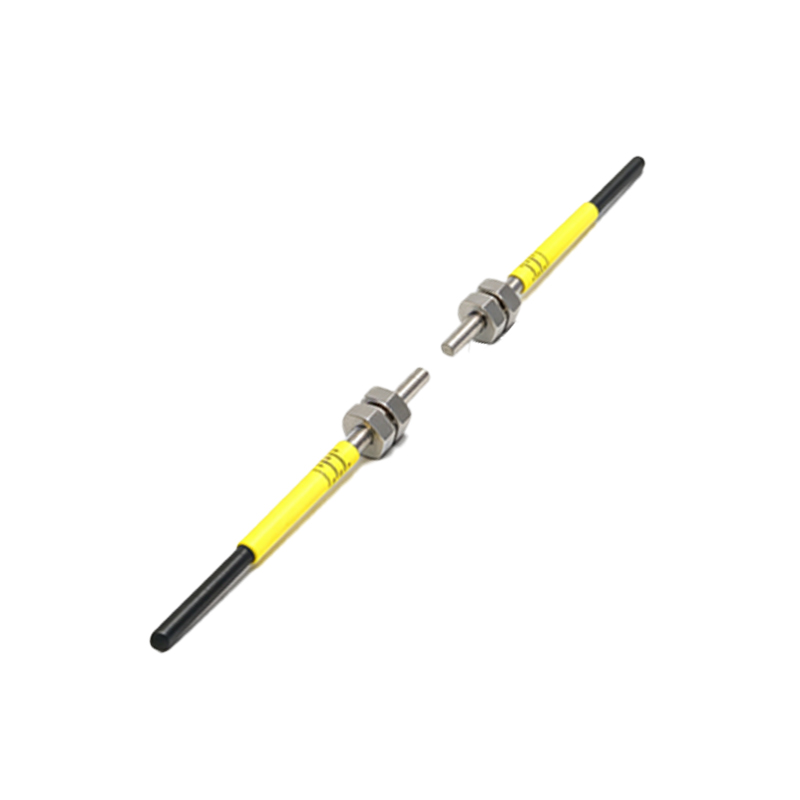
Staud photoelectric sensors typically use four-wire or three-wire configurations. The standard color coding follows the IEC 60947-5-2 norm: Brown for DC power supply positive (10-30V), Blue for DC negative or common ground, Black for normally open (NO) output, and White for normally closed (NC) output (if applicable). For AC models, the wiring may vary, but DC models are most common in industrial settings.
Wiring Diagram for DC Three-Wire Sensors
For a typical Staud three-wire DC sensor (e.g., model ST-P18 series), connect the Brown wire to the positive terminal of a 24V DC power supply. Connect the Blue wire to the 0V (ground) terminal. The Black wire serves as the output signal line, which should be connected to the input of a PLC or relay. When the sensor detects an object, the output transitions from high-impedance to low-impedance (sinking type) or vice versa, depending on the sensor configuration (NPN or PNP). Always verify the sensor type (NPN vs. PNP) before wiring to avoid short circuits.
Wiring Diagram for DC Four-Wire Sensors
Four-wire Staud sensors (e.g., model ST-P30 series) include both NO and NC outputs. Connect the Brown and Blue wires to the power supply as described above. The Black wire is the NO output, and the White wire is the NC output. These outputs can be used to trigger different alarm systems or control logic. For example, in a conveyor belt system, the NO output activates an actuator when an object is present, while the NC output triggers a stop signal when no object is detected. Ensure that both outputs are not shorted to ground or power simultaneously.
Wiring for AC Photoelectric Sensors
Although less common, some Staud AC sensors use a two-wire system. Connect the black wire to the AC line (e.g., 110V or 230V) and the white wire to the neutral. The load (e.g., a relay coil) must be placed in series with the sensor. Note that AC sensors typically do not have polarity, but always check the manufacturer’s datasheet for specific voltage ratings and load current limits.
Best Practices and Safety Tips
Always disconnect power before wiring. Verify the sensor’s voltage rating (typically 10-30V DC for DC models). Use shielded cables in high-noise environments to reduce electromagnetic interference. Test the wiring with a multimeter before connecting to the PLC: measure voltage between Brown and Blue (should be 24V), and check output state by covering/uncovering the sensor lens. For long cable runs (over 50 meters), consider adding a terminal block to avoid voltage drop.
Troubleshooting Common Wiring Issues
If the sensor does not respond, first check power supply polarity and voltage. A common issue is incorrect NPN/PNP selection: for a sinking (NPN) sensor, the output connects to the PLC input’s negative side; for a sourcing (PNP) sensor, connect to the positive side. Also, inspect the lens for dirt or misalignment, as this can affect detection. If the output remains always on or off, verify that the load impedance matches the sensor’s specifications.
Conclusion
Correct wiring of Staud photoelectric sensors ensures reliable operation and extends equipment lifespan. By following the color codes, understanding the output types, and adhering to safety practices, engineers can integrate these sensors seamlessly into automation systems. Always refer to the specific model’s datasheet for precise wiring details, as variations may exist across different series.