In the world of industrial automation and precision measurement, reliable detection is non-negotiable. Among the various sensing technologies available, through-beam laser sensors stand out for their unparalleled accuracy, long range, and exceptional reliability. Unlike other sensor types that rely on reflected light, through-beam sensors operate on a simple yet powerful principle: a clear line of sight between a separate transmitter and receiver.
The core working principle is straightforward. The transmitter unit emits a focused, coherent beam of laser light. This beam travels across a defined distance and is captured by the opposing receiver unit. The receiver is continuously monitoring the intensity of this incoming light signal. The presence of an object within the sensing field interrupts this beam, causing a significant drop in the light intensity at the receiver. This change triggers an output signal, indicating the object's detection. This "go/no-go" binary operation makes them incredibly robust against environmental factors like target color, reflectivity, or surface finish, which often plague diffuse-reflective sensors.
The advantages of utilizing through-beam laser sensors are numerous and significant. First and foremost is their exceptional sensing range. They can reliably detect objects over distances that far exceed those of photoelectric or ultrasonic sensors, often spanning several meters to even hundreds of meters in specialized models. This makes them ideal for large-scale applications. Secondly, their precision is remarkable. The laser beam is extremely narrow and focused, allowing for the detection of very small objects or precise edges with high positional accuracy. This pinpoint accuracy enables tasks like exact positioning or checking for minute part presence.
Furthermore, their operational stability is a key benefit. Since the detection depends on beam interruption rather than reflection, they are largely immune to problems caused by dirty, shiny, dark, or transparent objects. A black rubber gasket or a clear glass panel will interrupt the beam just as effectively as a bright metal part. This consistency reduces false triggers and maintenance downtime. Their high response speed also allows them to detect objects moving at very high velocities, which is critical in fast-paced manufacturing lines, packaging machinery, and conveyor sorting systems.
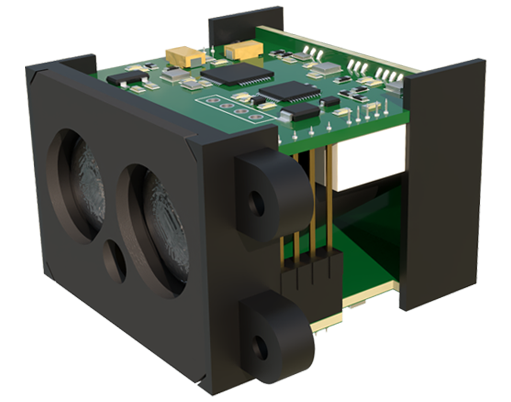
The applications for through-beam laser sensors are vast and span across multiple industries. In material handling and logistics, they are indispensable for object counting on high-speed conveyors, jam detection in automated systems, and controlling the fill levels in silos or containers. Within the automotive manufacturing sector, they are used for precise robot guidance, verifying the presence of components in assembly jigs, and inspecting part dimensions. The electronics industry relies on them for wafer handling, PCB positioning, and detecting miniature components. They also play a vital role in security systems as part of intrusion detection grids and in packaging machinery for ensuring proper product placement and label verification.

When selecting a through-beam laser sensor for a specific application, several critical factors must be considered. The required sensing distance is paramount; ensure the sensor's specified range accommodates the actual gap with a safety margin. The size of the target object is equally important; the laser beam's spot size must be smaller than the object to ensure a clean interruption. Environmental conditions cannot be overlooked. Factors such as ambient light (especially sunlight), dust, fog, or oil mist can interfere with the beam. Many modern sensors feature robust housings (IP67 or higher) and use modulated laser light to resist ambient light interference. Finally, the required output type (PNP/NPN, relay, analog) and connection method must be compatible with the existing control system.
Installation and alignment, while conceptually simple, require attention to detail. The transmitter and receiver must be mounted securely on stable surfaces to prevent vibration-induced misalignment. Precise alignment is crucial for optimal performance; manufacturers often provide alignment aids like visible red light beams or alignment indicators on the device. Regular maintenance involves keeping the lenses clean from dust and debris to maintain signal strength and periodically checking the alignment to ensure long-term, trouble-free operation.
In conclusion, through-beam laser sensors represent a cornerstone technology for applications demanding the highest levels of precision, range, and reliability. Their simple beam-break principle translates into robust performance in challenging industrial environments. By understanding their operating principles, key advantages, and application considerations, engineers and technicians can effectively deploy these sensors to enhance automation efficiency, improve quality control, and ensure system safety. As technology advances, we continue to see developments in miniaturization, connectivity with Industrial IoT networks, and even smarter diagnostic capabilities, further solidifying their essential role in the automated world.
