Proximity sensors are a cornerstone of modern industrial automation, playing a critical role in object detection, positioning, and control without physical contact. Among their various applications, the ability to reliably sense metal objects is one of the most fundamental and widespread. This capability hinges on the specific type of proximity sensor employed, with inductive proximity sensors being the undisputed specialists for metal detection.
Unlike photoelectric or capacitive sensors, inductive proximity sensors are designed specifically to detect ferrous and non-ferrous metals. They operate on the principle of electromagnetic induction. At the heart of the sensor is a coil wound around a ferrite core, which is part of an oscillator circuit. When an alternating current flows through this coil, it generates a high-frequency electromagnetic field that radiates from the sensor's active face.
In the absence of a metal target, the oscillator operates at a constant amplitude. However, when a metal object enters this oscillating electromagnetic field, eddy currents are induced on the surface of the metal. These eddy currents draw energy from the sensor's oscillator circuit, causing a measurable drop in the oscillation amplitude. The sensor's internal circuitry monitors this amplitude change. Once the drop reaches a predetermined threshold, the sensor's output state switches, signaling the presence of the metal object.
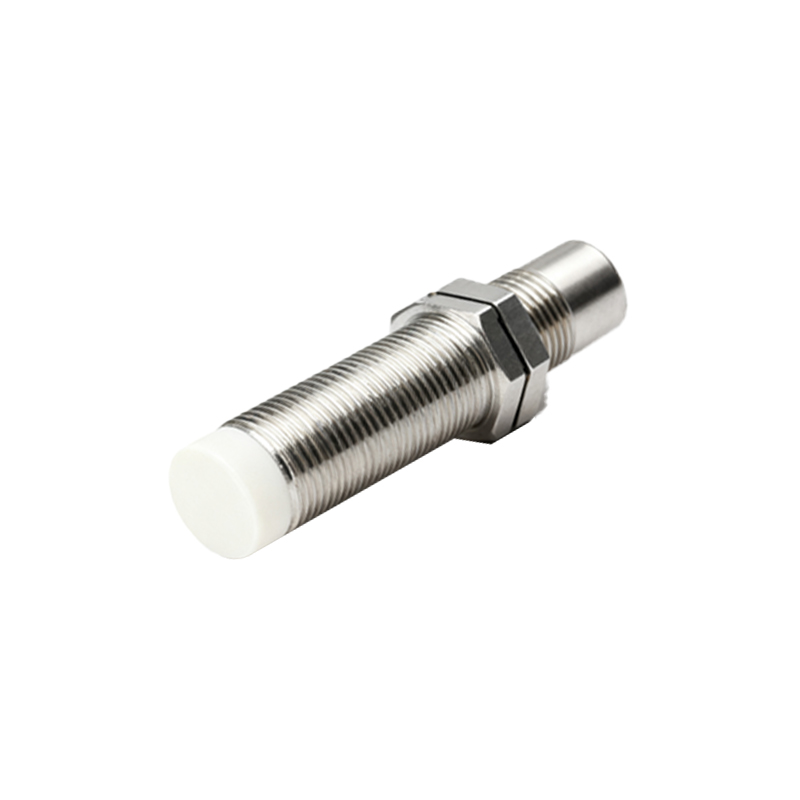
The effectiveness of detection depends on several key factors. First is the sensor's nominal sensing distance, or Sn, which is specified for a standard target—typically a square of mild steel (Fe360) with a side length equal to the sensor's diameter or the diameter of its sensing face. It is crucial to note that the actual sensing range can vary significantly with different metals. For instance, steel and iron (ferrous metals) are generally detected at or near the rated Sn distance. Non-ferrous metals like aluminum, copper, or brass have lower conductivity or permeability, which reduces the eddy current effect. Consequently, the sensing distance for aluminum is typically 40-50% of Sn, and for copper or brass, it can be as low as 20-30% of Sn.
The size and shape of the target also influence performance. A target smaller than the sensor's sensing face or one that is very thin may not be detected at the full rated distance. For optimal reliability, the target should be at least as large as the sensor's face and have sufficient thickness to generate adequate eddy currents. Furthermore, the installation environment is critical. Inductive sensors can be affected by the presence of other metals in close proximity. Installing a sensor flush in a metal bracket (flush-mounted) minimizes this interference from surrounding metal, while non-flush mountable sensors require a clear zone of non-metallic material around them to function correctly.
The advantages of using inductive proximity sensors for metal detection are numerous. They offer extremely fast response times, often in the microsecond range, making them suitable for high-speed counting or sorting applications. They are remarkably robust, with solid-state designs that have no moving parts, leading to long service life and high resistance to vibration and shock. Their housings are typically made of nickel-plated brass or stainless steel, providing excellent resistance to industrial contaminants like coolants, oils, and dust. This makes them ideal for harsh environments in machine tools, automotive assembly, material handling, and packaging machinery.
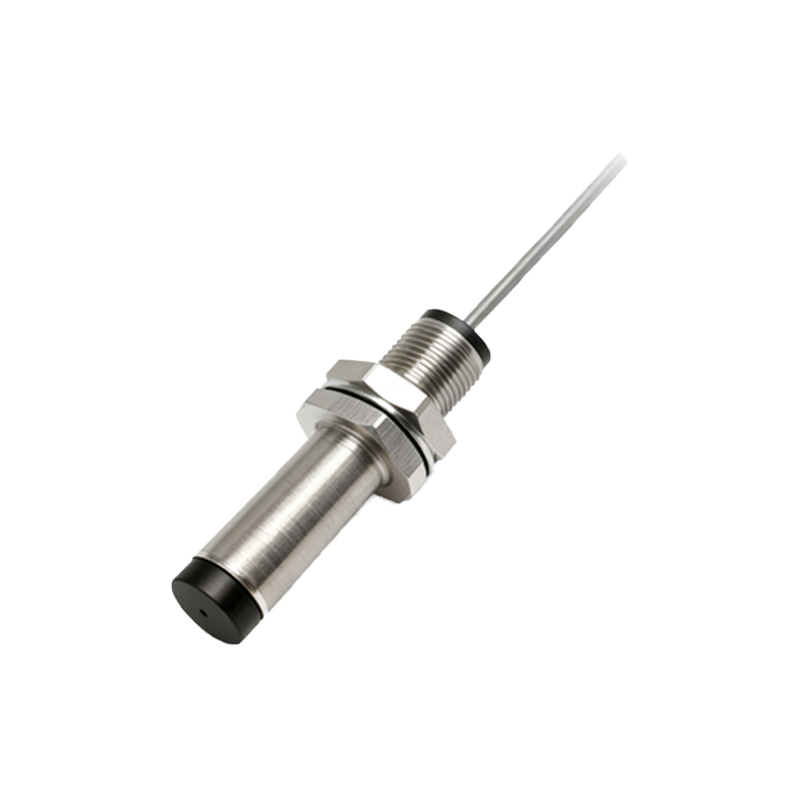
Common applications include detecting the presence of a metal part on a conveyor, verifying the position of a cylinder rod, counting metal bottles or cans, monitoring gear tooth rotation for speed, and ensuring proper seating of metal components in an assembly jig. In summary, the ability of inductive proximity sensors to detect metal is a reliable, efficient, and durable solution that forms the backbone of countless automated processes, ensuring precision, safety, and productivity in industrial settings worldwide.