Introduction to Infrared Photoelectric Sensors
Infrared photoelectric sensors are essential components in modern industrial automation systems. These devices utilize infrared light to detect the presence or absence of objects without physical contact, making them ideal for harsh environments where mechanical wear is a concern. As a seasoned electrical engineer, I emphasize their reliability in applications ranging from conveyor belt monitoring to robotic positioning. The core principle involves an emitter projecting infrared radiation onto a receiver, with changes in light intensity triggering electrical signals.
Operating Principles and Key Components
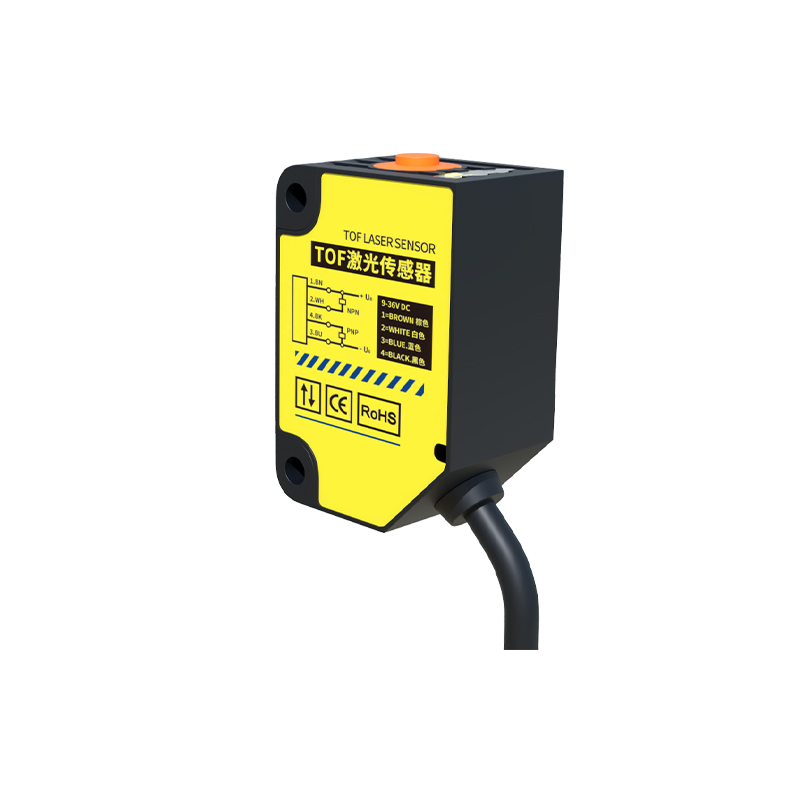
The typical infrared sensor consists of a light source (usually an LED), a photodetector, and signal processing electronics. The emitter generates modulated infrared beams to minimize interference from ambient light. The receiver, often a photodiode or phototransistor, converts optical signals into electrical ones. Three main configurations dominate: through-beam, retro-reflective, and diffused. Through-beam sensors offer the longest detection range but require separate emitter and receiver units. Retro-reflective types use a reflector to bounce the beam back, simplifying wiring. Diffused sensors combine emitter and receiver in one housing, detecting objects by reflected light from the target itself.
Critical Performance Parameters
When selecting a sensor, engineers must evaluate range, response time, and environmental robustness. Detection distances vary from a few millimeters to over 100 meters, depending on the model. Response time, typically in milliseconds, determines suitability for high-speed production lines. Infrared sensors excel in dusty or smoky conditions due to their wavelength, but lens contamination remains a challenge. Key specifications include hysteresis, which prevents oscillation at detection thresholds, and immunity to light interference from welding arcs or sunlight. Advanced models incorporate pulse coding to reject false triggers.
Industrial Applications and Case Studies
In packaging industries, infrared sensors ensure precise label placement on moving containers. For example, a retro-reflective sensor on a bottling line detects glass bottles at 50 per minute, sending signals to a PLC for reject sorting. In automotive assembly, through-beam sensors monitor robotic arm positions in weld cells, where high temperatures would damage capacitive sensors. A recent case involved a warehouse automated guided vehicle system using 50 diffused sensors to navigate narrow aisles, achieving 99.7% accuracy in pallet detection. These implementations highlight the technology’s versatility.
Installation and Maintenance Best Practices
Proper alignment is critical for through-beam and retro-reflective sensors. Use alignment tools to ensure the beam hits the receiver center. For diffused sensors, consider the target’s reflectivity—dark or matte surfaces require higher sensitivity settings. Clean lenses regularly with isopropyl alcohol to prevent buildup. Check cable connections for corrosion, especially in outdoor or wash-down zones. Calibrating thresholds every six months maintains accuracy. Avoid mounting near high-frequency emitters like variable frequency drives to reduce electrical noise interference.
Future Trends in Infrared Sensor Technology
The industry is shifting toward smart sensors with IoT connectivity. Modern infrared sensors now integrate with Industry 4.0 platforms, offering real-time diagnostics and predictive maintenance alerts. Advances in solid-state components reduce power consumption, enabling battery-operated wireless units. Multi-wavelength sensors are emerging to differentiate between materials, such as plastic and metal. As an engineer, I recommend staying updated on IO-Link communication standards, which simplify sensor configuration and data exchange. The evolution promises even higher precision and resilience in challenging industrial settings.