2026-04-26
Tech Hub
By 创始人
Understanding the Differences Between Photoelectric Sensors and Modules in Industrial Automation
Introduction to Photoelectric Sensors and Modules
In industrial automation, photoelectric sensors and modules are essential components for detecting objects, measuring distances, and controlling processes. Photoelectric sensors are standalone devices that use light beams to sense the presence or absence of objects, while photoelectric modules are integrated units often combining sensing, processing, and output functions in a compact form. Both are widely used in manufacturing lines, packaging systems, and robotics. However, their design, application, and performance characteristics differ significantly. Understanding these differences is crucial for selecting the right component for specific industrial tasks.
Core Functional Differences
Photoelectric sensors typically operate as independent units with a transmitter and receiver, detecting changes in light intensity or beam interruption. They offer basic outputs like NPN or PNP signals and require external controllers for complex logic. In contrast, photoelectric modules incorporate additional circuitry, such as amplifiers, signal processors, or communication interfaces (e.g., IO-Link), enabling direct integration with PLCs or industrial networks. Modules often support advanced features like background suppression, contrast detection, or analog output, while sensors focus on simpler on/off detection.
Design and Form Factor Variations
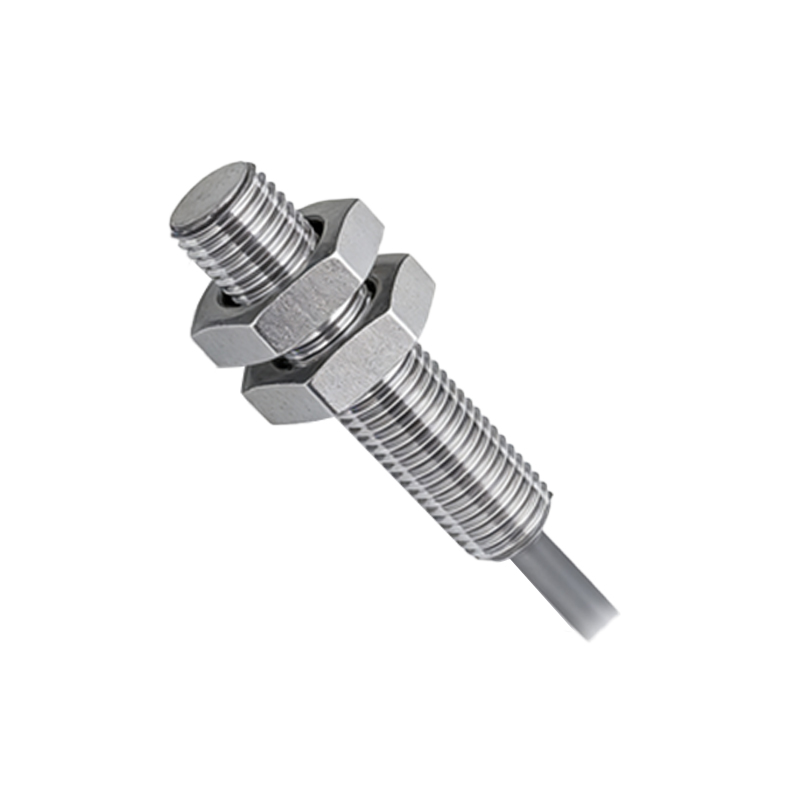
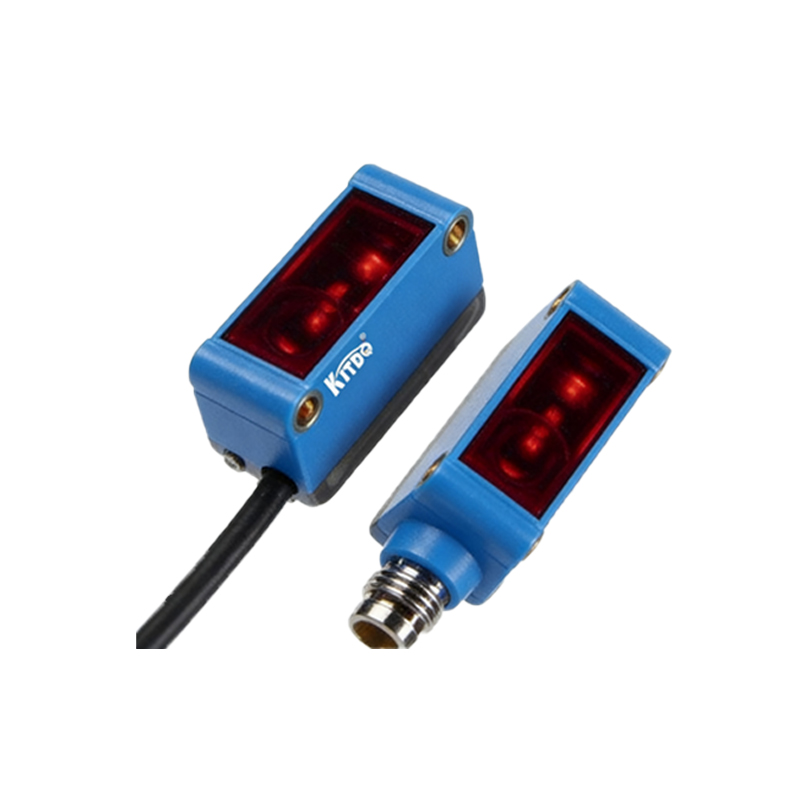
Photoelectric sensors are usually housed in cylindrical or rectangular enclosures with separate connectors, designed for fixed mounting in harsh industrial environments. They require careful wiring and external power supplies. Photoelectric modules, however, are often compact and board-level components, designed for embedding into larger systems like vision cameras or automated guided vehicles (AGVs). Modules may include built-in LEDs, lenses, and filtering optics, but may lack robust housings, making them less suitable for extreme conditions without additional protection.
Application Scenarios in Industry
Photoelectric sensors excel in simple, reliable detection tasks: counting products on conveyors, detecting jammed parts, or monitoring bin levels. Their rugged construction and standardized outputs make them ideal for factory floors. Photoelectric modules are preferred in precision applications: color sorting, high-speed labeling, or measuring transparent films where signal conditioning is needed. Modules also dominate in space-constrained designs, such as in medical devices or robotic end-effectors, where miniaturization and multi-functionality are critical.
Cost and Integration Considerations
Photoelectric sensors are generally lower in cost, especially for basic through-beam or retroreflective types, but they may require additional controllers for complex applications. Modules have higher upfront costs due to integrated electronics, but reduce overall system cost by eliminating external amplifiers and simplifying wiring. For large-scale industrial IoT setups, modules with IO-Link or Ethernet interfaces provide easy data integration, while sensors demand separate converters. Maintenance also differs: sensors are easily replaceable, while modules may require system-level troubleshooting.
Conclusion: Choosing the Right Solution
For straightforward detection in tough environments, photoelectric sensors are reliable and cost-effective. For advanced, multi-parameter sensing or compact system integration, photoelectric modules offer greater flexibility. Engineers should evaluate factors: ambient light interference, response time, cable length, and network compatibility. Understanding these distinctions ensures optimal performance in automation lines, from basic conveyor monitoring to sophisticated quality control.