What Are Photoelectric Sensors?
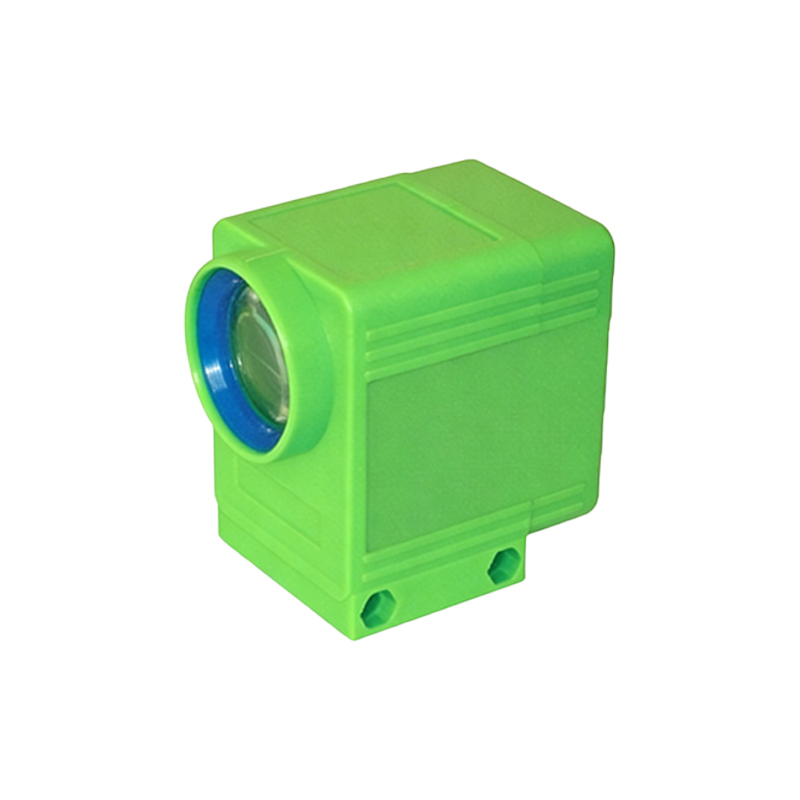
Photoelectric sensors are electronic devices that use light to detect the presence, absence, or distance of objects. They consist of a light emitter (usually an LED or laser) and a light receiver (photodiode or phototransistor). When an object interrupts or reflects the light beam, the sensor triggers an output signal. These sensors are widely used in industrial automation for tasks like product counting, position detection, and safety monitoring. Their non-contact nature makes them ideal for applications where mechanical wear or contamination is a concern.
Types of Photoelectric Sensors
There are three main types of photoelectric sensors: through-beam, retro-reflective, and diffuse reflective. Through-beam sensors have separate emitter and receiver units; when the object blocks the beam, detection occurs. They offer the longest range and highest reliability, but require alignment and more space. Retro-reflective sensors combine emitter and receiver in one housing, using a reflector to bounce the beam back. They are easier to install and work well for medium ranges, but may be affected by glossy objects. Diffuse reflective sensors also have one unit, but detect light reflected directly from the target object. They are compact and cost-effective, but have shorter range and can be influenced by object color or surface texture.
Key Applications in Industry
In manufacturing, photoelectric sensors are used for conveyor belt monitoring, where they detect product jams or count items. In packaging, they ensure proper label placement or seal integrity. In automotive assembly, they verify component presence or measure part dimensions. In warehouse automation, they guide automated guided vehicles (AGVs) and detect pallet positions. Other applications include liquid level detection in tanks, door opening systems, and safety light curtains in hazardous areas. These sensors excel in environments with high speed, dust, or vibration, where mechanical switches fail.
Selection Criteria for Engineers
When selecting a photoelectric sensor, engineers must consider sensing range, target material, ambient conditions, and response time. For long distances (over 10 meters), through-beam sensors are preferred. For transparent or shiny objects, retro-reflective models with polarization filters reduce false triggers. In dusty or wet environments, sensors with IP67/IP69K ratings or background suppression features are essential. For high-speed applications, choose sensors with fast switching frequencies (e.g., 1 kHz or higher). Output type (PNP/NPN, analog, IO-Link) must match the control system. Cost and installation complexity also play roles in final selection.
Advancements and Future Trends
Modern photoelectric sensors now integrate smart features like IO-Link communication, which provides diagnostics and parameter configuration. Laser-based sensors achieve sub-millimeter precision for microchip inspection. Multi-beam sensors allow detection of irregular shapes or small gaps. IoT-enabled sensors send data to cloud platforms for predictive maintenance. Future developments include self-calibrating algorithms, energy harvesting for battery-free operation, and integration with AI for adaptive detection in complex environments. These trends enhance reliability, reduce downtime, and enable Industry 4.0 applications.