Introduction to Six-Wire Photoelectric Sensors
In industrial automation, photoelectric sensors are essential for object detection, positioning, and counting. While standard sensors typically have three or four wires, a six-wire variant offers enhanced functionality. These sensors integrate multiple outputs or dual channels, allowing for versatile control logic. For example, they can provide both NPN and PNP outputs simultaneously, or include a test input for diagnostic purposes. Understanding the wiring and application of six-wire sensors is critical for optimizing system reliability and reducing downtime.
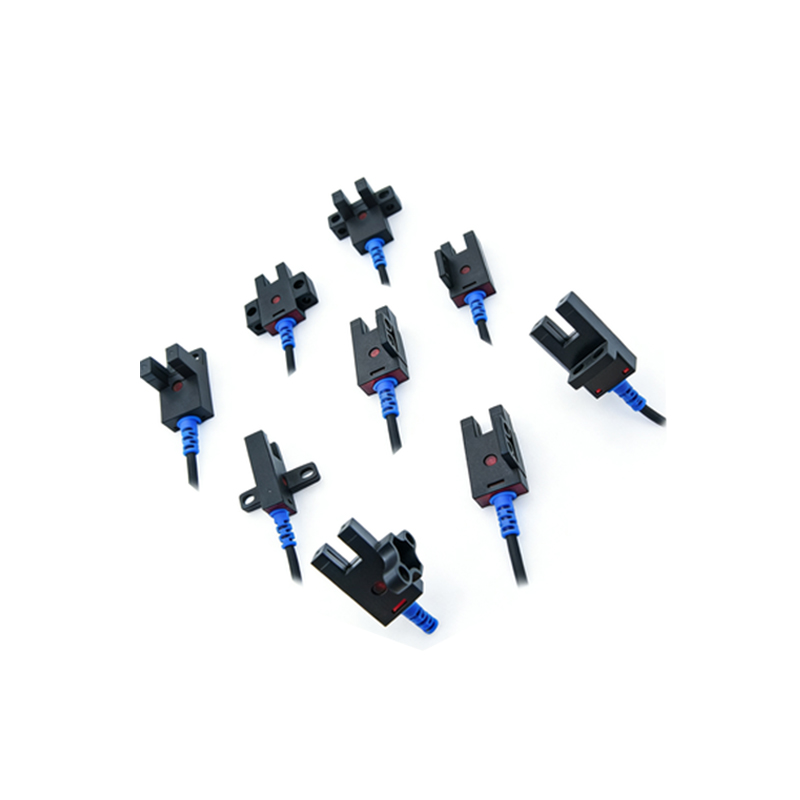
Wiring Configuration and Color Codes
A typical six-wire photoelectric sensor follows a standardized color code: brown (power supply +V, typically 10-30V DC), blue (ground, 0V), black (output 1, often NPN normally open), white (output 2, often PNP normally open), gray (output 3 or alarm output), and pink (test input or synchronization line). It is vital to verify the datasheet, as manufacturers may differ. Incorrect wiring can damage the sensor or cause erratic operation. Always use a multimeter to confirm voltage levels before connection.
Application Scenarios in Manufacturing Lines
Six-wire sensors excel in complex environments. In a conveyor system, one output can trigger a counter while another activates a reject gate. The test input allows engineers to simulate detection without physical objects, facilitating calibration. For packaging machines, dual outputs enable simultaneous monitoring of clear and opaque materials. The alarm output can signal lens contamination, prompting preventive maintenance. These capabilities reduce wiring clutter by replacing two separate sensors.
Advantages Over Standard Three-Wire Sensors
The primary advantage is flexibility. A single six-wire sensor can replace multiple three-wire units, saving panel space and reducing installation costs. The test input simplifies troubleshooting, as operators can manually cycle the sensor without stopping production. Additionally, the dual output configuration allows for redundant sensing, which is crucial in safety-critical applications like robotic arms. However, the complexity requires careful planning; ensure your PLC has enough input channels to handle the outputs.
Troubleshooting Common Issues
Frequent problems include incorrect wiring, power supply fluctuations, and environmental interference (e.g., dust or ambient light). If the sensor fails to trigger, first check the power supply voltage at the brown and blue wires. Use a sensor tester to verify output states on the black and white wires. For erratic behavior, shield cables from electromagnetic interference. If the test input is used, ensure it is not floating; tie it to ground or +V as per the manual. Regular cleaning of the lens prevents false alarms.
Selection Criteria for Engineers
When choosing a six-wire sensor, consider the sensing range, light source (LED or laser), and response time. For dusty environments, select a sensor with a pre-alarm output. Evaluate the output type: NPN outputs are common in Asian markets, while PNP is preferred in Europe and the US. Ensure the sensor’s housing material (e.g., stainless steel or plastic) matches the environmental conditions, such as high temperature or chemical exposure. Always request a sample for testing before bulk purchasing.
Conclusion: Future Trends
As Industry 4.0 advances, six-wire sensors are evolving to include IO-Link communication, enabling real-time data exchange. This allows for parameter adjustments and predictive maintenance. Engineers should stay updated on these smart sensors to improve system efficiency. For now, mastering the six-wire configuration is a valuable skill that enhances automation design.