Photoelectric sensors are widely used in industrial automation for object detection, counting, and positioning. The fixed-value principle provides a simple yet effective method for reliable switching, making it a foundational concept for engineers. By understanding this principle, professionals can optimize sensor selection and application in diverse automation systems.
Photoelectric sensors are essential components in industrial automation, utilizing light to detect the presence, absence, or distance of objects. Their fixed-value detection principle relies on a stable reference threshold, ensuring reliable operation in various environments, from manufacturing lines to packaging systems.
Basic Components and Light Emission
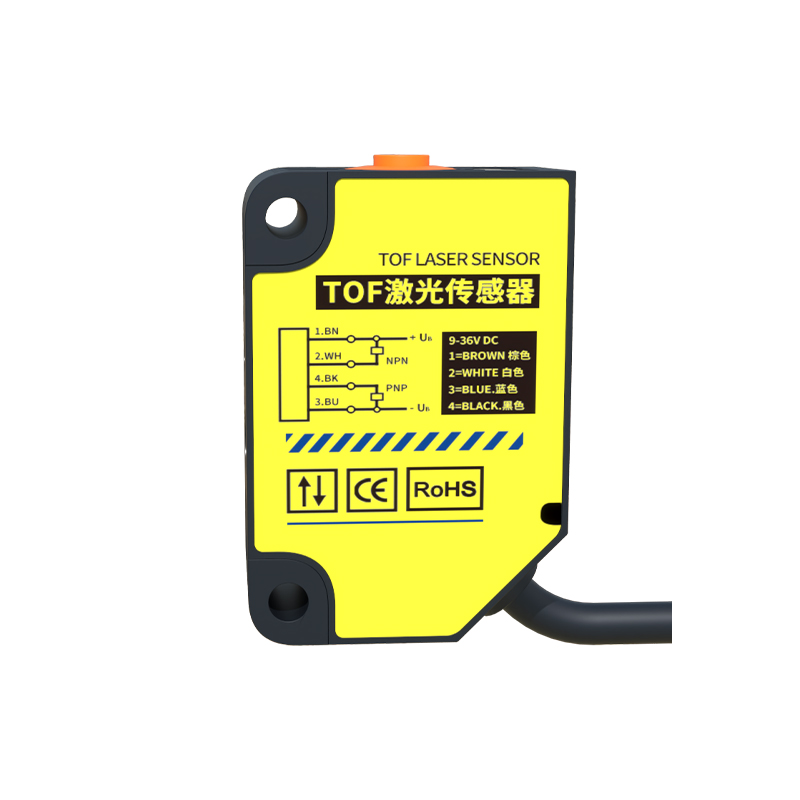
A typical photoelectric sensor consists of a light emitter (usually an LED or laser diode) and a light receiver (a photodiode or phototransistor). The emitter produces a consistent light beam, which is modulated at a specific frequency to reduce interference from ambient light sources. This modulated light is then directed toward the target area.
Fixed-Value Threshold Setting
The core of the fixed-value principle is the calibration of a reference threshold. During initial setup, the sensor measures the received light intensity under a "no-object" condition (background). This value is stored as a baseline. Then, the user defines a fixed threshold, typically a percentage of the baseline or an absolute value. When an object enters the detection zone, it alters the received light intensity—either by reflecting more light (in diffuse mode) or by blocking it (in through-beam mode). The sensor continuously compares the current signal to this fixed threshold.
Signal Processing and Output
The sensor's internal circuit amplifies and filters the received signal. If the signal level crosses the fixed threshold, a comparator triggers the output switch (e.g., NPN, PNP, or relay). For example, in a through-beam sensor, if an object blocks the beam, the signal drops below the threshold, activating the output. The fixed-value approach ensures consistent switching points regardless of slow drift in light source intensity or minor contamination, as long as the change remains within the sensor's dynamic range.
Environmental Compensation and Reliability
To maintain accuracy, many sensors incorporate automatic gain control (AGC) or manual sensitivity adjustment. However, the fixed-value principle remains robust because the threshold is not continuously adaptive. This prevents false triggering from gradual changes like dust accumulation or temperature shifts. Engineers must select the threshold carefully, considering the target's reflectivity, size, and speed. For high-precision applications, laser-based sensors offer narrower beams and finer threshold resolution.
Practical Application Example
In a bottling line, a through-beam photoelectric sensor with a fixed threshold detects caps on bottles. The baseline is set when the beam is uninterrupted. When a missing cap allows the beam to pass, the signal exceeds the threshold, triggering an alarm. This simple binary logic ensures fast, reliable detection without complex calculation, making it ideal for high-speed production environments.