How photoelectric sensors achieve precise positioning through light-based detection, with practical guidance for selection and calibration in industrial automation systems.
Understanding the Working Principle of Photoelectric Sensors
Photoelectric sensors use light beams to detect the presence, absence, or distance of objects without physical contact. They consist of a light emitter (usually an LED or laser diode) and a photoelectric receiver. When the emitted light is interrupted, reflected, or absorbed by a target, the receiver triggers a signal change, enabling precise positioning. This principle is fundamental in applications ranging from conveyor belt monitoring to robotic arm alignment. The three main types—through-beam, retro-reflective, and diffuse—offer different advantages based on the environment and target characteristics. Through-beam sensors provide the longest range and highest accuracy, while diffuse sensors are ideal for close-range detection.
Through-Beam Sensors for Long-Range Positioning
In through-beam configurations, the emitter and receiver are placed opposite each other. The object is detected when it breaks the light path between them. This setup offers exceptional stability and is immune to surface color, texture, or reflectivity. For positioning tasks, such as detecting the exact moment a metal sheet enters a press, through-beam sensors ensure high repeatability. Engineers often select these for high-speed production lines where tolerance is critical, as they can detect small objects with precision down to sub-millimeter levels. However, installation requires precise alignment of both components, which can increase setup time.
Retro-Reflective Sensors for Flexible Alignment
Retro-reflective sensors combine the emitter and receiver in a single housing, with a reflector placed opposite. The light from the emitter bounces off the reflector and returns to the receiver. When an object obstructs the beam, the sensor triggers. This design simplifies wiring and reduces installation space compared to through-beam types. For positioning applications like pallet alignment or object counting, retro-reflective sensors offer reliable performance even with transparent or shiny objects. They are particularly effective in packaging machinery where frequent changeovers require quick sensor adjustment.
Diffuse Sensors for Proximity Positioning
Diffuse sensors detect objects by measuring the light reflected directly from the target surface. The emitter and receiver are in the same housing, and the sensor activates when enough light returns. This makes them suitable for detecting objects at close range, such as parts in a pick-and-place robot. Engineers use diffuse sensors for positioning tasks where space is limited and the target has a consistent reflectivity. Background suppression models further enhance accuracy by ignoring reflections from distant surfaces, ensuring reliable detection of small components like screws or circuit boards.
Laser-Enhanced Sensors for High-Precision Applications
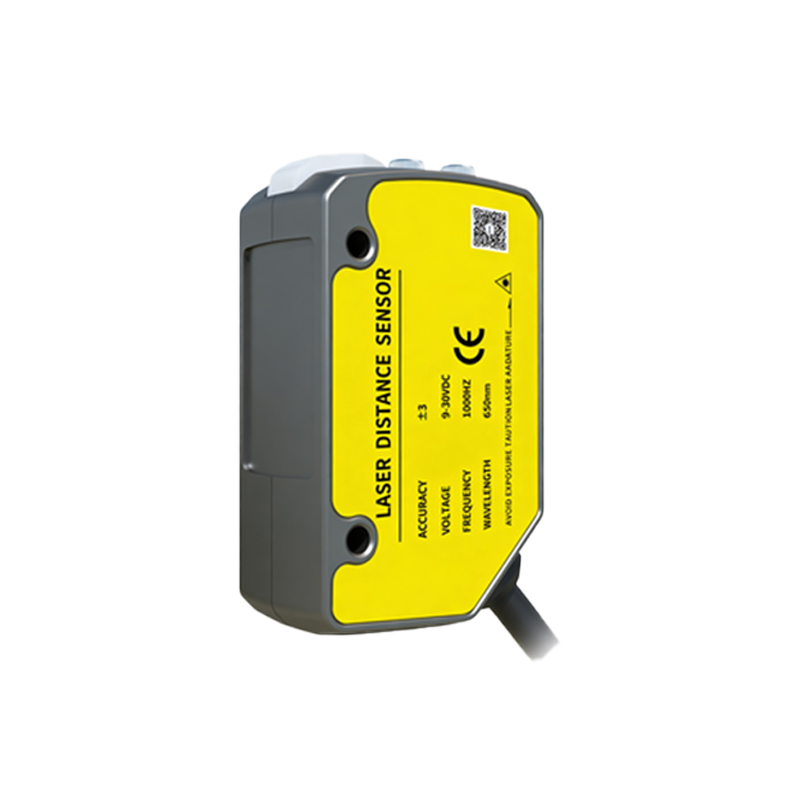
For ultra-precise positioning, laser-based photoelectric sensors offer narrow beam widths and high resolution. These sensors can detect objects as small as 0.1 mm at distances up to 50 meters. In industries like semiconductor manufacturing or medical device assembly, laser sensors enable micron-level alignment. They often feature digital outputs and can communicate with PLC systems for real-time feedback. Engineers must consider factors like ambient light interference and beam divergence, but the payoff is unmatched accuracy in high-value production environments.
Practical Considerations for Installation and Calibration
To maximize positioning accuracy, engineers should evaluate the sensor’s response time, environmental conditions (dust, moisture, temperature), and target material. Calibration involves setting the threshold to avoid false triggers from background noise. For example, in a warehouse automated guided vehicle (AGV) system, sensors must be tuned to distinguish between the floor and pallet edges. Periodic cleaning of lenses and reflectors is also critical, as contamination can degrade performance. Using shielded cables and proper grounding reduces electrical noise in harsh industrial settings.