Overview of Retro-Reflective Photoelectric Sensors
Retro-reflective photoelectric sensors are a critical component in industrial automation, designed to detect the presence or absence of objects without physical contact. Unlike through-beam sensors that require separate transmitter and receiver units, retro-reflective sensors integrate both components into a single housing, paired with a reflector. This design simplifies installation and reduces wiring, making it ideal for applications where space is limited or where alignment is challenging. The core principle relies on the emission of a light beam, typically infrared or visible red, which is reflected back to the receiver by a specialized retro-reflector. When an object interrupts the beam, the sensor triggers a response, such as a signal to a PLC or a relay.
Key Components and Their Functions
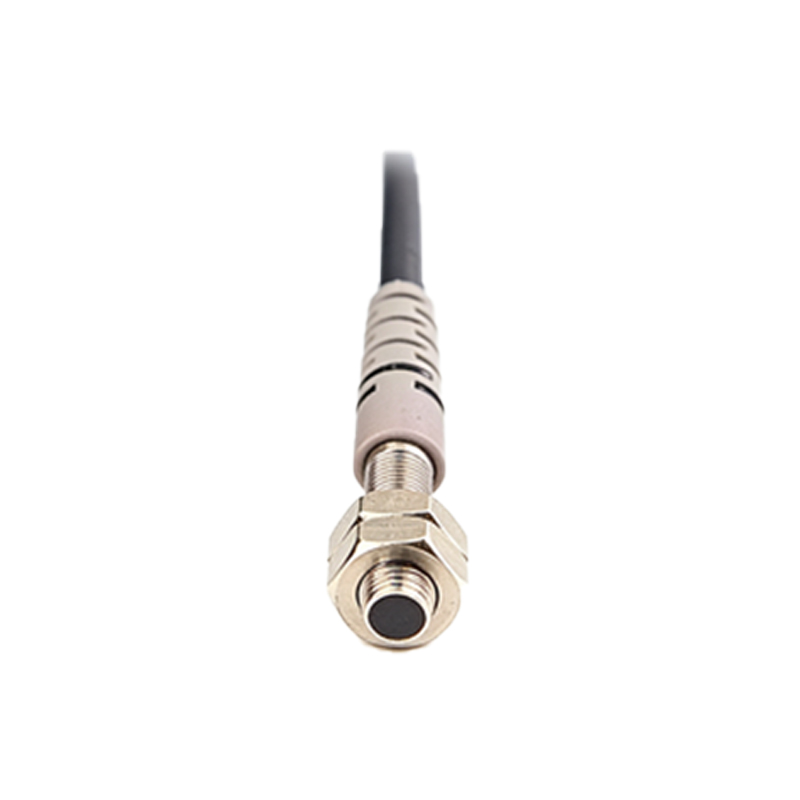
The sensor consists of three main elements: an emitter, a receiver, and a retro-reflector. The emitter, often an LED (Light Emitting Diode), generates a modulated light beam to minimize interference from ambient light. The receiver, typically a photodiode or phototransistor, detects the reflected light. The retro-reflector, usually made of corner-cube prisms or reflective tape, returns the light beam back to the source with minimal divergence. This retro-reflective property ensures that even if the sensor and reflector are slightly misaligned, a significant portion of the light is captured. Additionally, many sensors include a polarizing filter to distinguish between the sensor’s own light and reflections from shiny objects, enhancing detection reliability.
Working Principle: Light Transmission and Reflection
The operation begins with the emitter sending a pulsed light beam toward the reflector. This pulsing is crucial because it allows the receiver to filter out continuous ambient light, focusing only on the modulated signal. The retro-reflector, designed with optical efficiency, redirects the beam back to the receiver along the same path. In a clear-path condition, the receiver continuously detects this reflected light, maintaining a "no object" state. When an object, such as a package or conveyor belt item, enters the beam path, it blocks the light from reaching the reflector and, consequently, the receiver. The drop in received light intensity triggers the sensor’s output, indicating object presence. This binary detection is straightforward but highly effective for sensing opaque or translucent materials.
Modulation and Ambient Light Rejection
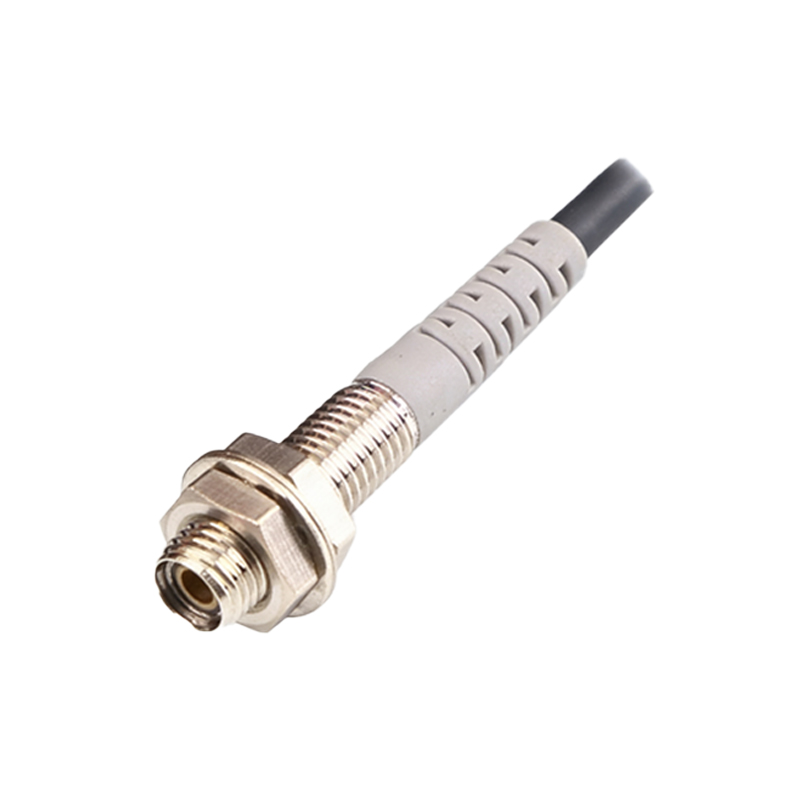
To ensure robust performance in industrial environments, retro-reflective sensors employ modulation techniques. The emitter’s light is turned on and off at a specific frequency (e.g., a few kilohertz), while the receiver is tuned to respond only to that frequency. This synchronization rejects background light from sources like sunlight, fluorescent lamps, or welding arcs. Advanced sensors also incorporate gain control, automatically adjusting sensitivity to compensate for reflector aging or dust accumulation. This self-adaptive feature maintains consistent detection over time, reducing false triggers and maintenance needs. For applications with high ambient light, such as outdoor sorting systems, this modulation is indispensable for reliable operation.
Polarized vs. Non-Polarized Retro-Reflective Sensors
A key variation in retro-reflective sensors is the use of polarization. Non-polarized sensors rely solely on light intensity, making them susceptible to false triggers from shiny or mirrored surfaces. For example, a glossy package might reflect the beam directly back to the receiver, mimicking the reflector. Polarized sensors solve this by incorporating a polarizing filter in the emitter and a corresponding analyzer in the receiver. The reflector rotates the polarization of the light, while a shiny surface does not. Thus, only light that has passed through the reflector and undergone polarization rotation is detected, eliminating interference from specular reflections. This technology is essential in industries like food and beverage packaging, where shiny foil or plastic is common.
Applications in Industrial Automation
Retro-reflective sensors are widely used in conveyor systems, packaging lines, and warehouse automation for object counting, positioning, and jamming detection. Their compact design and ease of alignment make them suitable for detecting items on fast-moving belts, such as boxes or bottles. In automotive manufacturing, they monitor component presence in assembly stations. Their ability to work with both opaque and translucent materials expands utility in quality control. For harsh environments, such as foundries or chemical plants, sensors with IP67 ratings and metal housings are available. The retro-reflective sensor’s balance of cost, simplicity, and reliability ensures its dominance in non-contact sensing applications across industries.