Introduction to Square Laser Photoelectric Sensors
Square laser photoelectric sensors are critical components in modern industrial automation systems, offering high-precision detection capabilities for a wide range of applications. Unlike traditional round sensors, their square housing design allows for easier mounting and integration into tight spaces, making them ideal for machinery with limited clearance. These sensors operate by emitting a focused laser beam and detecting changes in light intensity or interruption, enabling reliable object presence, distance, or position detection. Their solid-state construction ensures durability in harsh factory environments, including exposure to dust, vibration, and temperature fluctuations.
Working Principle and Key Features
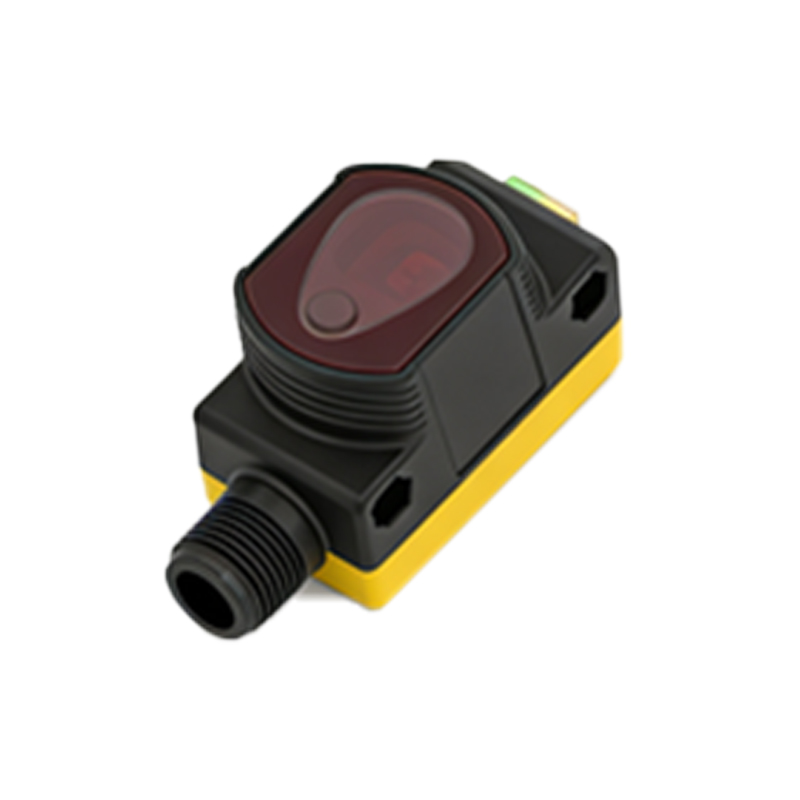
The core technology behind square laser photoelectric sensors relies on a laser diode that generates a coherent, narrow beam. This beam is typically in the visible red or infrared spectrum, with wavelengths around 650 nm or 905 nm. The sensor’s receiver, often a photodiode or phototransistor, measures the reflected or transmitted light. Key features include high-speed response times (down to microseconds), long detection ranges (up to several meters), and excellent immunity to ambient light interference. Many models incorporate background suppression technology, which allows accurate detection regardless of target color or surface finish. Additionally, square sensors often include built-in amplifiers and digital outputs (e.g., NPN, PNP, or IO-Link), simplifying integration with PLCs and control systems.
Types and Configurations
Square laser photoelectric sensors come in several configurations to suit different tasks. Through-beam sensors consist of a separate emitter and receiver, offering the longest range and highest reliability for detecting opaque objects. Retro-reflective sensors use a reflector to bounce the beam back, ideal for transparent or shiny targets. Diffuse sensors, which detect light reflected from the target itself, are best for short-range applications where object shape or color varies. Some advanced models offer adjustable detection windows, allowing users to set specific distance thresholds. For extreme precision, polarized retro-reflective sensors reduce false triggers from reflective backgrounds. The square form factor often supports multiple mounting orientations, including side-view or front-view options.
Installation and Calibration Best Practices
Proper installation is critical for optimal sensor performance. Begin by selecting a mounting location that avoids excessive vibration and direct sunlight. Use the sensor’s alignment indicators or laser sighting tools to ensure the beam aligns with the reflector or receiver. For through-beam systems, maintain a clear line-of-sight without obstructions. Calibration involves setting the sensitivity threshold using the sensor’s potentiometer or digital interface. In noisy environments, it is advisable to enable filter settings to suppress transient pulses. Grounding and shielding cables are essential to prevent electromagnetic interference (EMI). Always test the sensor under real operating conditions, including varying target speeds and ambient lighting, to confirm reliable detection.
Industrial Applications and Case Studies
Square laser photoelectric sensors excel in numerous industries. In automotive manufacturing, they detect small parts on conveyor belts, such as bolts or clips, with high accuracy. In packaging, they verify label presence or seal integrity on fast-moving lines. In semiconductor fabrication, these sensors precisely position wafers without physical contact, preventing contamination. A notable case study involves a beverage bottling plant that replaced ultrasonic sensors with square laser units to detect clear glass bottles at high speed, reducing false triggers by 40%. Another example is in warehouse automation, where sensors guide automated guided vehicles (AGVs) for accurate docking and obstacle avoidance.
Advantages and Limitations
The primary advantage of square laser sensors is their precise detection capability, even with small or transparent objects. They offer longer ranges than LED-based sensors and are less affected by ambient light. Their compact square design simplifies installation in modular systems. However, limitations include higher cost compared to standard photoelectric sensors and sensitivity to heavy dust or fog, which can scatter the laser beam. For safety-critical applications, they must be paired with redundant systems to meet ISO 13849 standards. Additionally, laser sensors require careful handling to avoid eye damage, and Class 1 lasers are recommended for general industrial use.
Future Trends and Maintenance Tips
The evolution of square laser photoelectric sensors is driven by Industry 4.0 demands. Emerging trends include integration with IoT platforms for real-time diagnostics and predictive maintenance. Sensors with built-in self-diagnostic functions can alert operators to lens contamination or alignment drift. For maintenance, regularly clean the lens with a soft, lint-free cloth and check cable connections for wear. Calibration should be verified quarterly, especially in high-temperature environments where laser output may drift. As laser technology advances, we expect smaller, lower-power sensors with enhanced communication protocols like EtherCAT or PROFINET.