Introduction to Slot-Type Photoelectric Sensors
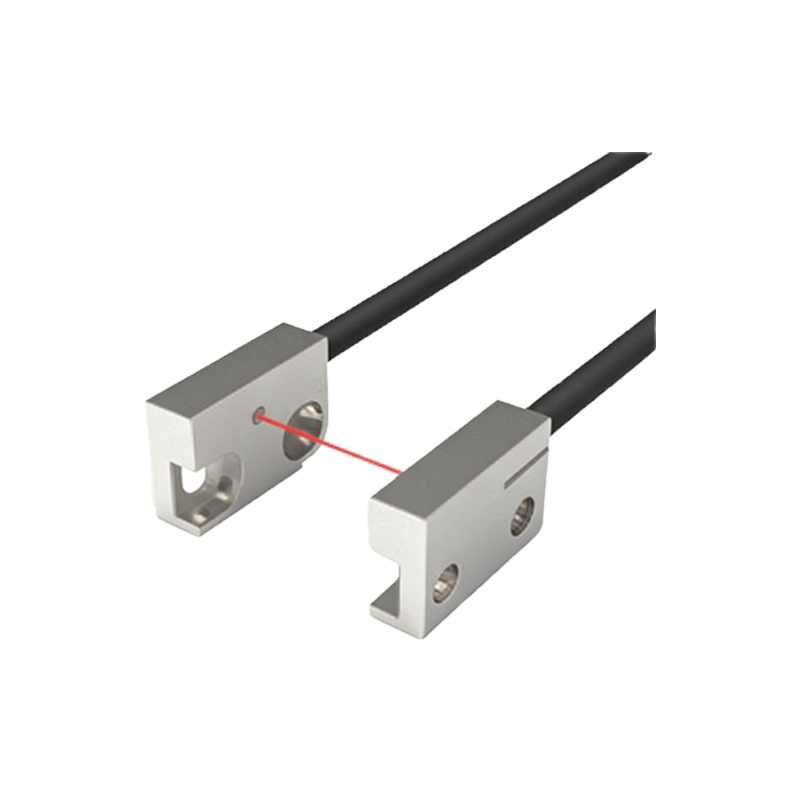
Slot-type photoelectric sensors, also known as fork sensors, are essential components in industrial automation for object detection, counting, and positioning. Their output characteristics directly influence system reliability and performance. These sensors consist of an emitter and receiver housed in a single fork-shaped body, with a detection gap where objects pass through. The output is typically digital, indicating the presence or absence of an object based on light interruption or reflection.
Key Output Types: NPN vs. PNP
The most common output configurations are NPN (sinking) and PNP (sourcing) transistors. In NPN outputs, the sensor switches the load to ground when activated, making it suitable for systems with common positive supply. PNP outputs switch the load to positive voltage, ideal for controllers with sinking inputs, such as many PLCs. Selection depends on the input requirements of the connected device to ensure signal compatibility and avoid wiring errors.
Output Signal Characteristics: Light-ON and Dark-ON Modes
Output states are defined by operating modes. In Light-ON mode, the output activates when the light beam is uninterrupted (object absent in through-beam or retro-reflective types). In Dark-ON mode, the output activates when an object blocks the beam. Slot-type sensors often offer both modes via wiring configurations or dip switches, providing flexibility for diverse applications, such as detecting clear objects or high-speed counting.
Response Time and Frequency Performance
Response time is critical for high-speed automation. Typical slot-type sensors have response times ranging from 0.1 ms to 1 ms, enabling detection frequencies up to several kilohertz. Factors affecting response include the optical design and circuit filtering. Fast response is essential for applications like bottle counting or label detection. However, slower response may be acceptable for low-speed conveyors where noise immunity is prioritized.
Load Driving Capability and Protection Features
Output circuits are designed to drive loads such as relays, solenoids, or PLC inputs. Maximum load current typically ranges from 50 mA to 200 mA at supply voltages of 10-30 VDC. Most sensors include short-circuit protection, reverse polarity protection, and overcurrent limiting to prevent damage. Engineers must verify that the sensor output can handle the inrush and steady-state current of the connected load, especially with inductive loads like relays.
Noise Immunity and Output Stability
In industrial environments, electromagnetic interference (EMI) and power line noise can cause false triggering. Slot-type sensors often incorporate shielded cables, internal filtering capacitors, and hysteresis in the output stage to reject noise. Output stability is enhanced by using the sensor’s built-in timing functions or by selecting sensors with superior immunity. Proper grounding and cable routing further ensure reliable output signals.
Practical Considerations for Integration
When integrating slot-type sensors, check the output type (NPN/PNP), operating mode (Light-ON/Dark-ON), and response time against the application requirements. Use pull-up or pull-down resistors if needed to match logic levels. For longer cable runs, consider voltage drop and signal degradation. Ensure the sensor’s output is compatible with the controller’s input impedance, and test with actual loads to verify functionality.
Conclusion
Mastering the output characteristics of slot-type photoelectric sensors enables engineers to design robust detection systems. By understanding output configurations, response times, load capabilities, and noise immunity, one can optimize sensor selection for specific industrial tasks, enhancing automation efficiency and reliability.