Introduction to Thin-Reflective Photoelectric Sensors
Thin-reflective photoelectric sensors are a specialized type of optical sensor designed for precise object detection in confined spaces. Unlike traditional through-beam or diffuse sensors, these devices utilize a retroreflective principle with a slim profile, making them ideal for applications where space is limited, such as in packaging machinery, conveyor systems, and robotic assembly lines. They emit a focused light beam, typically infrared or visible red, which is reflected back by a reflector placed opposite the sensor. When an object interrupts this beam, the sensor triggers an output signal, enabling reliable detection regardless of the object’s color or surface finish.
Key Features and Technical Specifications
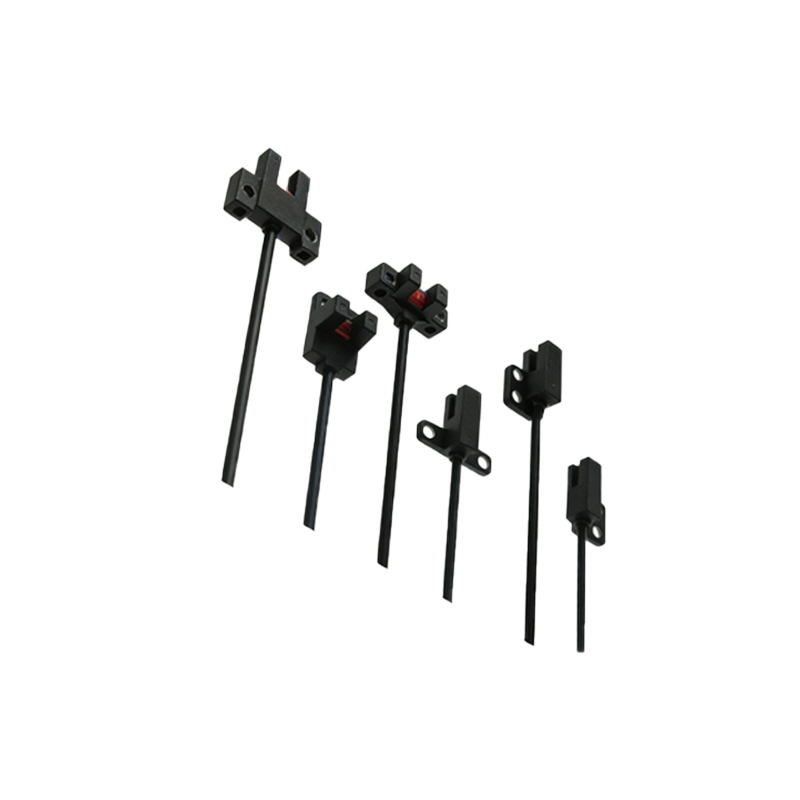
These sensors boast several critical features tailored for industrial environments. The thin housing, often less than 10 mm in thickness, allows for mounting in tight gaps or along edges. They operate with a sensing range from 0.1 to 5 meters, depending on the model and reflector size. The response time is typically fast, ranging from 0.5 to 2 milliseconds, ensuring high-speed detection. Additionally, they offer immunity to ambient light interference through modulated light techniques, and some models include IP67 or IP69K ratings for dust and water resistance. Output options include NPN, PNP, or analog interfaces, supporting integration with PLCs and other control systems.
Operating Principles and Technology
The core technology relies on the retroreflective principle: the sensor emits a light beam that travels to a reflector, which returns the beam to a receiver within the same unit. The sensor uses a polarized filter to prevent false triggering from shiny surfaces, ensuring only the reflector’s return signal is accepted. This design reduces installation complexity compared to through-beam sensors, as only one side of the detection path requires wiring. Advanced models incorporate background suppression or teach-in functions for dynamic adjustments in varying conditions.
Applications in Industrial Settings
Thin-reflective sensors excel in material handling, where they detect small parts on conveyor belts or monitor the presence of product labels. In automotive assembly, they verify component alignment in tight engine bays. They are also common in electronics manufacturing for detecting PCBs in pick-and-place machines. The slim design enables integration into actuator systems, robotics, and automated guided vehicles (AGVs) for collision avoidance. Their reliability in dusty or humid environments makes them suitable for food processing and packaging lines.
Installation and Calibration Best Practices
Proper installation ensures optimal performance. Mount the sensor and reflector on stable surfaces with their optical axes aligned within ±2 degrees. The reflector should be clean and non-obstructed. Calibration involves setting the sensing threshold using the sensitivity adjustment potentiometer or via a digital teach-in button. For long-range applications, ensure the beam is not scattered by nearby reflective surfaces. Test the system with actual target objects to verify detection consistency, and periodically clean the lens to maintain accuracy.
Troubleshooting Common Issues
Common challenges include false triggers due to ambient light or reflective backgrounds, which can be mitigated by using polarized versions. Reduced sensing range may result from dust accumulation on the lens or reflector misalignment. If the sensor fails to detect transparent objects, select models with specialized optics for glass or plastic. Electrical noise in the output signal may require shielded cables or ferrite cores. Always consult the sensor’s datasheet for voltage and current limits to avoid damage.
Advantages Over Other Sensor Types
Compared to through-beam sensors, thin-reflective types require only one side of wiring, reducing installation cost. They outperform diffuse sensors in detecting transparent or low-reflective objects. Their compact size allows for placement in restricted spaces where standard sensors cannot fit. Additionally, they offer longer sensing ranges than many proximity sensors, with less sensitivity to target color or material. For applications demanding high precision in small footprints, these sensors provide a balanced solution.
Future Trends and Innovations
Emerging developments include integration with IoT for real-time diagnostics, using IO-Link communication for parameter adjustments. Miniaturization continues, with sensors as thin as 3 mm now available. Smart features like auto-calibration and environmental compensation are being added to handle extreme conditions. Laser-based variants offer even higher precision for micro-detection in semiconductor manufacturing. These advancements will expand their role in Industry 4.0 and smart factories.