Proximity sensors are ubiquitous in modern technology, silently performing critical tasks in industries ranging from manufacturing and automotive to consumer electronics and security systems. Unlike traditional mechanical switches, these non-contact devices detect the presence or absence of an object within a specified range without any physical touch. Understanding how they function and, more importantly, how to accurately measure their performance is essential for engineers, technicians, and hobbyists alike. This article delves into the operational principles of common proximity sensor types and provides a practical guide on how to measure their key parameters.
At their core, proximity sensors work by emitting a field or beam of electromagnetic radiation or by using changes in a local field. The sensor then monitors for changes in the return signal or field strength caused by the approach of a target object. The primary types include:
1. Inductive Proximity Sensors: These are used for detecting metallic objects, primarily ferrous metals like steel and iron. The sensor contains a coil that generates a high-frequency oscillating electromagnetic field. When a metal object enters this field, eddy currents are induced on the object's surface. This causes a load on the oscillator, which is detected by the sensor's circuitry, triggering an output signal. The sensing distance depends on the type of metal, its size, and shape.
2. Capacitive Proximity Sensors: These can detect both metallic and non-metallic materials, such as liquids, plastics, wood, and granules. They function by generating an electrostatic field. Any object that enters this field alters the capacitance of the sensor's circuit. The sensor detects this change in capacitance and switches its output state. They are ideal for level detection of materials inside non-metallic containers.
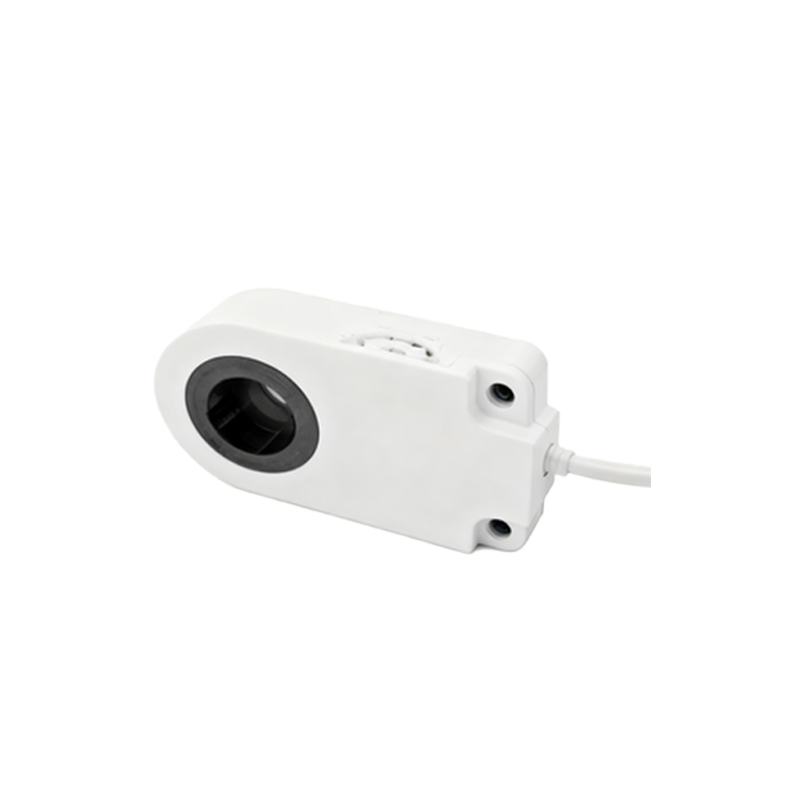
3. Photoelectric Sensors: These use light, typically infrared, visible red, or laser light, to detect objects. An emitter sends out a light beam. A receiver opposite the emitter (in a through-beam setup) detects it. An object interrupting this beam triggers the output. In a retro-reflective setup, the light bounces off a reflector back to the receiver. Diffuse sensors rely on light reflecting directly off the target object itself. They offer long sensing ranges and can detect virtually any material.
4. Ultrasonic Sensors: These measure distance by emitting high-frequency sound waves (ultrasound) and calculating the time it takes for the echo to return. They are excellent for detecting objects of various materials, including transparent ones, and for measuring precise distances or levels in challenging environments with dust or vapor.
How to Measure Proximity Sensor Performance
Measuring a proximity sensor involves verifying its specified operational characteristics. Key measurements include:
Sensing Distance (Sn): This is the nominal operating distance at which the sensor is guaranteed to detect a standard target under specified conditions. To measure it, you need a precisely controlled test setup.
1. Use the standard target specified by the manufacturer (e.g., a square of mild steel of defined thickness for inductive sensors).
2. Mount the sensor and the target on a calibrated linear motion stage.
3. Slowly move the target toward the sensor's active face along the sensor's axis.
4. The point at which the sensor's output consistently switches (e.g., from OFF to ON) is the operating point. Record this distance.
5. Slowly move the target away from the sensor. The point where the output switches back is the release point.
6. The difference between the operating point and the release point is the hysteresis. This prevents output chatter when a target is at the edge of the detection range.
Repeatability: This is the sensor's ability to consistently trigger at the same distance. Perform the "operating point" measurement at least 10 times under identical conditions (same target, same approach speed, same temperature). The maximum variation in the measured operating points is the repeatability error, often expressed as a percentage of the sensing distance.
Response Time: This measures how quickly the sensor reacts to a target appearing or disappearing. It is typically broken into two values:
ON-Delay: The time from when a target enters the sensing field to when the output signal fully activates.
OFF-Delay: The time from when a target leaves the sensing field to when the output signal deactivates.
To measure this, use an oscilloscope. Connect the sensor's output to one channel. Use a fast-moving target (often controlled by a solenoid or pneumatic actuator) to abruptly enter and exit the sensing zone. Trigger the oscilloscope on the target's movement (using a separate limit switch or signal) and observe the delay on the sensor's output waveform.
Temperature Drift: A sensor's sensing distance can change with ambient temperature.