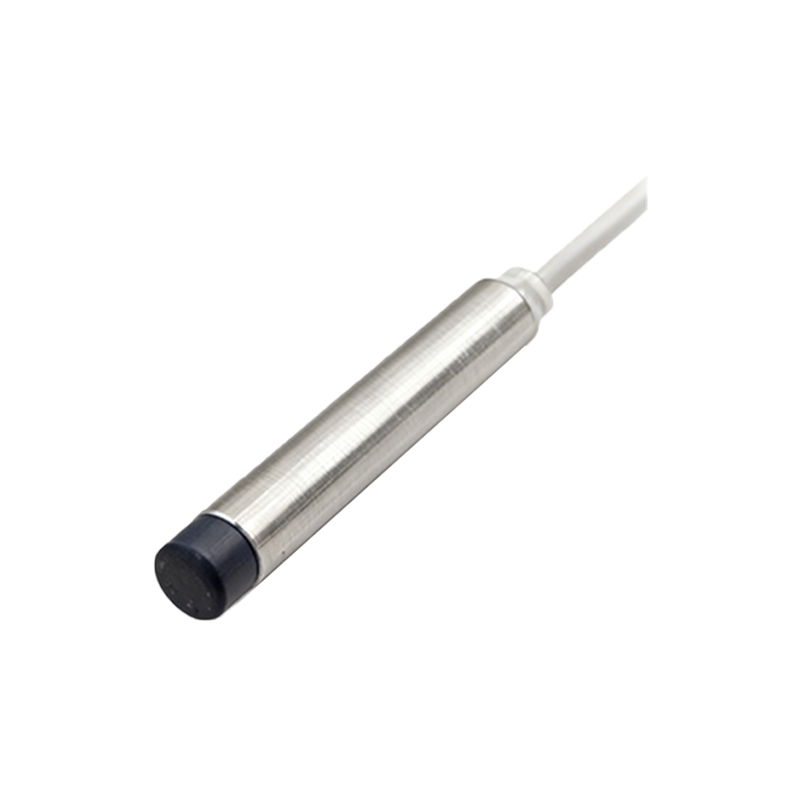
In the realm of industrial automation and smart technology, the 220 proximity sensor stands as a fundamental component, enabling machines to "sense" the presence or absence of objects without physical contact. This non-contact detection capability is crucial for enhancing efficiency, safety, and reliability across countless applications. Unlike mechanical limit switches, these sensors operate silently and withstand harsh environments, making them indispensable in modern manufacturing and beyond.
At its core, a 220 proximity sensor is an electronic device designed to detect metallic objects, typically within a specified range, often up to several millimeters. The "220" designation commonly refers to models operating on a 220V AC power supply, making them suitable for direct integration into industrial control circuits without the need for additional power converters. The most prevalent type within this voltage category is the inductive proximity sensor. Its working principle is based on electromagnetic induction. The sensor generates a high-frequency oscillating electromagnetic field from its active face. When a metallic object enters this detection field, eddy currents are induced on the surface of the metal. This causes a change in the oscillation amplitude within the sensor's internal LC oscillator circuit. The sensor's circuitry monitors this change and triggers a solid-state output switch, signaling the presence of the object.
The key advantages of using a 220V AC inductive proximity sensor are significant. Their high voltage rating allows for robust performance in electrically noisy industrial environments and enables them to directly switch control relays or contactor coils, simplifying panel design. They exhibit exceptional longevity due to the absence of moving parts that wear out. Furthermore, they are capable of high-speed operation, detecting objects at rates far exceeding mechanical switches, which is vital for fast-paced production lines. Their sealed housings, often rated IP67 or higher, provide excellent resistance to dust, coolants, oils, and moisture.
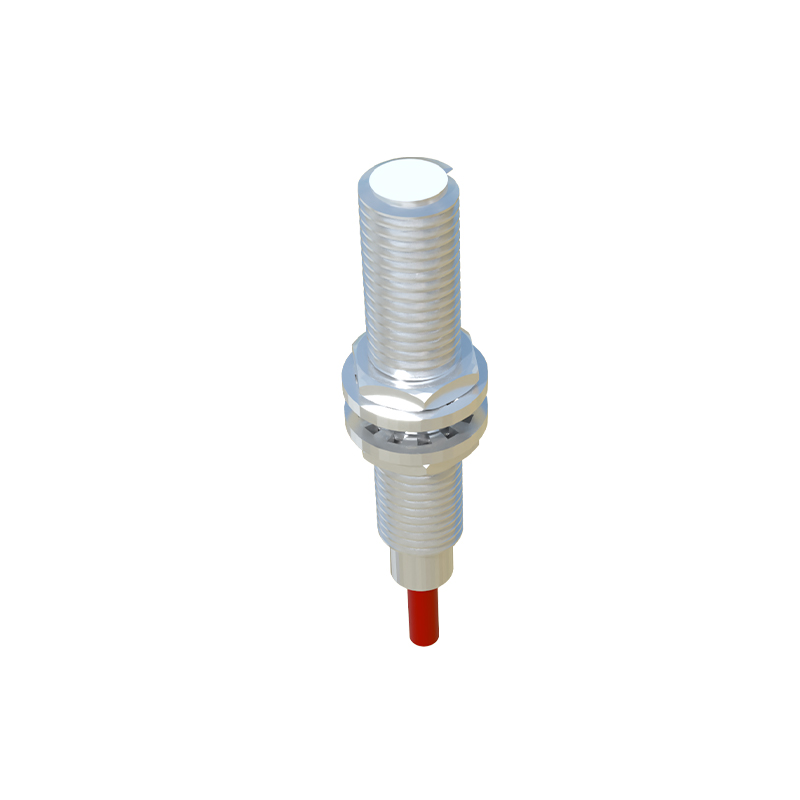
When selecting a 220 proximity sensor for an application, several critical parameters must be considered. The sensing range, or nominal range (Sn), is specified for a standard target (usually mild steel). It's important to note that different metals have different correction factors; for instance, the effective range for stainless steel or aluminum is reduced. The housing style is another crucial factor, with cylindrical (e.g., M12, M18, M30 threaded barrels) and rectangular shapes being most common, chosen based on mounting constraints. Output configuration is also vital: sensors can be NPN (sinking) or PNP (sourcing) for DC models, but 220V AC sensors typically provide a two-wire AC output. The output function, normally open (NO) or normally closed (NC), determines the switching logic in the control circuit.
The applications for 220V AC proximity sensors are vast and varied. In automotive manufacturing, they are used for part presence verification on assembly robots, end-of-travel detection on actuators, and counting components on conveyor lines. In the packaging industry, they detect metal components on machinery, control filling levels by sensing pistons, and ensure proper positioning of containers. Within material handling, these sensors monitor the position of metal pallets, control gate operations, and provide safety interlocks on automated guided vehicles (AGVs). They are also extensively used in machine tools for tool position detection, workpiece clamping confirmation, and spindle orientation.
Proper installation and maintenance are straightforward but essential for optimal performance. The sensor must be mounted securely to prevent vibration from affecting its operation. It is critical to maintain the recommended clearance around the sensing face, as adjacent metal structures (like the mounting bracket) can cause a permanent signal if too close, a phenomenon known as "side-metal influence." For flush-mountable sensors, this effect is minimized. Regular cleaning of the sensing face to remove debris or metallic dust buildup ensures consistent detection ranges. While these sensors are robust, it is important to ensure they are not subjected to voltage spikes beyond their specifications, which may necessitate the use of surge suppressors in some installations.
In conclusion, the 220 proximity sensor, particularly the inductive type, is a workhorse of industrial sensing. Its ability to provide reliable, non-contact detection of metallic objects in tough conditions directly contributes to increased automation, improved safety, and reduced downtime. Understanding its operating principles, key selection criteria, and application best practices allows engineers and technicians to effectively harness its capabilities, forming a critical link in the chain of modern automated systems. As industries continue to evolve towards greater connectivity and intelligence, the fundamental role of these robust sensors remains secure.