Overview of Infrared Photoelectric Sensors
Infrared photoelectric sensors are essential components in modern industrial automation systems, enabling non-contact detection of objects based on light reflection or interruption. These sensors utilize infrared light, which is invisible to the human eye, to reliably detect a wide range of materials, including metals, plastics, and transparent objects. The structure of an infrared photoelectric sensor is designed for robustness, accuracy, and longevity in harsh environments, such as factories with dust, vibration, and temperature fluctuations. Typically, a sensor comprises several key modules: an emitter, a receiver, a signal processing unit, and a housing. Understanding each part is critical for troubleshooting and optimizing performance.
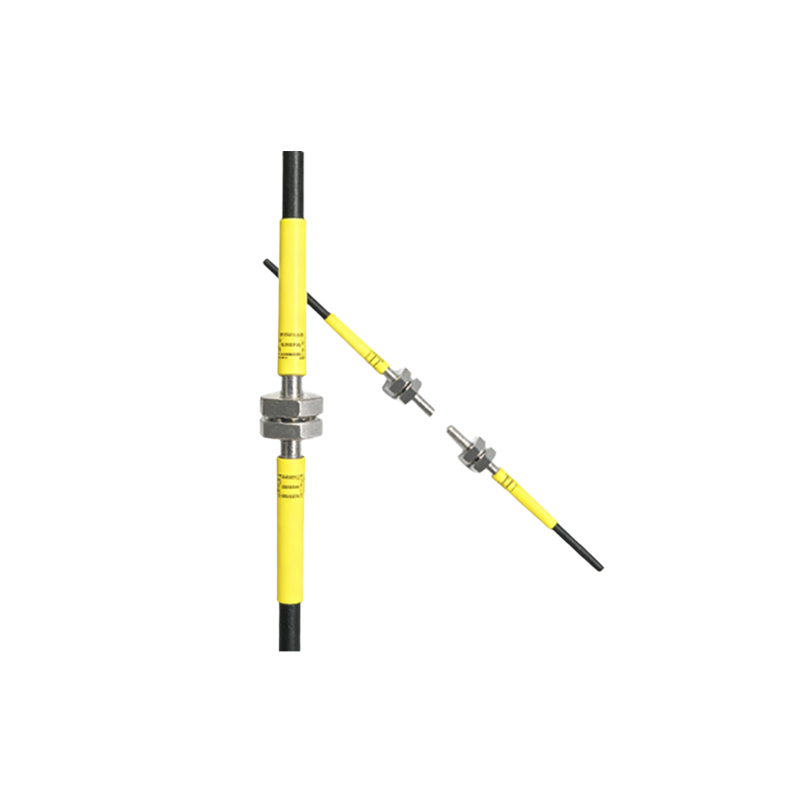
Emitter Module: Infrared Light Source and Optics
The emitter module is responsible for generating the infrared light beam. It consists of an infrared LED, which emits light at a specific wavelength, typically 850nm or 940nm, chosen for their efficiency and resistance to ambient light interference. The LED is often paired with a focusing lens or collimator to shape the light into a narrow, concentrated beam. This optical design ensures that the light reaches the target with minimal divergence, enhancing detection range and accuracy. In reflective sensors, the emitter may also include a built-in reflector to direct the beam at an angle. The entire emitter assembly is sealed within the housing to prevent contamination from dust or moisture, which can degrade optical performance.
Receiver Module: Photodetector and Signal Amplification
The receiver module captures the reflected or interrupted infrared light. It uses a photodiode or phototransistor as the primary sensing element, which converts light intensity into an electrical current. This current is extremely small and requires amplification, which is achieved through a high-gain operational amplifier circuit. The receiver also includes a band-pass filter tuned to the emitter's wavelength, which helps reject ambient light from sources like sunlight or incandescent bulbs. In through-beam sensors, the receiver is aligned directly opposite the emitter, while in diffuse sensors, it is housed alongside the emitter. The sensitivity of the receiver can be adjusted via a potentiometer to accommodate different object reflectivity and distances.
Signal Processing Unit: Logic and Output Interface
Once the receiver generates an electrical signal, it is fed into the signal processing unit. This unit typically includes a comparator circuit that compares the amplified signal against a threshold voltage. If the signal exceeds the threshold, the sensor triggers an output, indicating the presence of an object. The processing unit also incorporates hysteresis to prevent output oscillations near the detection edge. Output types vary, including NPN or PNP open-collector transistors, analog voltage signals, or digital interfaces like IO-Link. These outputs are protected against short circuits and reverse polarity, ensuring reliable integration with programmable logic controllers (PLCs) or other control systems.
Housing and Environmental Protection
The housing encloses all internal components and provides mechanical protection. Industrial-grade sensors often use metal housings, such as die-cast zinc or stainless steel, for high durability. Plastic housings, like polycarbonate, are common for lightweight applications. The housing design includes a front optical window made of glass or transparent polycarbonate, which is coated with an anti-reflective layer to maintain light transmission. For harsh environments, sensors are rated with IP67 or IP69K, ensuring resistance to water jets and dust ingress. Additionally, the housing may include mounting brackets, cable glands, or M12 connectors for easy installation in conveyor lines, robotic cells, or packaging systems.
Additional Features: Built-in Indicators and Calibration
Many modern infrared photoelectric sensors include visual indicators, such as a red or green LED, to show power status and output state. These indicators aid in quick setup and diagnostics. Some sensors also have a teach-in function, allowing users to calibrate the detection threshold by pressing a button or via a remote input. This is particularly useful for objects with varying surface properties. For example, an operator can teach the sensor to differentiate between a glossy and a matte surface. Calibration data is stored in non-volatile memory, preserving settings even after power loss. These features reduce downtime and simplify maintenance in production environments.