In the intricate dance of modern automation and smart systems, a silent, unseen class of devices works tirelessly to perceive the immediate physical world. These are mass proximity sensors, the fundamental components that detect the presence, absence, or position of an object without any physical contact. Their proliferation across industries is not merely a trend but a foundational shift, enabling smarter, safer, and more efficient interactions between machines and their environments.
At their core, proximity sensors operate on various physical principles. Inductive sensors generate an electromagnetic field to detect metallic objects, making them stalwarts in factory assembly lines and metal machining. Capacitive sensors, on the other hand, can detect both metallic and non-metallic materials—like plastic, wood, or liquid—by measuring changes in capacitance, finding critical roles in level detection and touch-sensitive interfaces. Ultrasonic sensors emit sound waves and measure their echo return time, excelling in distance measurement and object detection even in challenging environments with dust or vapor. Finally, photoelectric sensors use a beam of light, typically infrared, to sense an object's interruption or reflection of that beam, offering long-range detection capabilities.
The term "mass" in this context signifies two interconnected realities: the massive scale of deployment and the massive impact on production and design. These sensors are produced in vast quantities, benefiting from economies of scale that drive down costs and increase reliability. This affordability and robustness have unlocked applications far beyond heavy industry. Consider the smartphone in your pocket; it likely uses an array of miniature proximity sensors. One detects when the phone is held to your ear during a call, turning off the display to save power and prevent accidental touches. Another might enable gesture control or assist in augmented reality applications by gauging the phone's position relative to other objects.
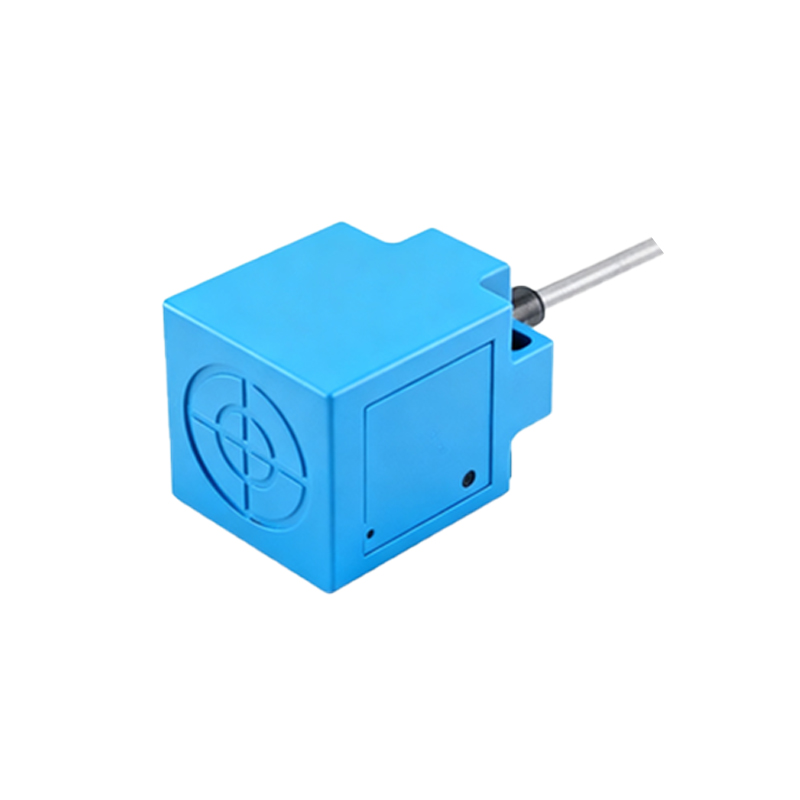
In the automotive sector, proximity sensors are ubiquitous guardians of safety and convenience. They form the backbone of parking assistance systems, emitting audible warnings as a vehicle nears an obstacle. Advanced driver-assistance systems (ADAS) rely on networks of these sensors to create a 360-degree awareness bubble around the vehicle, a critical step toward autonomous driving. Inside the cabin, they enable touchless control of infotainment systems, enhancing hygiene and reducing driver distraction.
The logistics and warehousing revolution, driven by automation, leans heavily on these sensors. Automated guided vehicles (AGVs) and autonomous mobile robots (AMRs) navigate bustling warehouse floors using proximity sensors to avoid collisions with infrastructure, inventory, and human workers. On conveyor systems, sensors ensure precise positioning of packages for sorting, labeling, and routing, streamlining the entire supply chain with relentless accuracy.
Industrial manufacturing remains the classic domain where proximity sensors ensure precision, safety, and uptime. On a high-speed packaging line, a sensor verifies the presence of a bottle cap before the label is applied. In robotic arms, sensors provide feedback on the position of a gripper, ensuring it picks up a component correctly. They guard hazardous areas on machine tools, triggering an emergency stop if a worker's hand ventures too close to a dangerous moving part. This non-contact nature is their supreme advantage, eliminating mechanical wear and tear and allowing for detection of fragile or sensitive objects.
Looking forward, the evolution of mass proximity sensors is intertwined with the growth of the Internet of Things (IoT) and Industry 4.0. Sensors are becoming smarter, equipped with onboard diagnostics, IO-Link communication for parameterization and data exchange, and the ability to function in increasingly harsh conditions. They are no longer simple binary switches but intelligent data points feeding into larger networks, contributing to predictive maintenance, energy efficiency, and detailed process analytics.
However, this widespread adoption is not without challenges. Engineers must carefully select the appropriate sensor type for each application, considering factors like the target material, required sensing range, environmental conditions (temperature, contaminants), and response speed. Electromagnetic interference, acoustic noise, or optical obstructions can also affect performance, necessitating proper installation and shielding.
In essence, mass proximity sensors are the unsung enablers of our automated world. They provide the essential sense of touch for machines, translating physical presence into actionable electronic signals. From enabling the convenience of a hands-free faucet to ensuring the safety of a multi-ton industrial press, their role is both fundamental and transformative. As technology continues to advance, these invisible guardians will become even more sophisticated, further blurring the line between the physical and digital realms and driving innovation across every sector they touch.