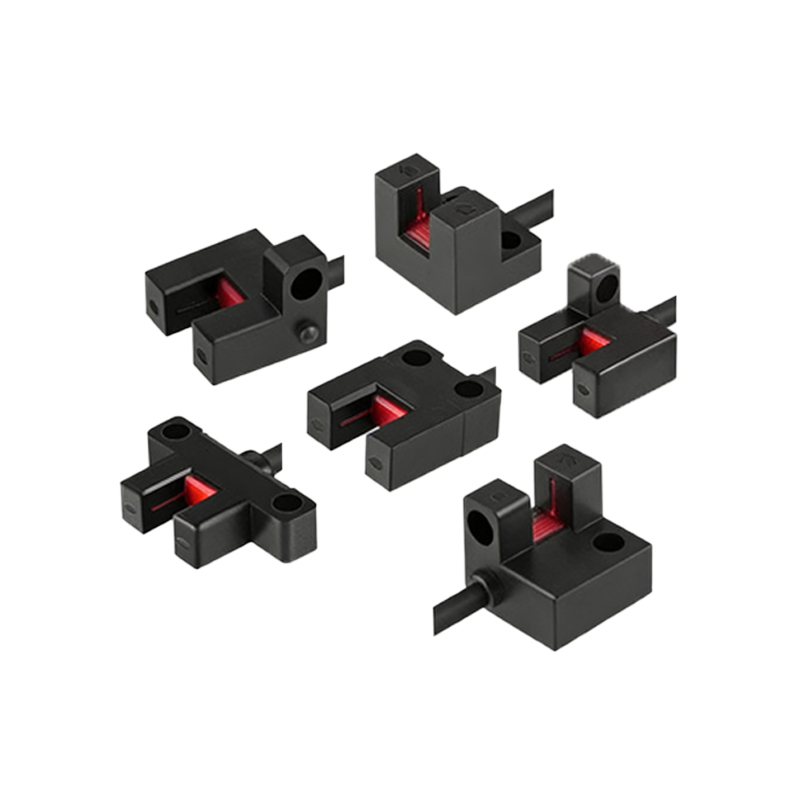
1. Through-Beam Sensing: Maximum Range and Reliability
In through-beam configurations, the transmitter and receiver are housed in separate units, aligned opposite each other. The light beam travels directly from the emitter to the detector. An object is detected when it breaks this uninterrupted beam. This form offers the longest sensing range, often exceeding 30 meters, and provides the highest level of immunity to contamination, dust, or misalignment in harsh industrial environments. It is ideal for counting parts on a conveyor belt, detecting small components in a clean room, or ensuring safe access in automated machinery. However, wiring both units adds complexity, and the physical separation may be impractical in confined spaces.
2. Retro-Reflective Sensing: Simplicity with a Single Housing
Retro-reflective sensors integrate both the emitter and receiver in one compact housing. The light beam is directed toward a reflector, which bounces it back to the receiver. Detection occurs when an object interrupts the path between the sensor and the reflector. This setup simplifies installation by requiring only one electrical connection and one mounting point on the machine frame. The sensing range typically reaches up to 10 meters, making it suitable for medium-distance applications like detecting pallets, boxes, or large opaque objects. Some models feature polarizing filters to avoid false triggers from shiny surfaces, enhancing reliability in packaging lines.
3. Diffuse Reflective Sensing: Direct Detection Without a Reflector
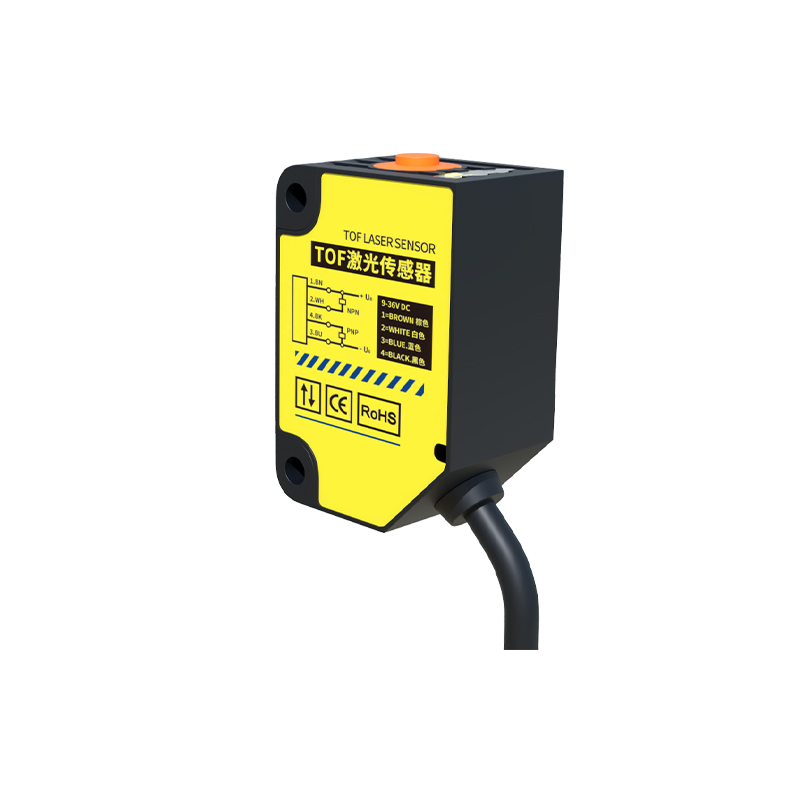
Diffuse reflective sensors, also known as proximity photoelectric sensors, use a single housing with both emitter and receiver. The emitted light reflects directly off the target object and returns to the receiver. No separate reflector or additional wiring is needed, simplifying setup in tight spaces. The sensing range is shorter, typically up to 1 meter, and depends on the object's color, surface texture, and reflectivity. This form excels in applications where objects vary in size or position, such as detecting glass bottles on a filling line or monitoring product presence in a packaging machine. Background suppression versions can ignore objects behind the target for precise detection.
4. Fiber Optic Sensing: Precision in Confined and Harsh Environments
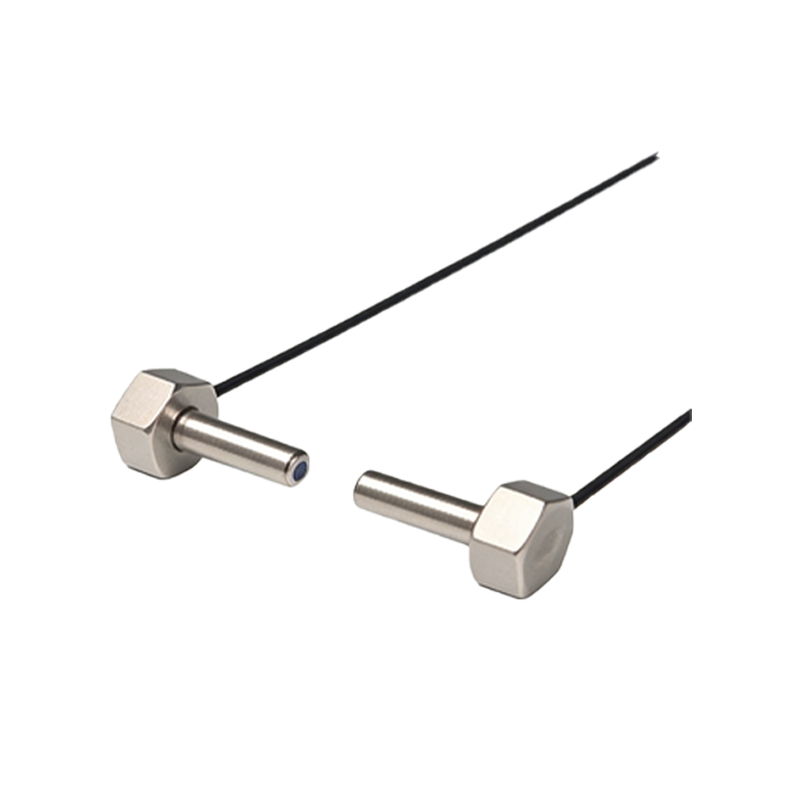
Fiber optic photoelectric sensors use flexible glass or plastic fibers to guide light to and from a remote sensing point. The electronics are housed in a separate amplifier unit, while the fiber tips can be positioned in areas as small as a few millimeters. This separation allows the electronics to be placed in a clean, stable location while the fibers endure extreme temperatures, high vibration, or corrosive atmospheres. The sensing forms (through-beam, retro-reflective, or diffuse) are achieved by the fiber arrangement. Common uses include detecting tiny parts in semiconductor manufacturing, monitoring liquid levels in tanks, or sensing components in robotic welding cells where space is at a premium.