Introduction to Reflective Photoelectric Sensors
Reflective photoelectric sensors are indispensable components in modern industrial automation. They operate by emitting a beam of light, typically from an LED, and detecting the light that is reflected back from a target object. This non-contact detection method is ideal for applications involving object presence, counting, positioning, and edge detection on production lines. Their versatility, reliability, and relatively simple setup make them a preferred choice over through-beam or diffuse sensors in scenarios where mounting a separate receiver is impractical. The market offers a wide array of models, varying in sensing range, response time, light source (red, infrared, laser), and housing design. Selecting the right sensor is critical for ensuring system efficiency and minimizing downtime.
Key Performance Metrics for Evaluation
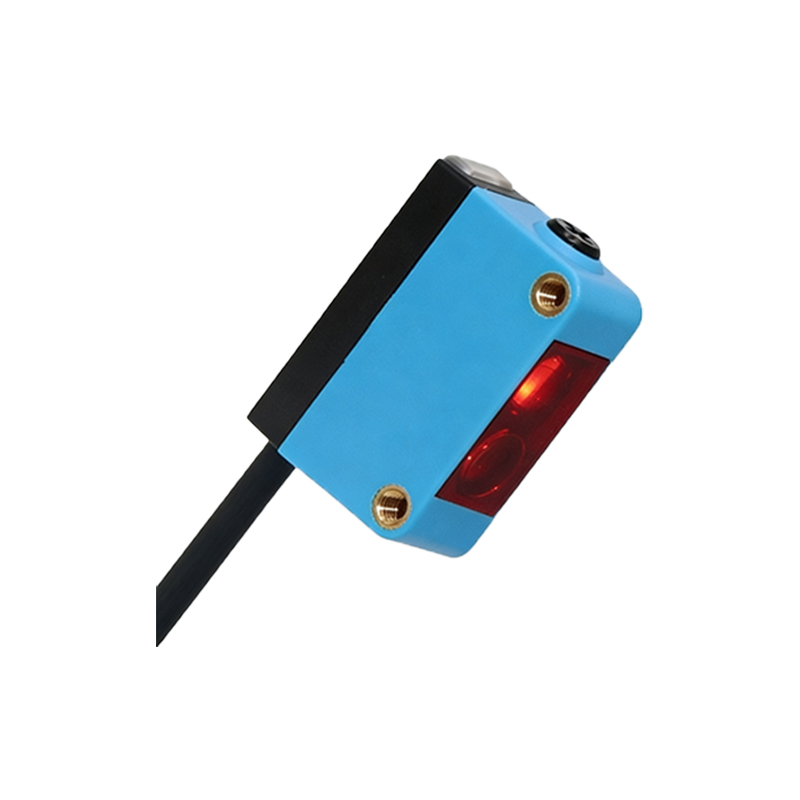
When ranking reflective photoelectric sensors, several technical parameters must be considered. Sensing distance is paramount; standard models may detect up to 1-2 meters, while specialized laser models can achieve several meters. Response time, measured in microseconds, determines how fast the sensor can detect a passing object, crucial for high-speed packaging or sorting. Environmental robustness is another key factor, including IP (Ingress Protection) ratings for dust and water resistance, temperature tolerance, and resistance to ambient light interference. Finally, features like teach-in functionality for easy setup, adjustable sensitivity, and IO-Link compatibility for smart factory integration add significant value and differentiate premium models from basic ones.
Top 1: Banner Engineering Q4X Series
Banner Engineering consistently ranks at the top for photoelectric sensors, and their Q4X Series exemplifies why. This laser-based reflective sensor offers an exceptional sensing range up to 2 meters with a highly visible red laser dot for precise alignment. Its patented "Clean Beam" technology allows it to ignore dust, dirt, and other contaminants on the lens, drastically reducing maintenance needs and false triggers. The housing is rated IP69K, making it suitable for harsh washdown environments in food and beverage or pharmaceutical industries. With a fast response time and reliable performance, the Q4X is a benchmark for demanding applications where reliability cannot be compromised.
Top 2: Omron E3Z-L Series
Omron's E3Z-L Series is a global standard for general-purpose reflective sensing, renowned for its balance of performance, durability, and cost-effectiveness. These sensors feature a robust metal housing and offer a sensing distance of up to 1 meter. A key advantage is their stable detection, achieved through a modulated LED light source that minimizes interference from ambient light. The series includes both standard and background suppression (BGS) models, the latter capable of detecting objects at a fixed distance regardless of color or reflectivity. Their compact size, easy wiring, and proven track record in countless factories make them a go-to choice for OEMs and system integrators.
Top 3: Sick WTT Series
Sick AG brings high-precision engineering to the table with its WTT Series of photoelectric sensors. These sensors are designed for tasks requiring extreme accuracy, such as detecting small parts or precise edge guidance. They utilize a focused, high-intensity light spot for reliable detection of even low-reflective or shiny objects. The housing design is particularly robust, with high IP67 ratings ensuring longevity in challenging industrial environments. Many models in the WTT series come with advanced diagnostics and IO-Link communication, providing valuable data on sensor health and process parameters, aligning perfectly with Industry 4.0 initiatives for predictive maintenance.
Top 4: Keyence LR-X Series
Keyence is synonymous with high-performance, innovative automation sensors, and the LR-X Series is a prime example. These advanced reflective sensors push the boundaries with ultra-long sensing ranges—some models reaching up to 5 meters. They incorporate sophisticated algorithms for "hyper-stable detection," effectively canceling out environmental noise from vibration or target surface variations. The user interface is exceptionally user-friendly, often featuring a digital display and one-touch setup. While positioned at a premium price point, the LR-X Series delivers unparalleled performance in specialized applications like large material handling or logistics where standard sensors fall short.
Top 5: Allen-Bradley 42JR RightSight Series
For facilities deeply integrated into the Rockwell Automation ecosystem, the Allen-Bradley 42JR RightSight Series offers seamless compatibility and reliable performance. These sensors are designed for easy integration with Allen-Bradley controllers and networks. They provide a solid sensing range and feature a unique, intuitive alignment system with a visible beam spot and a green ring indicator for clear status feedback, simplifying installation and troubleshooting. Built to withstand industrial electrical noise and physical stress, they are a trusted component in automotive, packaging, and other heavy industries where system-wide compatibility and support are critical factors.
Selection Guide and Future Trends
Choosing the right sensor from this ranking depends on your specific application. For harsh environments, prioritize IP69K ratings (Banner Q4X). For cost-sensitive, high-volume applications, the Omron E3Z-L is ideal. For precision and smart features, consider Sick or Keyence. For Rockwell-centric plants, Allen-Bradley simplifies integration. The future of reflective photoelectric sensors is leaning towards smarter, more connected devices. Expect increased integration of IO-Link for detailed parameterization and data exchange, enhanced diagnostics, and more robust designs for collaborative robot (cobot) workspaces and increasingly digitalized production floors.