The Foundation: Discovery of the Photoelectric Effect
The story of the photoelectric sensor begins not with a single inventor, but with a fundamental scientific discovery. In 1887, the German physicist Heinrich Hertz made a crucial observation while experimenting with radio waves. He noticed that ultraviolet light shining on metal electrodes facilitated the creation of sparks. This phenomenon, where light causes the emission of electrons from a material, was named the photoelectric effect. While Hertz documented the effect, he did not provide a theoretical explanation for it. His work, however, laid the essential experimental groundwork, proving that light could directly influence electrical properties, a concept that would become the core principle behind all photoelectric sensing technology.
The Theoretical Breakthrough: Einstein's Nobel-Winning Insight
For nearly two decades, the photoelectric effect remained a puzzling anomaly that classical physics could not adequately explain. The pivotal theoretical leap came from Albert Einstein in 1905, in what is often called his "miracle year." Einstein proposed that light itself is quantized, consisting of discrete packets of energy called photons. He theorized that a single photon could transfer all its energy to a single electron in a metal. If the photon's energy exceeded a certain threshold (the material's work function), the electron would be ejected. This elegant model perfectly explained the experimental observations, such as why the effect was instantaneous and why the energy of ejected electrons depended on the light's frequency, not its intensity. For this revolutionary explanation, not for his theory of relativity, Einstein was awarded the Nobel Prize in Physics in 1921. Einstein did not invent a device, but his theory provided the essential blueprint that made practical photoelectric devices conceivable.
From Theory to Device: Early Photoelectric Cells
Following these theoretical foundations, inventors began creating functional devices. One of the earliest practical photoelectric cells was developed in the early 20th century. A significant advancement came with the work of scientists like Elster and Geitel, who developed improved photocells using alkali metals, which were more sensitive to light. These early photocells, often called phototubes or vacuum tubes, contained a cathode made of a photosensitive material and an anode within a vacuum. When light struck the cathode, emitted electrons (photoelectrons) would flow to the anode, generating a small electric current proportional to the light intensity. These devices found initial applications in scientific instruments, light meters for photography, and early sound-on-film motion picture systems, where they converted variations in light on the film strip into audio signals.
The Semiconductor Revolution: The Birth of the Modern Phototransistor
The invention of the transistor in 1947 at Bell Labs marked a new era for all electronics, including photoelectric sensing. The phototransistor, a key component in modern sensors, was a direct offspring of this revolution. While John Northrup Shive is often credited with demonstrating a light-sensitive transistor at Bell Labs in 1948, the development was a collective effort building upon the groundbreaking work of William Shockley, John Bardeen, and Walter Brattain. A phototransistor is essentially a bipolar transistor with a light-sensitive base region. Light photons act on the base, generating electron-hole pairs that control a much larger current between the collector and emitter. This provides inherent amplification, making phototransistors far more sensitive and robust than earlier phototubes. Their small size, low cost, and compatibility with emerging solid-state electronics paved the way for widespread industrial adoption.
Integration and Proliferation: The Photoelectric Sensor as an Industrial Component
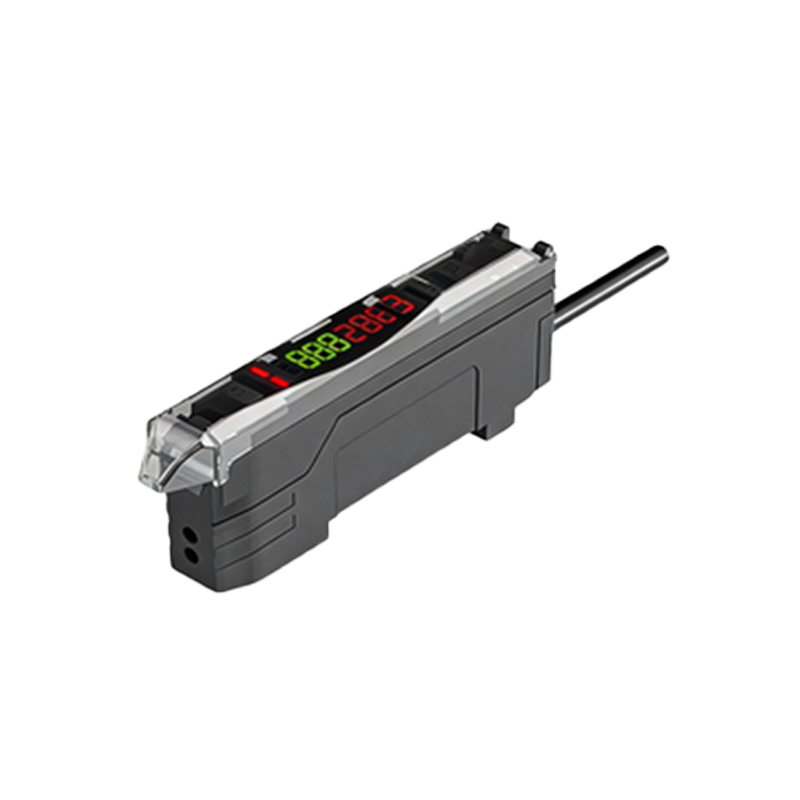
The modern, self-contained photoelectric sensor—a device integrating a light source (initially incandescent, later LED), a photodetector (phototransistor, photodiode), and signal processing circuitry into a single housing—was developed by multiple electronics and automation companies throughout the 1960s and 1970s. While no single individual is named as the sole inventor, this period saw rapid innovation driven by industrial automation needs. Companies like Siemens, Allen-Bradley, Omron, and Keyence played major roles in refining the technology. The introduction of the light-emitting diode (LED) as a reliable, long-lasting light source was a critical milestone. Engineers developed the three main sensing modes: through-beam, retro-reflective, and diffuse reflective. These compact, reliable sensors revolutionized factory automation by enabling non-contact detection of objects for counting, positioning, inspection, and safety applications, becoming ubiquitous on assembly lines worldwide.
Conclusion: A Legacy of Collaborative Innovation
Therefore, the photoelectric sensor does not have a single inventor. It is the product of a century of cumulative scientific and engineering progress. Its story spans from Heinrich Hertz's initial observation and Albert Einstein's theoretical genius, through the early pioneers of vacuum tube technology, to the semiconductor scientists at Bell Labs, and finally to the industrial automation engineers who packaged the technology into the versatile, reliable sensors used globally today. It stands as a prime example of how fundamental scientific research, theoretical insight, and practical engineering converge to create transformative technologies that drive modern industry.