Introduction to Photoelectric Sensor Positioning
Photoelectric sensors are indispensable components in modern industrial automation, providing non-contact, high-precision detection and positioning capabilities. These devices operate by emitting a beam of light, typically infrared, visible red, or laser, and detecting changes in the received light signal caused by the presence, absence, or specific characteristics of a target object. The fundamental principle allows for reliable object detection over various distances and in challenging environmental conditions. For positioning applications, the accuracy, response speed, and consistency of photoelectric sensors make them superior to mechanical limit switches or proximity sensors in many scenarios. They form the backbone of automated systems that require precise object location for subsequent operations like assembly, sorting, packaging, and robotic guidance.
Principle of Operation for Positioning
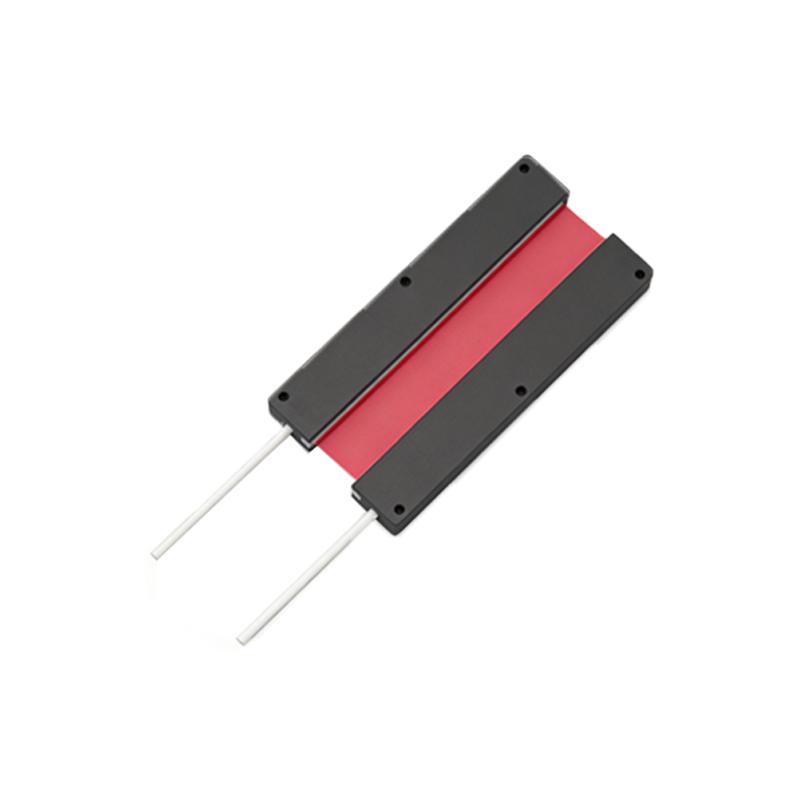
The core functionality for positioning relies on the sensor's ability to precisely determine when a target interrupts or reflects its light beam. Three primary sensing modes are employed: through-beam, retro-reflective, and diffuse-reflective. Through-beam sensors, with separate emitter and receiver units, offer the longest sensing ranges and highest reliability for detecting the exact point of beam interruption. Retro-reflective types use a single unit and a reflector, detecting when an object blocks the beam's path to and from the reflector. Diffuse-reflective sensors detect light reflected directly off the target itself, making them ideal for sensing objects at a specific distance. Advanced versions, like background suppression and convergent beam sensors, enhance positioning accuracy by defining a very precise sensing field, ignoring objects beyond a set distance.
Case Study 1: High-Speed Bottle Cap Alignment on a Filling Line
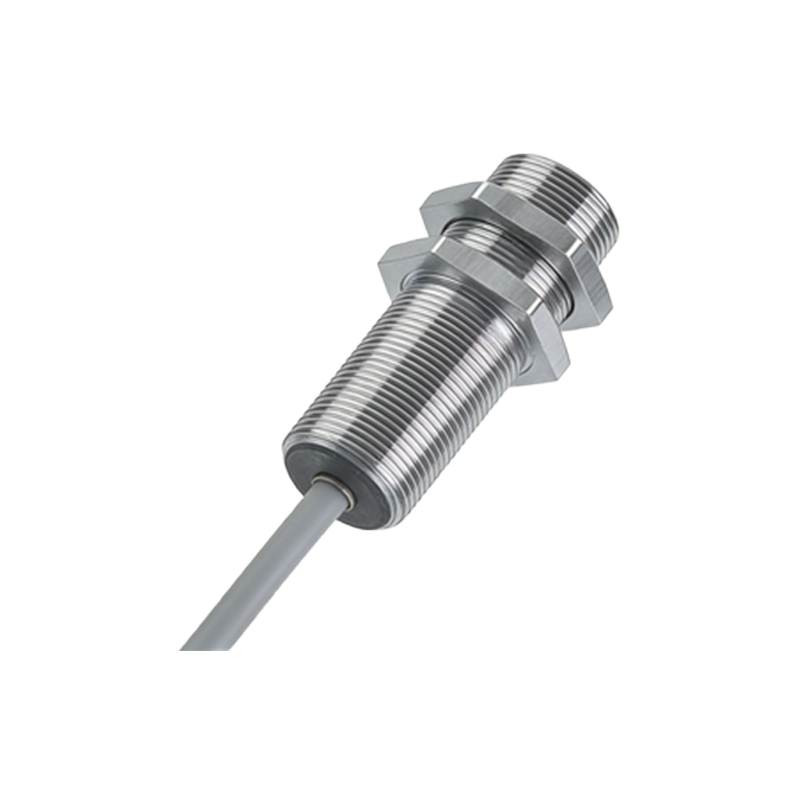
In beverage and pharmaceutical filling lines, ensuring bottle caps are correctly positioned before sealing is critical. A common application involves using a pair of polarized retro-reflective photoelectric sensors. Bottles travel on a conveyor, and their caps pass through the sensor's detection zone. A correctly oriented, opaque cap will interrupt the light beam, sending a signal to the PLC. If a cap is missing or improperly seated (e.g., allowing light to pass through), the sensor does not trigger. The PLC uses this precise positional data to activate a rejection mechanism downstream, removing defective bottles from the line. The high response frequency of modern sensors allows this check to occur at line speeds exceeding hundreds of units per minute with micron-level repeatability, ensuring zero defects proceed to the capping station.
Case Study 2: Precise Web Edge Guidance in Printing
Continuous material webs, such as paper, plastic film, or foil in printing and converting machinery, must be kept aligned to prevent wrinkles, tears, and print misregistration. Here, contrast or luminescence sensors are used for edge guiding. The sensor is mounted on a servo-driven guide frame, constantly scanning the edge of the moving web. It detects the contrast between the material and the background or uses the material's inherent luminescent properties. The sensor's analog output provides a continuous signal proportional to the edge's position. This real-time positional feedback is sent to a controller, which adjusts the guiding rollers to correct any lateral drift, maintaining the web's position within a tight tolerance, often as low as ±0.1 mm. This precise positioning is vital for multi-color printing and subsequent slitting operations.
Case Study 3: Robotic Pick-and-Place Part Localization
Automated robotic cells often use photoelectric sensors to locate parts randomly presented in bins or on conveyors. A common method employs multiple diffuse-reflective or background suppression sensors arrayed around a bin. By detecting the presence or absence of parts at specific coordinates, the system can approximate the position and height of the topmost part. More advanced systems use laser profile scanners, a type of photoelectric sensor, to create a detailed 3D profile of the parts pile. The scanner projects a laser line across the bin and uses a camera to detect the line's deformation. This data generates a precise point cloud, allowing the robot's vision system to calculate the optimal pickup point and orientation for the gripper, dramatically increasing pick success rates and system flexibility.
Case Study 4: Synchronization in Packaging Machine Feed Chains
In horizontal form-fill-seal machines, the film web must be precisely positioned so that the product is dropped into the forming tube at the exact moment a package cavity is beneath it. This is achieved using a registration mark sensor. A photoelectric sensor, often a fiber-optic type with a focused spot size, detects a printed mark or a perforation on the continuous film web. The exact moment of detection provides a reference pulse. This pulse is used by the machine's servo controller to synchronize the film advance with the actions of the product feeder and the longitudinal sealing jaws. Any lag or lead in the film position is corrected in real-time, ensuring each product is perfectly centered in its final package, which is essential for both operational efficiency and product presentation.
Key Selection Criteria for Positioning Applications
Selecting the right photoelectric sensor for a positioning task requires careful analysis. Sensing range and the required spot size at the target are paramount; a smaller spot allows for more precise edge detection. Response time must be fast enough to handle the object's speed and the required positional resolution. The sensing mode (through-beam, retro-reflective, diffuse) is chosen based on mounting constraints, target characteristics, and required reliability. Environmental factors like ambient light, dust, fog, or target color and reflectivity must be considered, potentially necessitating sensors with specific light wavelengths (e.g., laser for precision, green light for red objects) or robust housings (IP67/IP69K). Finally, the output type (discrete ON/OFF or analog proportional) must match the control system's needs for simple detection or continuous position feedback.
Integration with Control Systems and Industry 4.0
Modern photoelectric sensors are intelligent devices that integrate seamlessly into digital automation architectures. Sensors with IO-Link capability can transmit not just a switch signal but also detailed parameter data (e.g., signal strength, operating hours, temperature) and receive configuration updates remotely. This facilitates predictive maintenance and quick changeovers. In a networked Industry 4.0 environment, positional data from sensors across the line can be aggregated and analyzed to optimize overall equipment effectiveness (OEE). For instance, tracking positioning errors over time can predict wear in conveyor guides or indicate the need for robotic path recalibration, moving from reactive troubleshooting to proactive process optimization.
Conclusion and Future Trends
Photoelectric sensors provide a versatile, accurate, and robust solution for a vast array of industrial positioning challenges. From simple presence detection to complex 3D profiling, they enable the high-speed, flexible automation demanded by modern manufacturing. Future developments are focused on enhancing intelligence and connectivity. Sensors with embedded measurement capabilities will provide direct dimensional data. Further miniaturization will allow installation in tighter spaces. Enhanced resistance to extreme environments (e.g., intense washdowns, high temperatures) will expand their application range. The convergence of sensing, vision, and data analytics will continue to blur the lines, creating smarter systems where photoelectric sensors act as critical data points within a fully digitalized and self-optimizing production