Introduction to Photoelectric Sensing Technology
Photoelectric sensors are indispensable components in modern industrial automation, offering non-contact detection of objects based on the presence, absence, or distance of a target. These devices operate by emitting a beam of light, typically from an LED or laser diode, and then detecting changes in the received light signal. The fundamental principle relies on the modulation, reflection, or interruption of this light beam by the target object. Their versatility, speed, and reliability make them superior to mechanical limit switches in countless applications, from packaging and material handling to automotive assembly and pharmaceutical production. The core advantage lies in their ability to detect objects without physical contact, thereby eliminating wear and tear and enabling high-speed operation. Understanding the different operational types is crucial for selecting the optimal sensor for a specific environmental condition and detection task.
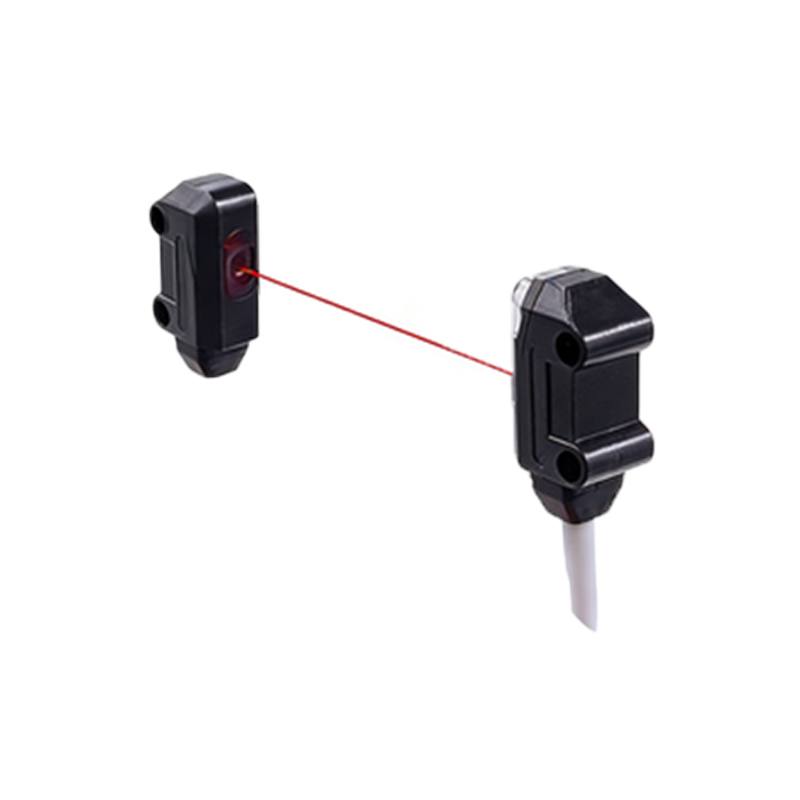
Through-Beam Sensors (Opposed Mode)
Through-beam sensors, also known as opposed mode sensors, consist of two separate units: a transmitter and a receiver. The transmitter projects a continuous or modulated beam of light directly to the receiver. Detection occurs when an object physically interrupts this beam, causing the receiver's signal to drop. This type offers the longest sensing range and highest excess gain, making it highly reliable even in dusty or dirty environments. It is exceptionally immune to target color, reflectivity, or surface finish. Common applications include detecting the presence of objects on conveyors, counting items on high-speed lines, and ensuring safety in light curtains. The primary drawback is the need for precise alignment of two separate components and the requirement for wiring at both ends, which can increase installation complexity and cost.
Retroreflective Sensors
Retroreflective sensors house both the light emitter and receiver in a single housing. They operate by directing light toward a specialized reflector, often a corner-cube or tape reflector, which returns the beam directly back to the receiver. An object is detected when it blocks this return path. This design simplifies installation compared to through-beam sensors, as only one device needs wiring and alignment is with a passive reflector. Sensing ranges are typically shorter than through-beam but longer than diffuse sensors. A key feature is the use of polarizing filters to overcome a potential challenge: a shiny object might reflect light back like the reflector, causing a false "no object" signal. The polarizing filter ensures only light reflected from the specific retroreflector is recognized. These sensors are ideal for detecting objects at medium distances where through-beam setup is impractical.
Diffuse Reflective Sensors (Proximity Mode)
Diffuse reflective sensors, or proximity sensors, also incorporate the emitter and receiver in one unit. However, they do not use a separate reflector. Instead, they detect light that is diffusely reflected off the surface of the target object itself. Detection is based on the amount of reflected light returning to the receiver. This makes them the simplest to install, as they require only a single device pointed at the detection area. Their performance is highly dependent on the target's size, color, and surface texture; light-colored, matte objects are detected at longer ranges than dark, shiny ones. Advanced versions, often called background suppression or convergent beam sensors, use triangulation or fixed-focus optics to detect objects only within a specific, defined distance, ignoring the background. This makes them excellent for precise positioning or detecting objects on a conveyor regardless of the belt color.
Specialized Photoelectric Sensor Variants
Beyond the three main types, several specialized photoelectric sensors address niche requirements. Fiber-optic sensors use flexible light guides to deliver and receive light, allowing the amplifier unit to be mounted remotely in a clean, safe location while the tiny sensing head fits into extremely confined, hot, or hazardous spaces. Color sensors differentiate between colors by analyzing the reflected light's wavelength, crucial for sorting and quality control. Luminescence sensors detect the presence of materials (like adhesives or oils) that fluoresce under UV light. Contrast sensors detect marks or print on materials by measuring the difference in reflectivity between the background and the mark. Finally, distance-measuring sensors, often using laser time-of-flight or triangulation principles, provide precise analog distance measurements rather than simple on/off detection, enabling applications like height profiling and roll diameter measurement.
Key Selection Criteria and Application Considerations
Selecting the correct photoelectric sensor requires a systematic evaluation of the application parameters. First, determine the required sensing range and the physical size of the target. For long-range detection of small objects, a through-beam sensor is often mandatory. Next, consider the environmental factors: presence of dust, mist, vibration, or ambient light interference. Sensors with modulated LED light and synchronous detection circuits reject ambient light. The housing material (e.g., metal vs. plastic) and ingress protection (IP) rating are critical for washdown or outdoor use. Electrical output type (PNP/NPN, analog, IO-Link) must match the control system. Finally, consider the target's characteristics—its color, material, and surface finish—as these directly impact the performance of diffuse and retroreflective models. Proper mounting, alignment, and routine maintenance are essential for long-term, reliable operation in demanding industrial settings.