Introduction to Small Spot Photoelectric Sensors
Small spot photoelectric sensors are specialized devices designed for high-precision detection in industrial automation. Unlike standard photoelectric sensors, these units emit a highly focused light beam, creating a small detection spot. This characteristic allows them to detect minute objects, precise edges, or subtle positional changes that larger-spot sensors might miss. They operate on the fundamental principle of converting light signals into electrical outputs. A transmitter emits a light beam—often a visible red beam or laser—toward a target. A receiver then detects the presence, absence, or intensity of the reflected or transmitted light. The key differentiator is the optics: advanced lenses and laser diodes collimate the light into a tight, concentrated spot, sometimes as small as a fraction of a millimeter in diameter. This precision is critical in modern manufacturing, where tolerances are increasingly tight and component miniaturization is prevalent. Industries such as electronics assembly, semiconductor manufacturing, and precision engineering rely on these sensors to ensure accuracy in processes like wafer alignment, micro-part placement, and quality inspection.
Core Operating Principles and Technologies
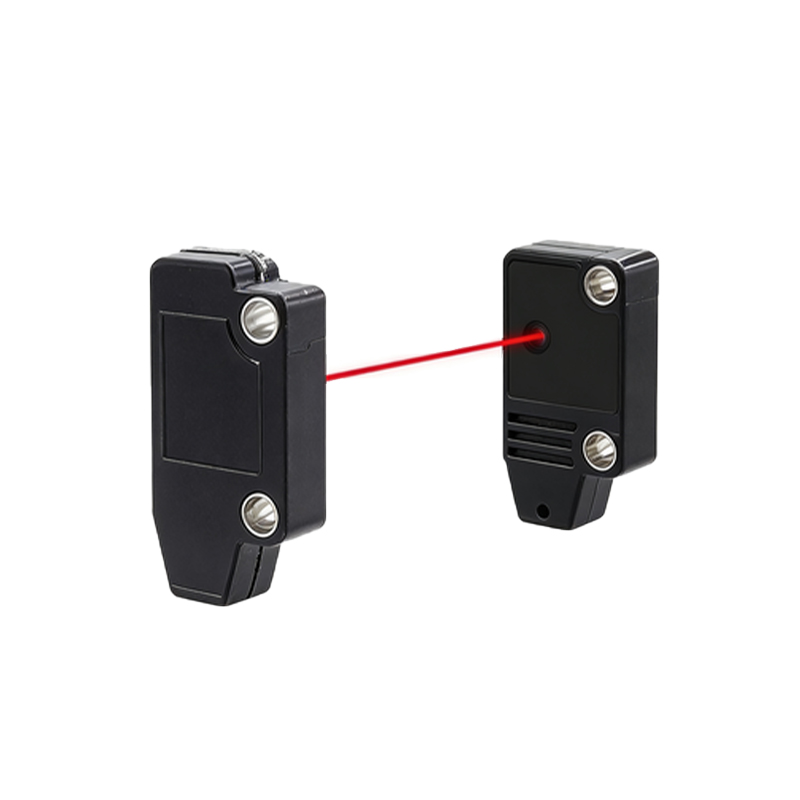
The effectiveness of a small spot sensor hinges on its optical design and the chosen sensing mode. There are three primary operating modes: through-beam, retro-reflective, and diffuse-reflective. In through-beam mode, the transmitter and receiver are separate units facing each other. An object is detected when it interrupts the light beam traveling between them. This mode offers the longest sensing range and highest reliability for small spot detection, as it is largely unaffected by the object's color or reflectivity. Retro-reflective mode uses a single unit housing both emitter and receiver, along with a reflector. Detection occurs when an object breaks the beam between the sensor and the reflector. Diffuse-reflective mode, also a single-unit design, detects light reflected directly off the target object. For small spot applications, diffuse-reflective sensors often incorporate background suppression or fixed-field background suppression technology. These technologies allow the sensor to ignore reflections from surfaces beyond a set distance, ensuring it only reacts to the tiny target within its precise focal point. Laser diodes are the preferred light source for most small spot sensors due to their ability to produce intense, coherent light that can be focused into an exceptionally small, bright spot with minimal divergence over distance.
Key Advantages in Industrial Applications
The primary advantage of small spot photoelectric sensors is their unparalleled precision. They can detect extremely small objects, such as individual semiconductor leads, micro screws, or thin wires. This capability is indispensable in miniaturized product assembly lines. Secondly, they enable precise edge detection and positioning. In web guiding systems for films, foils, or papers, a small spot sensor can accurately track the edge of a material, providing feedback for alignment control systems. Their focused beam minimizes the impact of background interference. In cluttered environments with multiple reflective surfaces, a standard sensor might trigger falsely, but a small spot sensor's narrow beam can discriminate between the intended target and its surroundings. Furthermore, the high intensity of the focused spot allows for reliable detection of low-reflectivity or dark-colored objects that might otherwise absorb too much diffuse light. This leads to improved process reliability and reduced downtime due to false triggers or missed detections. Finally, their ability to work at close ranges allows for integration into compact machinery where space is at a premium.
Critical Selection Criteria for Engineers
Selecting the right small spot photoelectric sensor requires careful consideration of several technical parameters. The spot size is the most obvious: engineers must match the sensor's spot diameter to the smallest feature they need to detect. The sensing distance, or range, is also crucial and varies significantly between operating modes. Through-beam sensors offer the longest range, often several meters, while diffuse-reflective models with background suppression are typically limited to shorter ranges suitable for close-up precision work. The response time, or switching frequency, determines how fast the sensor can detect objects passing by. High-speed applications, like counting tiny components on a fast conveyor, demand sensors with microsecond-range response times. Environmental factors cannot be overlooked. The sensor's housing must provide an appropriate Ingress Protection (IP) rating for resistance to dust, moisture, and coolants. Operating temperature range, vibration resistance, and compatibility with washdown procedures are vital for harsh industrial settings. Lastly, the output type (e.g., NPN, PNP, analog, or IO-Link) and electrical connection must integrate seamlessly with the existing control system, such as a PLC.
Implementation and Calibration Best Practices
Proper installation and calibration are paramount to achieving the promised performance of a small spot sensor. Mounting must be rigid and stable to prevent misalignment from vibration, which could drastically alter the beam's path and the detection point. For through-beam systems, precise alignment of the transmitter and receiver is critical; even a slight angular deviation over a long distance can cause the beam to miss the receiver entirely. Many sensors feature built-in alignment aids like visible red beams or alignment status LEDs. When using diffuse-reflective sensors, the distance to the target must be set accurately within the sensor's specified range, especially for models with background suppression. The sensing threshold or sensitivity may need fine-tuning to distinguish the target from ambient light or slight background reflections. Engineers should utilize the sensor's teach-in function if available, which allows for automatic setting of the switching point based on the actual target and background conditions. Regular maintenance, including cleaning the lens cover to prevent buildup of dust, oil, or debris that could scatter or attenuate the light beam, is essential for long-term reliability. Implementing these best practices ensures consistent, accurate detection and maximizes the return on investment in sensor technology.
Future Trends and Evolving Capabilities
The evolution of small spot photoelectric sensors is closely tied to advancements in Industry 4.0 and smart manufacturing. A significant trend is the integration of advanced communication protocols like IO-Link. This turns a simple sensor into a smart device capable of transmitting detailed diagnostic data—such as signal strength, operating temperature, and lens contamination levels—to higher-level control systems for predictive maintenance. This helps prevent unplanned downtime. Furthermore, the miniaturization of sensor packages continues, allowing for installation in ever-tighter spaces without sacrificing performance. There is also ongoing development in light source technology, with improvements in laser diode efficiency and the emergence of new wavelengths that can better detect specific materials. Another area of growth is the combination of sensing principles; for instance, integrating a small spot photoelectric sensor with a confocal displacement sensor to provide both presence detection and precise distance measurement in a single unit. As artificial intelligence and machine vision systems become more prevalent, the role of the small spot sensor as a precise, reliable trigger for these systems will only become more critical, solidifying its position as a fundamental component in the automated factory of the future.