Introduction to Normally Open Photoelectric Sensors
A normally open (NO) photoelectric sensor is a critical component in industrial automation, designed to complete an electrical circuit only when it detects a target object. Unlike normally closed (NC) sensors that maintain a closed circuit until detection, NO sensors remain in an open state under default conditions. This configuration is particularly advantageous in safety-critical applications where a broken beam or sensor failure must trigger an immediate system halt. The principle relies on modulating light—typically infrared, visible red, or laser—to sense presence, position, or quality of objects without physical contact. Industries such as packaging, material handling, and automotive assembly extensively utilize these sensors for their reliability and precision.
Working Principle and Key Components
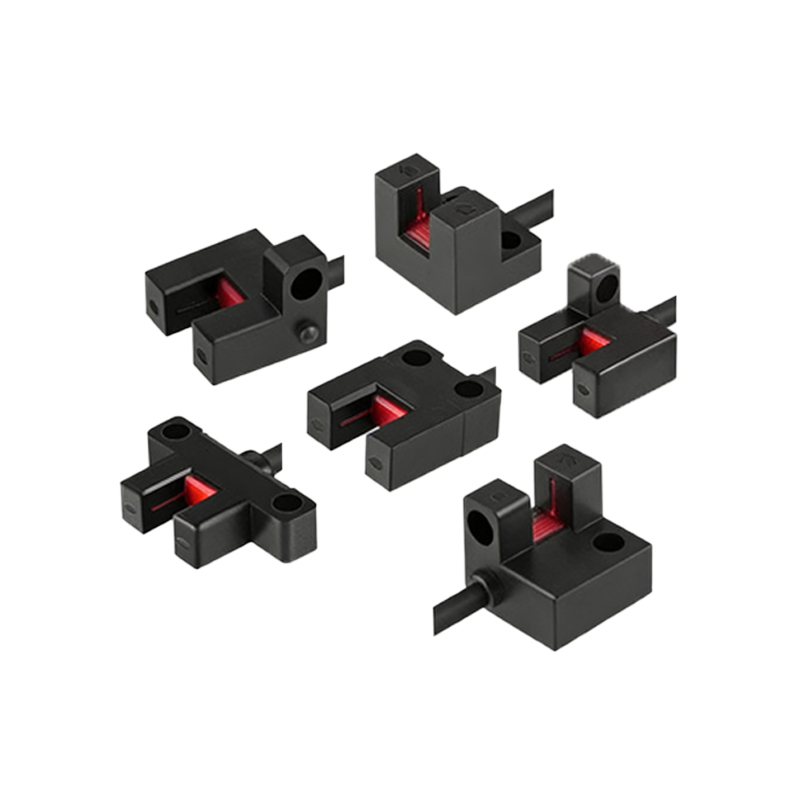
The operation of a normally open photoelectric sensor involves three main components: an emitter, a receiver, and a switching circuit. The emitter projects a light beam toward the receiver. In the absence of an object, the light beam reaches the receiver uninterrupted, keeping the output circuit open. When an object interrupts the beam, the receiver detects the change, triggering the internal switching circuit to close and allowing current to flow. This transition from open to closed state generates a signal to a controller, such as a PLC, initiating actions like counting, sorting, or stopping machinery. Different sensing modes—including through-beam, retro-reflective, and diffuse—offer flexibility for varying environmental and application needs.
Advantages of Normally Open Configuration
Normally open photoelectric sensors offer distinct benefits in industrial settings. First, they enhance safety by ensuring that any disruption in the light path—whether from an object, misalignment, or sensor damage—activates the system, preventing accidents. Second, they reduce energy consumption since the circuit only draws power during active detection, minimizing heat generation and extending sensor lifespan. Third, NO sensors provide clear fault detection; a constant closed signal might indicate a malfunction, allowing for prompt maintenance. Additionally, their compatibility with fail-safe circuits makes them ideal for monitoring conveyor belts, robotic arms, and access points where operational integrity is paramount.
Common Applications in Industry
In manufacturing, normally open photoelectric sensors serve diverse roles. On assembly lines, they detect missing components or verify product placement, ensuring quality control. In packaging, they count items or monitor fill levels by sensing interruptions in light beams. Automotive plants use them for position sensing in robotic welding, where precise alignment is crucial. They also safeguard personnel by creating safety curtains around hazardous machinery—if a beam is broken, the machine stops immediately. Logistics centers employ NO sensors in sorting systems to track parcels, while food and beverage industries rely on them for bottle cap inspection or label verification without contamination risks.
Selection Criteria and Installation Tips
Choosing the right normally open photoelectric sensor requires evaluating factors like sensing range, response time, and environmental conditions. For long-range detection up to several meters, through-beam sensors with separate emitters and receivers are optimal. In dusty or humid areas, models with IP67 or higher ratings ensure durability. Response time should match application speed; high-speed processes need sensors with millisecond responses. During installation, align the emitter and receiver precisely to avoid false triggers. Regular cleaning of lenses prevents dust accumulation, and periodic testing with calibration tools maintains accuracy. Integrating sensors with shielded cables reduces electromagnetic interference, enhancing signal stability.
Troubleshooting and Maintenance Practices
Common issues with normally open photoelectric sensors include false triggers, alignment drift, and output failures. False triggers often stem from ambient light interference; using sensors with modulated light or installing shades can mitigate this. Alignment problems may arise from vibration; securing mounts and checking alignment periodically is advised. If the sensor fails to switch, inspect power supply voltages and wiring connections. Cleaning optical surfaces with a soft cloth and avoiding harsh chemicals prolongs functionality. Implementing preventive maintenance schedules, such as monthly inspections and annual recalibrations, reduces downtime. Many modern sensors feature diagnostic LEDs for quick status checks, simplifying troubleshooting.
Future Trends and Innovations
Advancements in photoelectric sensor technology are driving smarter industrial systems. IoT-enabled NO sensors now transmit real-time data to cloud platforms, enabling predictive maintenance and analytics. Miniaturization allows integration into compact devices without sacrificing range or accuracy. Enhanced materials, like corrosion-resistant housings, expand usability in extreme environments. Additionally, AI algorithms are being incorporated to distinguish between target objects and background noise, reducing false positives. As Industry 4.0 evolves, normally open photoelectric sensors will increasingly support autonomous operations, contributing to efficient, safe, and connected manufacturing ecosystems.