Introduction to Photoelectric Sensing Technology
Photoelectric sensors are fundamental components in modern industrial automation, playing a critical role in object detection, positioning, and quality control. These devices operate on the principle of using a light transmitter, typically an LED or laser diode, and a receiver to detect changes in light intensity. The core function is to convert light signals into electrical signals, enabling machines to "see" and respond to their environment. Their versatility, reliability, and non-contact nature make them indispensable across manufacturing, packaging, material handling, and safety systems. Unlike mechanical limit switches, photoelectric sensors offer faster response times, longer operational life, and the ability to detect a wide variety of materials, including transparent objects, without physical wear.
Core Components and Light Emission
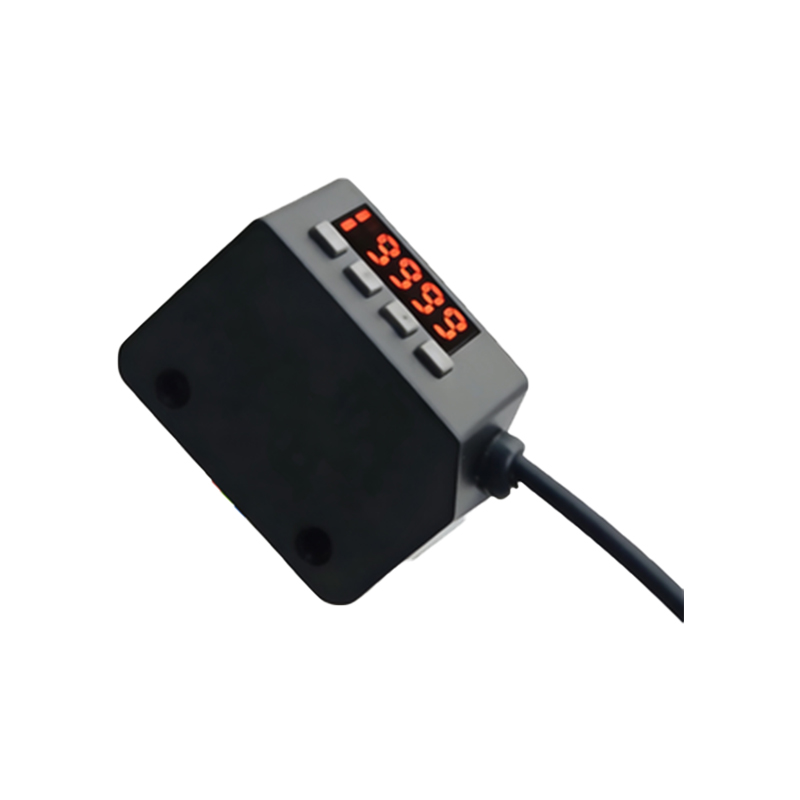
The operation begins with the emitter section. A light-emitting diode (LED) is the most common light source, chosen for its long life, low cost, and reliability. For specialized applications requiring a focused beam or long sensing ranges, laser diodes are employed. The emitted light is usually modulated at a specific high frequency, meaning it pulses on and off rapidly. This modulation is crucial as it allows the sensor's receiver to distinguish the emitted light from ambient background light (such as factory lighting or sunlight), significantly enhancing noise immunity and operational stability. The light is projected through a lens that shapes it into a defined beam pattern, which can be a precise spot, a diffuse field, or a focused line, depending on the sensor type.
Primary Operating Modes: Through-Beam
The through-beam, or opposed mode, is the most robust and offers the longest sensing range. It consists of two separate units: a transmitter and a receiver, positioned opposite each other. The transmitter continuously sends the modulated light beam to the receiver. An object is detected when it interrupts this beam path, causing the light signal to be blocked from reaching the receiver. This mode is highly reliable for detecting any opaque object, regardless of its color, surface finish, or orientation. It is ideal for precise detection in challenging environments, though it requires careful alignment and wiring for two separate housings.
Primary Operating Modes: Retroreflective
The retroreflective mode uses a single housing containing both the emitter and receiver. The device projects light toward a specialized reflector, often a corner-cube or prismatic reflector, which returns the light beam directly back to the receiver along the same path. Detection occurs when an object breaks this reflected beam. This design simplifies installation compared to through-beam sensors, as only one unit needs wiring and alignment with the reflector. However, it may struggle with highly reflective or shiny objects, which can sometimes mimic the reflector's function. Many models feature polarization filters to mitigate this by only accepting light that has its polarization state altered by the reflector.
Primary Operating Modes: Diffuse (Proximity)
Diffuse, or proximity, sensors are the most compact, as the emitter and receiver are housed together and rely on the reflection of light from the target object itself. The sensor emits light, and the receiver detects the portion of that light that scatters back from the object's surface. Detection is based on the intensity of this reflected signal exceeding a set threshold. This mode allows for one-sided installation but is sensitive to the object's color, surface texture, and reflectivity. Dark, matte, or absorbent materials reflect less light and have a shorter effective range. Advanced background suppression versions use triangulation to measure the angle of the returning light, allowing them to detect an object only within a precise, defined distance while ignoring objects beyond it.
The Receiver and Signal Processing
The receiver is typically a phototransistor or photodiode that converts the incoming light intensity into a proportional electrical current. This weak analog signal is then fed into an amplifier circuit. The amplifier is tuned to the specific modulation frequency of the emitter, filtering out DC ambient light and other frequency noise. Once the signal is amplified and validated, a comparator circuit checks it against a preset threshold. If the signal level is correct (for retroreflective and diffuse modes) or absent (for through-beam mode), the sensor's solid-state output switch is triggered, changing state to indicate detection. This output can be a discrete NPN/PNP transistor, a relay, or an analog signal proportional to distance or light intensity.
Key Performance Specifications
Understanding sensor specifications is vital for correct selection. Sensing range defines the maximum reliable operating distance, which varies greatly between modes. Response time indicates how quickly the sensor can react to a change, critical for high-speed applications. Repeatability refers to the sensor's consistency in detecting an object at the same point. Light-on/Dark-on operation defines whether the output activates when light is received or when it is blocked. Environmental ratings like IP (Ingress Protection) and NEMA codes are essential for ensuring reliability in the presence of dust, moisture, or washdowns. Many modern sensors also feature built-in diagnostics, such as LED indicators for power, output status, and signal strength.
Advanced Features and Applications
Modern photoelectric sensors incorporate sophisticated features to solve complex application challenges. Background suppression, as mentioned, enables precise distance-based detection. Fiber optic versions use flexible light guides to deliver light to and from tight or hazardous spaces, with the electronics housed remotely. Color sensors differentiate between colors by analyzing the reflected light's wavelength. Luminescence sensors detect markings visible only under UV light. Contrast sensors detect the difference in reflectivity between a mark and its background, essential in label detection. These advanced capabilities expand their use into intricate tasks like fill-level control, robotic guidance, part verification, and counterfeit detection.
Selection and Installation Best Practices
Successful implementation requires careful consideration. First, define the application: object characteristics (size, material, color), required sensing distance, environmental conditions, and required output. Choose the operating mode that best fits these parameters. During installation, ensure stable mounting to prevent misalignment from vibration. Precisely align through-beam and retroreflective sensors for optimal performance. For diffuse sensors, account for the target's reflectivity and potential interference from background objects. Always verify operation with the actual target material under real-world conditions, not just a test card. Regularly clean lenses and reflectors to prevent false triggers from accumulated dust or grime, ensuring long-term system reliability.