Introduction to Photoelectric Sensing
Rotary disc photoelectric sensors are pivotal components in modern industrial automation and motion control systems. These devices utilize light to detect the position, speed, or direction of rotating objects, offering high precision and reliability. Unlike mechanical sensors, they operate without physical contact, minimizing wear and tear and ensuring longevity in demanding environments. The core principle revolves around the interruption or reflection of a light beam, which is then converted into an electrical signal for processing. This technology is widely applied in robotics, conveyor systems, and automotive manufacturing, where accurate motion feedback is essential. By leveraging optical methods, these sensors provide fast response times and immunity to electromagnetic interference, making them ideal for diverse applications.
Basic Components and Structure
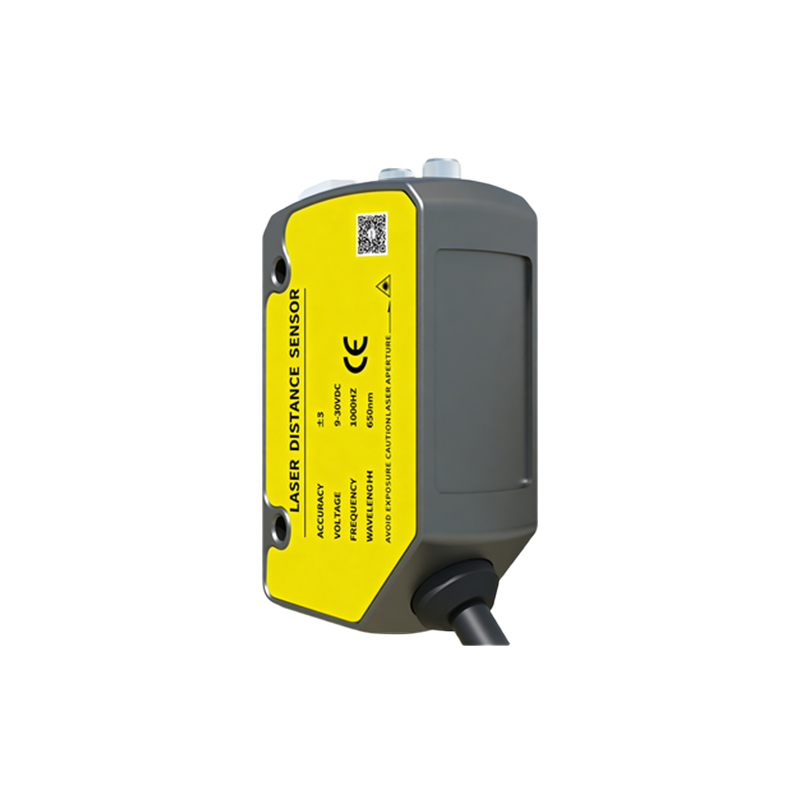
A typical rotary disc photoelectric sensor consists of three main parts: a light source, a photodetector, and a rotating disc with patterned slots or holes. The light source, often an LED or infrared emitter, generates a focused beam directed toward the photodetector, such as a phototransistor or photodiode. The rotating disc, attached to a shaft, is placed between the emitter and detector. As the disc rotates, its patterned openings alternately allow or block the light beam, creating a series of pulses. The disc's design, including the number and arrangement of slots, determines the resolution and output signal characteristics. Additional components may include lenses for beam focusing and housing for protection against dust and moisture, ensuring stable operation in industrial settings.
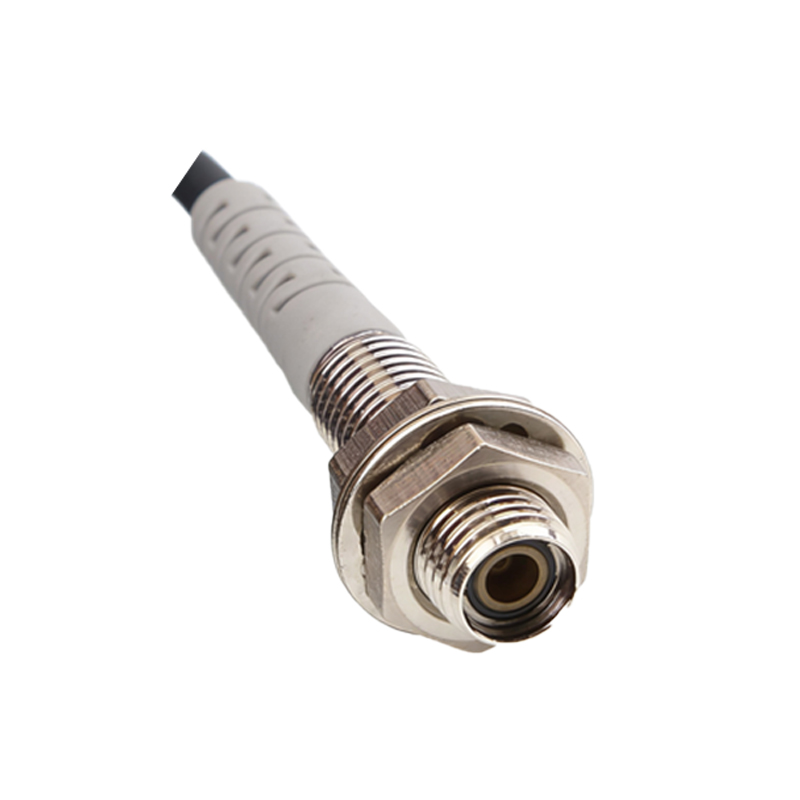
Operating Principle and Signal Generation
The fundamental operation relies on the modulation of light intensity caused by the disc's rotation. When a slot aligns with the light path, the beam reaches the photodetector, generating a high output signal. Conversely, when an opaque section blocks the beam, the signal drops to low. This on-off pattern produces a digital pulse train proportional to the disc's rotational speed. By counting these pulses over time, the system can calculate parameters like RPM or angular position. Advanced versions may use multiple light sources and detectors to enable direction sensing or enhance accuracy through quadrature encoding. The photodetector converts light into electrical current, which is then amplified and conditioned into a clean, usable signal for microcontrollers or PLCs.
Types and Configurations
Rotary disc photoelectric sensors come in various types to suit different needs. Transmissive sensors, the most common, have the emitter and detector facing each other with the disc in between, ideal for high-speed applications. Reflective sensors position both components on the same side, using the disc's reflective markings to bounce light back, suitable for compact setups. Additionally, incremental encoders provide relative position data by counting pulses, while absolute encoders offer unique codes for each position, ensuring accuracy even after power loss. The choice depends on factors like resolution requirements, environmental conditions, and cost constraints, with options ranging from simple binary outputs to complex analog interfaces.
Advantages in Industrial Applications
These sensors offer numerous benefits that make them preferred in automation. Their non-contact operation eliminates mechanical friction, reducing maintenance and extending service life. High precision allows for exact motion control, critical in CNC machinery and robotic arms. They are also resistant to electrical noise, ensuring reliable performance near motors or power lines. Moreover, their fast response enables real-time monitoring of rapid movements, enhancing system efficiency. In harsh environments, sealed designs withstand dust, oil, and temperature variations. By integrating with digital systems, they facilitate seamless data exchange for process optimization and predictive maintenance, boosting overall productivity.
Common Challenges and Solutions
Despite their robustness, rotary disc photoelectric sensors face challenges like contamination, alignment issues, and ambient light interference. Dust or oil buildup on the disc or lenses can attenuate the light beam, causing signal loss. Regular cleaning and using protective enclosures mitigate this. Misalignment between the emitter and detector may lead to inconsistent pulses, which can be addressed through precise mounting and calibration. Ambient light, especially from industrial lamps, might introduce noise; employing modulated infrared light with filtering techniques helps distinguish the sensor's signal. Additionally, selecting appropriate materials for the disc, such as metal or coated plastics, ensures durability and consistent optical properties over time.
Future Trends and Innovations
The evolution of rotary disc photoelectric sensors is driven by advancements in miniaturization, smart technology, and integration. Emerging trends include the use of fiber optics for remote sensing in hazardous areas and MEMS-based designs for ultra-compact devices. Wireless connectivity enables IoT integration, allowing sensors to transmit data to cloud platforms for analytics and remote monitoring. Enhanced algorithms improve signal processing, reducing errors in noisy environments. Furthermore, eco-friendly materials and energy-efficient components are gaining focus to support sustainable manufacturing. As industries embrace Industry 4.0, these sensors will become more intelligent, adaptive, and interconnected, paving the way for smarter automation systems.