Introduction to Photoelectric Sensor Standards
In the global industrial automation landscape, photoelectric sensors are indispensable components for detection, positioning, and counting. To ensure interoperability, safety, and reliability across different manufacturers and applications, adherence to established national and international standards is paramount. For engineers and procurement specialists, understanding the relevant standard numbers is crucial for specification, design, and compliance verification. This article details the primary national standard numbers governing photoelectric sensors, with a focus on widely recognized international (IEC) and regional (e.g., GB) codes.
Core International Standard: IEC 60947-5-2
The fundamental international standard for proximity sensors, including photoelectric types, is IEC 60947-5-2: "Low-voltage switchgear and controlgear – Part 5-2: Control circuit devices and switching elements – Proximity switches." This standard, published by the International Electrotechnical Commission (IEC), defines the general rules, characteristics, performance requirements, and testing procedures for inductive, capacitive, ultrasonic, and photoelectric proximity sensors. It covers aspects such as rated operational voltage and current, switching frequency, environmental conditions (temperature, humidity), housing protection (IP ratings), and electromagnetic compatibility (EMC). Compliance with IEC 60947-5-2 is a key benchmark for sensors intended for international markets, ensuring a baseline of quality and safety.
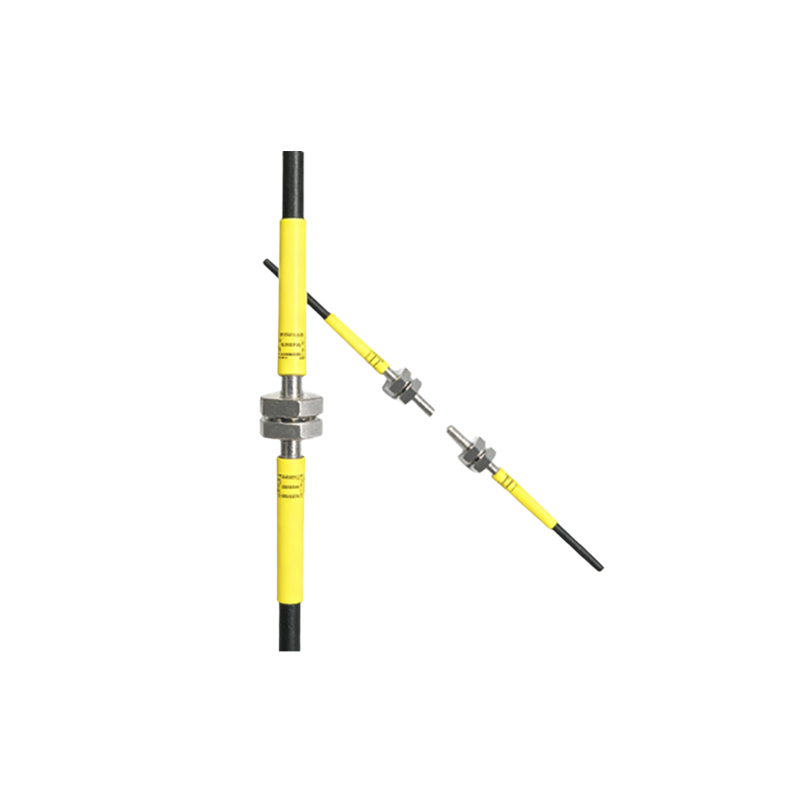
Chinese National Standard: GB/T 14048.10
In China, the national standard for proximity switches directly adopts and aligns with the international IEC standard. The corresponding designation is GB/T 14048.10-2016 "Low-voltage switchgear and controlgear – Part 5-2: Control circuit devices and switching elements – Proximity switches." The "GB/T" denotes a recommended national standard (Guobiao/Tuijian), and "14048.10" is the specific part number. This standard is technically equivalent to IEC 60947-5-2. Therefore, a photoelectric sensor compliant with GB/T 14048.10 meets the same core technical requirements as its IEC counterpart. Engineers specifying equipment for the Chinese market must prioritize this standard number for regulatory and technical alignment.
Additional Relevant Standard Numbers
Beyond the core performance standard, photoelectric sensors must often comply with other standards related to safety, environmental protection, and specific applications. Key supplementary standard numbers include:
IEC/EN 60529 (GB/T 4208): This defines the Ingress Protection (IP) code, rating the enclosure's protection against solid objects and liquids (e.g., IP67). This is critical for specifying sensors for harsh environments.
IEC/EN 61326 (GB/T 18268): Pertains to EMC requirements for electrical equipment for measurement, control, and laboratory use. It ensures the sensor does not emit excessive electromagnetic interference and is immune to interference from other equipment.
ISO 13849-1 / IEC 62061: These are functional safety standards for safety-related parts of control systems. Photoelectric sensors used as safety devices (e.g., light curtains, safety scanners) must be designed and validated according to these standards.
UL 508 (USA) / CSA C22.2 No. 14 (Canada): These are North American safety standards for industrial control equipment, often required for products sold in those regions.
Importance of Standard Compliance in Selection
Verifying the standard numbers is a critical step in the sensor selection process. It guarantees that the device has undergone rigorous testing for electrical characteristics, mechanical durability, environmental resilience, and electromagnetic behavior. For system integration, standards ensure compatibility with programmable logic controllers (PLCs) and other control gear. In regulated industries like packaging, automotive, or pharmaceuticals, using non-compliant components can lead to system failures, safety hazards, and non-conformance during audits. Always request the manufacturer's declaration of conformity or test certificates referencing the specific standard numbers.
How to Verify Standard Conformance
Engineers should not rely solely on marketing materials. The standard compliance is typically marked on the sensor's nameplate or datasheet. Look for symbols and text such as "IEC 60947-5-2," "GB/T 14048.10," "IP67," along with certification marks from bodies like TÜV, UL, or CCC (China Compulsory Certification). Consult the product's official manual or directly contact the manufacturer's technical support for detailed certification documents. For critical applications, reviewing the test reports aligned with the claimed standards provides the highest level of assurance.
Conclusion and Key Takeaways
The primary national/international standard number for photoelectric sensors is IEC 60947-5-2, mirrored in China as GB/T 14048.10. These standards form the technical foundation. However, a complete specification must also consider IP ratings (IEC 60529), EMC (IEC 61326), and possibly functional safety standards. Understanding and applying these standard numbers empowers engineers to make informed decisions, ensure system reliability, achieve regulatory compliance, and facilitate global equipment integration. Always prioritize components with clear, verifiable standard conformance for robust and future-proof automation solutions.