Understanding Photoelectric Sensor Blind Spots
Photoelectric sensors are widely used in industrial automation for object detection, presence sensing, and positioning. A common question among engineers is whether these sensors have blind spots. The answer is yes, but the nature and impact of these blind spots depend on the sensor type, configuration, and application. Blind spots refer to areas where the sensor cannot reliably detect an object, often due to physical limitations or environmental factors. This article explores the causes, implications, and mitigation strategies for blind spots in photoelectric sensors.
Types of Photoelectric Sensors and Their Blind Spot Characteristics
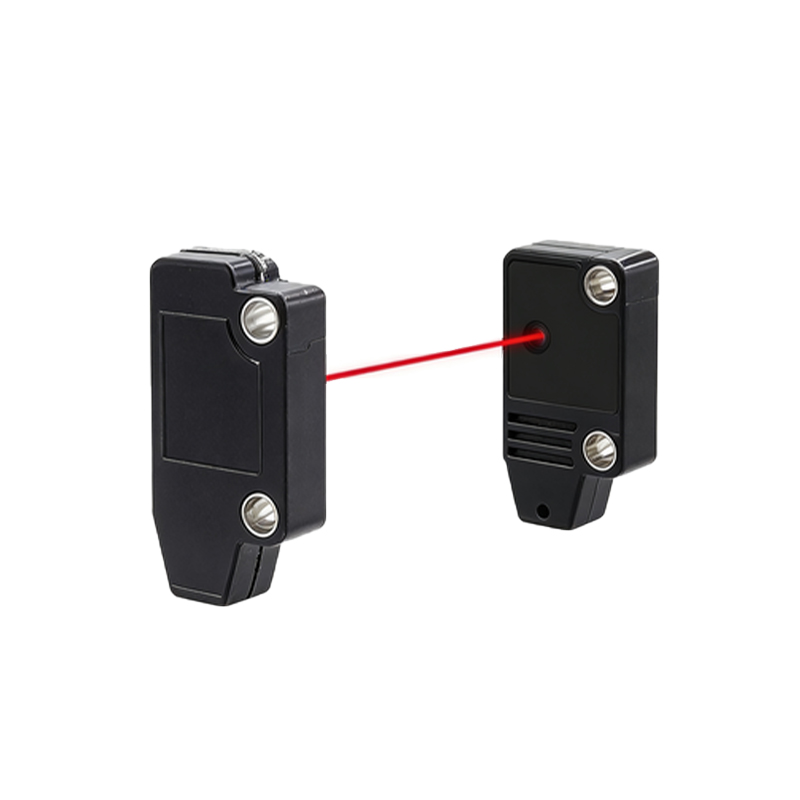
There are three main types: through-beam, retro-reflective, and diffuse sensors. Through-beam sensors consist of a separate emitter and receiver. They have a minimal blind spot near the emitter or receiver due to the optical alignment, but the detection zone is generally linear and continuous. Retro-reflective sensors use a reflector; the blind spot typically occurs at very close range (e.g., less than 10 cm) because the emitted light may not reflect back properly. Diffuse sensors rely on the object reflecting light back to the receiver. They have a significant blind spot immediately in front of the sensor (often 0 to 5 cm) where the emitted and reflected beams overlap, causing interference or signal saturation. This is known as the "dead zone."
Causes of Blind Spots in Photoelectric Sensors
Blind spots arise from several factors. First, optical design: the sensor's lens and beam geometry create zones where the light path is obstructed or reflected incorrectly. For example, in diffuse sensors, the emitter and receiver are in the same housing, leading to a near-field blind spot due to the angle of incidence. Second, ambient light interference: strong external light sources (e.g., sunlight or welding arcs) can overwhelm the sensor's detection, creating temporary blind spots. Third, object properties: transparent, shiny, or dark-colored objects may fail to reflect enough light, especially in diffuse modes. Fourth, contamination: dust, oil, or moisture on the lens can create blind spots by scattering or blocking the light beam.
Impact on Industrial Applications
Blind spots can cause significant issues in automated systems. For instance, in conveyor belt sorting, a sensor with a blind spot may miss small or fast-moving items placed too close to the sensor. In robotic pick-and-place operations, a blind spot could lead to collisions or missed parts. In safety applications, such as light curtains, blind spots can create hazardous gaps that fail to detect personnel or objects. The severity depends on the sensor's mounting position, target size, and speed. Engineers must account for these blind spots during system design to avoid false readings or downtime.
How to Mitigate Blind Spots in Photoelectric Sensors
Several strategies can reduce or eliminate blind spots. First, select the right sensor type: for close-range detection, use through-beam sensors which have fewer near-field issues. For diffuse sensors, choose models with advanced optics that minimize the dead zone, such as those with background suppression or adjustable sensing distances. Second, adjust mounting and alignment: position the sensor at an angle or offset to avoid the blind zone. Third, use multiple sensors in a redundant configuration to cover blind spots. Fourth, implement regular cleaning and maintenance to prevent contamination. Fifth, employ digital filtering or signal processing to reject ambient noise. In critical applications, combine photoelectric sensors with other technologies like inductive or capacitive sensors for full coverage.
Case Study: Blind Spot Detection in a Packaging Line
Consider a packaging line using retro-reflective sensors to detect boxes. A blind spot of 5 cm near the sensor caused intermittent misses for boxes shorter than 10 cm. By switching to a through-beam sensor with a narrow beam and adjusting the mounting height, the blind spot was eliminated, achieving 99.9% detection accuracy. This highlights the importance of understanding sensor limitations and applying engineering solutions.
Conclusion
Photoelectric sensors do have blind spots, but these are manageable with proper selection, installation, and maintenance. Engineers should evaluate the specific application requirements, including object size, distance, and environmental conditions, to choose the optimal sensor type. By addressing blind spots proactively, industrial systems can achieve reliable performance and high efficiency. Always consult sensor datasheets for precise blind spot specifications and test in real-world conditions.