Introduction: The Role of Photoelectric Sensors in Line Following
In the field of industrial automation, line following is a critical function for autonomous guided vehicles (AGVs), conveyor systems, and robotic platforms. While traditional line-following sensors rely on magnetic strips or inductive proximity sensors, many engineers ask: can photoelectric sensors be used for this purpose? The answer is yes, but with specific considerations regarding sensor type, surface reflectivity, and environmental conditions. This article explores the technical feasibility, advantages, and limitations of using photoelectric sensors for line tracking in industrial settings.
Understanding Photoelectric Sensor Types for Line Detection
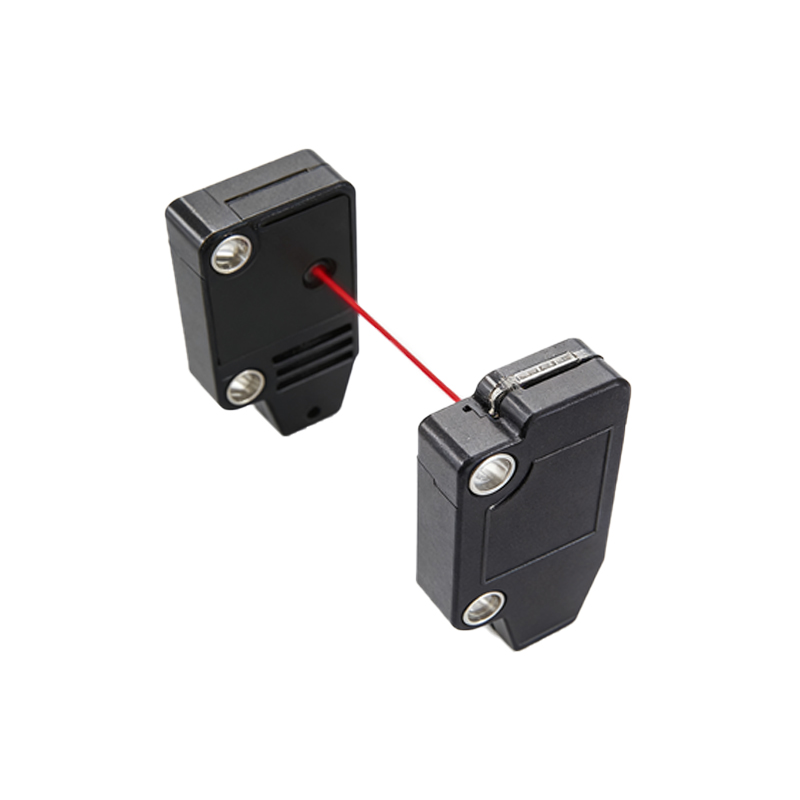
Photoelectric sensors operate by emitting a light beam (typically infrared or visible red) and detecting changes in the reflected or interrupted signal. For line following, the most suitable types are diffuse reflective sensors and retro-reflective sensors. Diffuse sensors rely on the target surface to reflect light back to the receiver, making them ideal for detecting contrasting lines on a background. For example, a black line on a white surface absorbs more light, causing a drop in the received signal, which the sensor interprets as a line. Retro-reflective sensors, while less common, can be used with reflective tape to create distinct boundaries. However, through-beam sensors are generally not recommended for line following because they require a separate receiver and are better suited for object presence detection.
Key Parameters: Contrast, Distance, and Response Time
To successfully implement photoelectric sensors for line following, engineers must evaluate three critical parameters: contrast ratio, sensing distance, and response time. The contrast ratio between the line and the background surface must be high—typically at least 10:1 for reliable detection. For instance, a matte black tape on a glossy white floor provides excellent contrast. Sensing distance should be calibrated to the application: shorter distances (10-50 mm) offer higher accuracy but limit speed, while longer distances (up to 2 meters) allow faster travel but may suffer from ambient light interference. Response time, measured in milliseconds, must match the vehicle's speed to prevent missed detections. A fast sensor with a response time of under 1 ms is recommended for high-speed AGVs.
Environmental Challenges and Solutions
Industrial environments pose challenges such as dust, vibrations, and ambient light. Photoelectric sensors are sensitive to these factors. For example, dust on the sensor lens can reduce sensitivity, leading to false triggers. To mitigate this, use sensors with IP67 or higher ratings and install protective housings. Ambient light from welding arcs or sunlight can also interfere. Engineers should select sensors with modulated light (pulsed LEDs) that filter out steady-state interference. Additionally, vibrations from machinery can misalign the sensor beam. Mounting sensors on dampened brackets and using redundant sensor arrays can improve reliability.
Practical Implementation: Sensor Placement and Calibration
For optimal line following, sensors should be mounted at a fixed height, typically 10-30 mm above the surface, with a narrow beam angle to focus on the line. A common configuration uses two sensors side-by-side: one for line detection and another for edge tracking. Calibration involves adjusting the sensitivity potentiometer to differentiate between the line and background. For example, set the threshold so that the output switches when the sensor detects a 50% reduction in reflected light. Testing with the actual line material (e.g., PVC tape or painted line) is essential, as surface gloss and color affect performance.
Comparison with Other Line-Following Technologies
Compared to inductive sensors, which require metal strips, photoelectric sensors offer greater flexibility by working with various materials like paint, tape, or printed patterns. They are also cheaper than vision-based systems. However, inductive sensors are more robust in dirty environments, while vision systems provide higher precision for complex paths. Photoelectric sensors excel in clean, indoor settings with high-contrast lines. For outdoor or dusty environments, consider using laser-based photoelectric sensors for better penetration.
Conclusion: When to Use Photoelectric Sensors for Line Following
Photoelectric sensors are a viable solution for line following in controlled industrial environments, provided the contrast is high, and environmental factors are managed. They offer a cost-effective and easy-to-implement alternative to more complex systems. Engineers should prioritize sensor selection based on contrast ratio, response time, and environmental resilience. For applications requiring high speed or harsh conditions, evaluate hybrid solutions combining photoelectric sensors with other technologies. Always conduct thorough field testing to validate performance.