Introduction to Reflective Laser Photoelectric Sensors
Reflective laser photoelectric sensors are advanced optical devices used for non-contact detection in industrial automation. Unlike traditional infrared sensors, laser-based sensors offer higher precision, longer range, and better resistance to ambient light interference. They operate by emitting a focused laser beam toward a target and detecting the reflected light to determine object presence, distance, or position. This technology is critical in industries requiring micron-level accuracy, such as semiconductor manufacturing, automotive assembly, and packaging.
Working Principle and Key Components
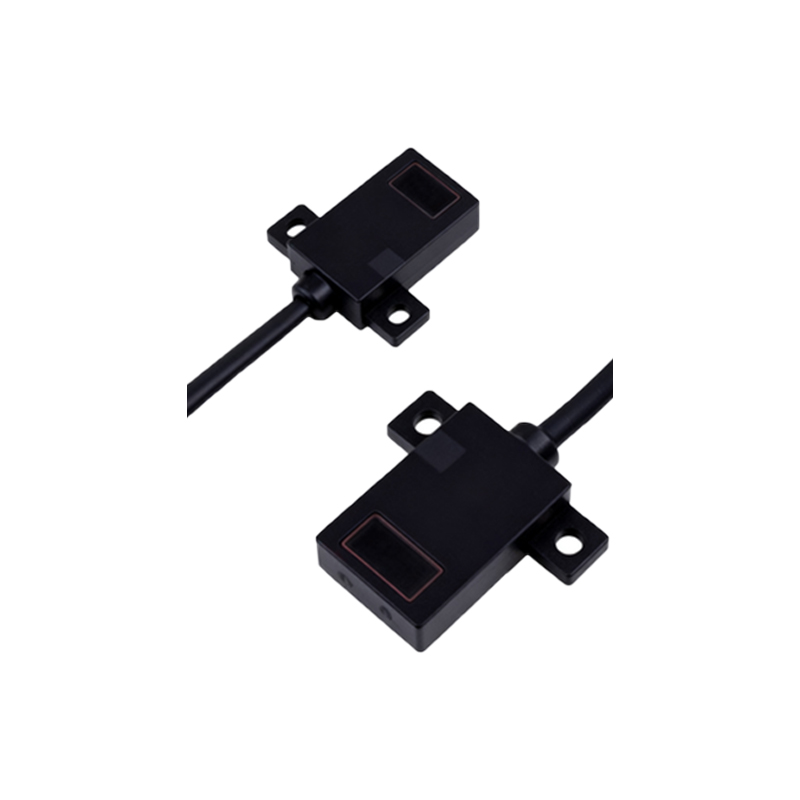
The core of a reflective laser sensor consists of a laser diode, a photodetector, and a signal processing unit. The laser diode emits a collimated beam (typically 650 nm or 905 nm wavelength) which strikes the target surface. The reflected beam is captured by the photodetector, which converts light intensity into an electrical signal. The sensor then analyzes signal strength, time-of-flight (ToF), or triangulation angle to determine object characteristics. For reliable operation, the sensor must account for surface reflectivity, color, and texture variations. Many modern sensors include auto-calibration circuits to adapt to changing conditions.
Advantages Over Conventional Sensors
Compared to standard photoelectric or inductive sensors, reflective laser sensors offer several distinct advantages. First, their narrow beam divergence (often< 1 mrad) allows detection of very small targets, such as microchips or thin wires. Second, they achieve long sensing distances—up to 50 meters in some models—without compromising accuracy. Third, laser sensors can operate reliably in harsh environments, including dusty or vibrating conditions, due to their high optical power and robust signal filtering. Additionally, they support high-speed switching (up to 10 kHz), making them ideal for fast-moving production lines.
Common Industrial Applications
Reflective laser sensors are widely deployed in automated manufacturing. In electronics assembly, they verify the presence of components on PCBs or inspect solder joints. In automotive production, they monitor robotic arm positioning and detect gaps in body panels. In logistics, they count packages on conveyor belts or measure fill levels in storage bins. A notable use case is in 3D laser scanning for quality control, where arrays of sensors create precise surface maps. The sensors also excel in safety systems, such as light curtains for machine guarding, due to their rapid response time.
Installation and Calibration Considerations
Proper installation is essential for optimal performance. The sensor must be aligned so that the laser beam hits the target perpendicularly to minimize reflection loss. The mounting distance should comply with the sensor's specified sensing range, and the background should be non-reflective to avoid false triggers. Calibration involves setting the threshold for reflected light intensity—this is often done via a teach-in button or software interface. Environmental factors like fog, oil mist, or strong sunlight may require the use of lens hoods or IR filters. Regular cleaning of the lens is also recommended to maintain accuracy.
Future Trends and Integration with Industry 4.0
The next generation of reflective laser sensors is moving toward smarter, more connected devices. Many now feature IO-Link communication for real-time diagnostics and parameter adjustment. Integration with machine learning algorithms enables adaptive detection, where the sensor learns to ignore background noise. Additionally, multi-beam and 2D array sensors are emerging for simultaneous multi-point measurement. As factories adopt Industry 4.0 standards, these sensors will play a key role in creating digital twins and enabling predictive maintenance. The trend toward miniaturization and lower power consumption will further expand their use in mobile robotics and IoT applications.
Conclusion
Reflective laser photoelectric sensors are indispensable tools in modern industrial automation, offering unmatched precision and reliability. Their ability to function in demanding environments, coupled with ongoing technological advancements, ensures they will remain a cornerstone of sensing solutions. Engineers should consider factors like target material, ambient conditions, and communication protocols when selecting and deploying these sensors to maximize production efficiency and quality.