Introduction to Blue Photoelectric Sensors
In the realm of industrial automation, photoelectric sensors are indispensable for detection, positioning, and quality control. Among the various types available, blue photoelectric sensors have carved out a significant niche due to their unique optical properties. Unlike traditional red-light sensors, blue light sensors operate at a shorter wavelength, typically around 470 nm. This fundamental difference in the light source bestows several distinct advantages, particularly in challenging detection scenarios involving specific materials or environmental conditions. Their adoption is growing across diverse sectors, from food and beverage processing to advanced electronics manufacturing, where precision and reliability are non-negotiable.
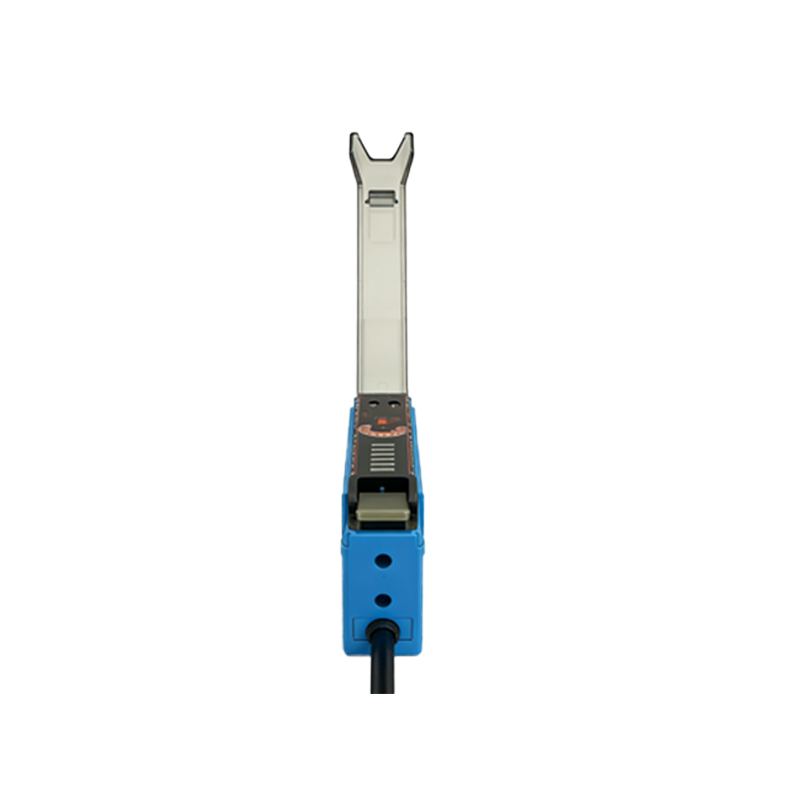
Core Operating Principles and Technology
The fundamental principle of a blue photoelectric sensor is similar to its red-light counterpart: it emits a light beam, and a receiver detects the presence or absence of the beam or its reflection to sense an object. The key technological divergence lies in the light-emitting diode (LED). Blue LEDs, made from materials like indium gallium nitride (InGaN), produce light with higher photon energy. This allows the sensor to interact differently with target objects. There are three primary sensing modes: through-beam, retro-reflective, and diffuse-reflective. In diffuse-reflective mode, the blue light's shorter wavelength is less prone to penetration and scatter on certain surfaces, leading to more stable detection of glossy, transparent, or low-contrast objects that often confuse red-light sensors.
Key Advantages in Industrial Applications
The primary advantage of blue photoelectric sensors is their superior performance with challenging materials. Transparent objects, such as glass bottles, plastic films, and clear liquids, absorb and reflect blue light differently than red light, resulting in a stronger signal contrast. Similarly, for highly reflective or glossy surfaces like metallic packaging or polished components, blue light reduces false triggers caused by specular reflection. Furthermore, blue light is less affected by ambient red light sources commonly found in factories, such as incandescent bulbs or some machine vision lights, enhancing signal integrity and noise immunity. This makes them exceptionally reliable in environments with variable lighting conditions.
Specific Use Cases and Industry Examples
In the food and beverage industry, blue sensors excel at detecting clear plastic bottles, monitoring fill levels in transparent containers, and identifying labels on glossy packaging. Within electronics manufacturing, they are crucial for detecting transparent substrates, silicon wafers, and the presence of thin, clear adhesive tapes. The automotive sector utilizes them for verifying the presence of clear coatings or inspecting glass components. Another growing application is in printing and packaging, where they reliably detect clear overlaminates, registration marks on shiny materials, and the precise edges of transparent films, ensuring high-speed process accuracy without downtime.
Selection Criteria and Installation Considerations
Selecting the appropriate blue photoelectric sensor requires careful analysis of the application. Key parameters include sensing distance, required response time, output type (e.g., NPN/PNP, analog), and housing material for environmental robustness (e.g., IP67 rating for washdown areas). The surface properties of the target object—its color, transparency, gloss, and size—are the most critical factors. Installation is paramount; sensors must be positioned to avoid direct interference from ambient blue light sources and angled correctly to minimize unwanted reflections from surrounding machinery. Regular maintenance, including lens cleaning to prevent dust or grime buildup, is essential for sustained optimal performance.
Comparison with Red and Infrared Sensors
While red-light sensors (around 650 nm) are versatile and cost-effective for general-purpose detection, and infrared sensors (850 nm and above) are excellent for long-range sensing and ignoring color variations, blue sensors fill a specific performance gap. Red light can penetrate or scatter excessively on transparent/glossy targets, causing unreliable detection. Infrared may be absorbed or poorly reflected by certain dark or non-metallic materials. Blue light offers a complementary solution, providing high-contrast detection precisely where other wavelengths falter. The choice is not about superiority but about matching the sensor's spectral output to the optical characteristics of the target and the environmental challenges.
Future Trends and Technological Developments
The future of blue photoelectric sensing is intertwined with advancements in LED technology and smart sensor integration. We are seeing the development of sensors with tunable intensity and multi-wavelength capabilities, sometimes combining blue with other colors for advanced material discrimination. Integration with Industrial Internet of Things (IIoT) platforms is a major trend, enabling sensors to provide diagnostic data, predictive maintenance alerts, and seamless communication via IO-Link or Ethernet protocols. Furthermore, miniaturization continues, allowing these powerful sensors to fit into increasingly compact machinery. As machine vision and sensor fusion evolve, blue photoelectric sensors will remain a critical, specialized tool in the automation engineer's arsenal.