Introduction to Photoelectric Sensing Technology
Photoelectric sensors are indispensable components in modern industrial automation, providing reliable, non-contact detection of objects. These devices operate by emitting a beam of light, typically from an LED or laser diode, and detecting changes in the received light signal caused by the presence, absence, or specific characteristics of a target object. Their ability to function without physical contact eliminates wear and tear, making them ideal for high-speed applications and harsh environments where mechanical switches would fail. The core principle hinges on the interaction between light and matter, translating optical phenomena into electrical signals that control machinery, count items, or ensure safety.

Core Operating Principles and Light Sources
The fundamental operation involves three key elements: an emitter, a receiver, and associated control circuitry. The emitter generates a modulated light beam, often in the visible red, infrared, or laser spectrum. Modulation, or pulsing the light at a specific frequency, is crucial. It allows the sensor's receiver to distinguish the intended signal from ambient background light (like factory lighting), dramatically improving reliability and signal-to-noise ratio. The receiver, typically a phototransistor or photodiode, converts the incoming light intensity into a proportional electrical current. The control circuitry then processes this signal, comparing it to a predefined threshold to generate a clean, digital output (ON/OFF) or an analog value.
Primary Sensing Modes: Through-Beam, Retroreflective, and Diffuse
Photoelectric sensors are categorized mainly by their optical path configuration, which defines their application scope. Through-beam sensors, also called opposed mode sensors, consist of separate, aligned emitter and receiver units. The object is detected when it interrupts the beam. This mode offers the longest sensing ranges and highest reliability because it uses a direct, unobstructed light path. Retroreflective sensors house both emitter and receiver in a single housing. They rely on a reflector, often a corner-cube prism, to bounce the light beam back. An object is detected when it blocks this return path. A polarization filter is sometimes used to ignore shiny objects that might falsely reflect light. Diffuse sensors, or proximity mode sensors, also have a combined emitter and receiver. They detect an object when light reflects off the object's surface back to the receiver. Sensing distance depends on the target's color, texture, and reflectivity.
Advanced Functionalities and Specialized Types
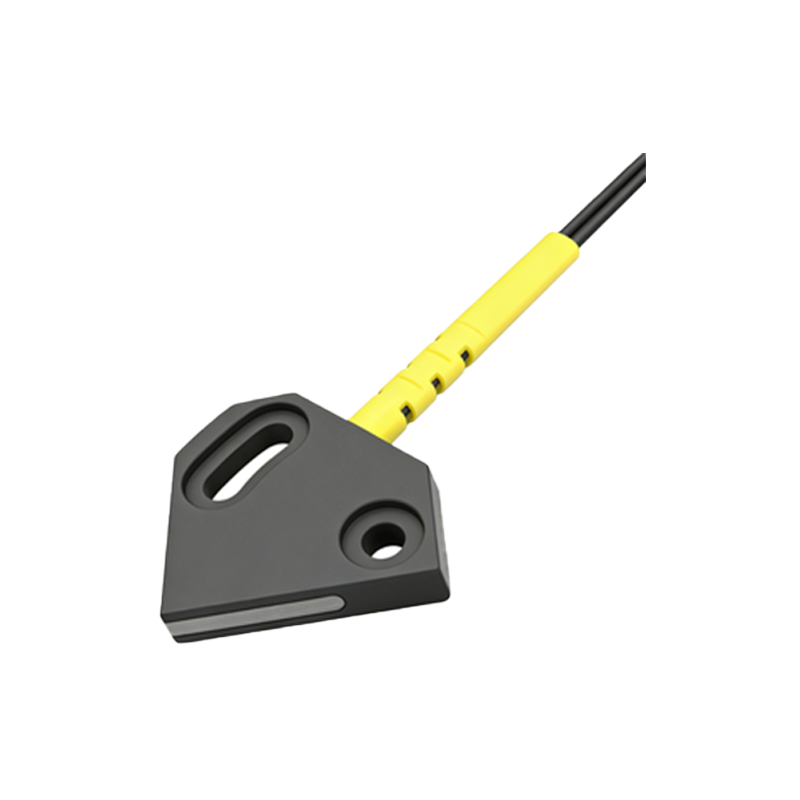
Beyond basic presence detection, advanced photoelectric sensors offer sophisticated functionalities. Background suppression sensors use triangulation principles to detect objects only within a precise, fixed distance, ignoring surfaces beyond that range regardless of color or reflectivity. This is vital for consistent detection on conveyor belts. Contrast sensors evaluate the difference in light intensity between the target and its background, perfect for label detection or edge guiding. Luminescence sensors detect the faint visible light emitted by certain materials under UV excitation, used in security or sorting applications. Fiber optic sensors utilize flexible light guides to bring light to and from cramped, hot, or hazardous locations where the sensor electronics cannot be placed.
Critical Performance Specifications and Selection Criteria
Selecting the correct sensor requires understanding key specifications. Sensing distance, the maximum range at which an object can be reliably detected, varies greatly by type and model. Repeatability defines the precision of detection at the same point. Response time, often in microseconds, determines the maximum operational speed. Light source type (red LED, infrared, laser) affects spot size, range, and visibility for alignment. Environmental factors are paramount: an IP67 or IP69K ingress protection rating is needed for washdown areas, while specialized housings resist chemicals, oils, or physical impact. The output type (NPN/PNP transistor, analog, IO-Link) must match the control system's input requirements.
Practical Applications Across Industries
The applications are vast and cross-sectorial. In packaging, they count bottles, detect label positions, and verify cap presence. In material handling, they provide pallet positioning, box sizing, and jam detection on conveyors. Automotive assembly lines use them for robot guidance, part verification, and weld seam tracking. In electronics manufacturing, they ensure precise component placement on PCBs. Safety curtains, consisting of arrays of through-beam sensors, create invisible barriers around dangerous machinery to protect personnel. Their versatility, speed, and accuracy make them a cornerstone of Industry 4.0 and smart factory initiatives.
Installation, Alignment, and Troubleshooting Tips
Proper installation is key to optimal performance. Ensure the sensor is securely mounted to minimize vibration. For through-beam and retroreflective types, precise alignment is critical; many models have built-in alignment indicators (like a green LED for signal strength). Avoid mounting surfaces that can transmit vibration to the sensor. Keep lenses clean from dust, moisture, and oil buildup. Common issues include false triggering from reflective backgrounds, which can be solved by adjusting the angle or using a sensor with background suppression. Insufficient signal strength may require cleaning the lens, realigning, or selecting a sensor with higher excess gain for the application. Always consult the manufacturer's datasheet for specific mounting distances and environmental limits.