Introduction to Diffuse Reflection Laser Sensors
Diffuse reflection laser switch photoelectric sensors represent a sophisticated category of non-contact detection devices. Unlike through-beam or retro-reflective sensors, they house both the laser emitter and the receiver in a single housing. The operating principle is straightforward: the integrated laser diode emits a focused beam of coherent light towards a target. When this beam strikes an object, light is scattered or "diffused" in many directions. A portion of this scattered light reflects back to the sensor's receiver. The internal electronics then evaluate the intensity of this returned signal. If the intensity surpasses a pre-set threshold, the sensor's output switch is activated, signaling the presence of the object. This self-contained design eliminates the need for a separate reflector or receiver unit, simplifying installation and alignment, particularly in space-constrained applications.
Core Advantages of Laser Light Source
The utilization of a laser, as opposed to a standard LED light source, confers significant performance benefits. The primary advantage is the exceptional precision offered by the laser's highly collimated beam. This results in a very small, well-defined sensing spot, enabling the detection of extremely small objects or precise edges with high repeatability. The coherent nature of laser light allows for longer sensing ranges compared to standard diffuse sensors, often exceeding several meters. Furthermore, the intense, focused beam provides superior resistance to ambient light interference. This makes laser sensors ideal for environments with strong background illumination, such as near welding stations or in direct sunlight. The visible red laser dot also aids immensely in precise alignment and setup, reducing commissioning time.
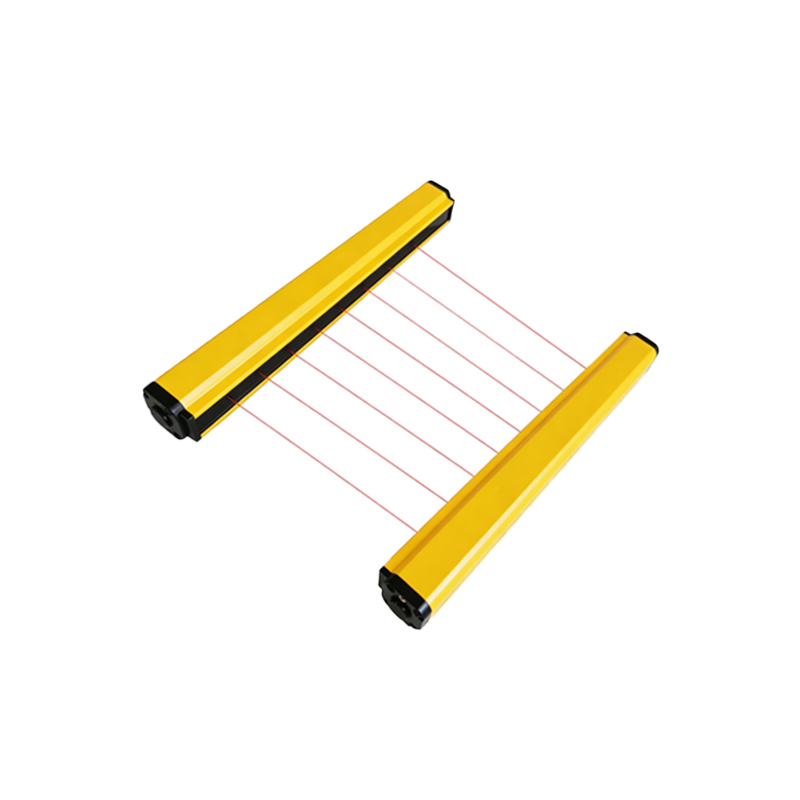
Key Technical Specifications and Parameters
Selecting the appropriate diffuse reflection laser sensor requires careful analysis of several critical parameters. The *sensing range* is fundamental and must accommodate the maximum expected distance to the target. Engineers must also consider the *spot size* at that range, as it determines the minimum detectable object size. *Repeatability*, typically specified in micrometers, indicates the sensor's precision in consistently detecting an object at the same point. *Response time* is crucial for high-speed applications like counting on fast conveyors. The *output type* (e.g., NPN, PNP, analog, IO-Link) must be compatible with the control system. Environmental factors dictate the need for specific *housing materials* (often stainless steel) and *Ingress Protection (IP) ratings* to withstand dust, moisture, or washdowns. Finally, features like *background suppression* or *foreground suppression* logic allow the sensor to ignore objects beyond or before a certain distance, adding another layer of application-specific control.
Industrial Applications Across Sectors
The versatility of diffuse reflection laser sensors makes them indispensable across numerous industries. In packaging and material handling, they are deployed for precise bottle cap detection, label verification, and carton presence checking on high-speed lines. Within the automotive sector, these sensors ensure component positioning accuracy in robotic assembly cells and verify the presence of small parts like pins or springs. Electronics manufacturing relies on them for wafer handling, PCB positioning, and detecting miniature surface-mount components. They also play a vital role in logistics for parcel dimensioning, pallet detection, and automated guided vehicle (AGV) navigation. Their ability to detect a wide variety of materials—including glass, plastic, metal, and even uneven surfaces—broadens their applicability far beyond simple presence detection.
Installation and Alignment Best Practices
Correct installation is paramount for reliable operation. The sensor should be mounted securely to minimize vibration, which can affect signal stability. When aligning the visible laser dot, it is critical to ensure the beam is perpendicular to the target surface whenever possible, as angled incidence can reduce the amount of reflected light received. For highly reflective or shiny targets, mounting the sensor at a slight angle (10-15 degrees) can help avoid direct specular reflection away from the receiver. The sensing environment must be evaluated for potential optical obstructions, airborne dust, or steam that could scatter the beam. Utilizing the sensor's built-in teach-in function or potentiometer for setting the sensitivity threshold directly on the actual target under operating conditions is a recommended best practice to account for real-world variables.
Comparison with Other Photoelectric Sensor Types
Understanding when to choose a diffuse laser sensor over other types is key. Compared to standard *diffuse sensors* with LEDs, laser variants offer longer range, a smaller spot size, and better performance on dark or low-reflectivity targets. Against *through-beam sensors*, they offer easier installation (one device) but generally have a shorter maximum range and can be influenced by the target's color and surface texture. *Retro-reflective sensors* require a reflector but are less sensitive to target properties; however, laser diffuse sensors avoid issues with reflector contamination. *Background suppression sensors*, a subtype of diffuse sensors, use triangulation to sense only at a specific distance, making them superior for ignoring backgrounds, but laser versions of these offer even higher precision. The choice ultimately hinges on the specific demands of range, precision, target characteristics, and environmental conditions.
Future Trends and Technological Developments
The evolution of diffuse reflection laser sensors is closely tied to advancements in industrial automation and Industry 4.0. Integration of smart communication protocols like IO-Link is becoming standard, enabling remote parameter configuration, real-time diagnostics, and condition monitoring data directly to the PLC or cloud. Miniaturization continues, allowing sensors to fit into increasingly tight spaces. There is also a trend towards multi-functional devices that combine measurement capabilities (e.g., distance via analog output) with switching functions. Enhanced connectivity will facilitate predictive maintenance, where sensors can report degrading performance before a failure occurs. Furthermore, improvements in laser diode efficiency and receiver sensitivity will likely push the boundaries of achievable sensing ranges and reliability in harsh environments, solidifying their role as a cornerstone of modern industrial sensing.