Introduction to Photoelectric Sensors in Robotics
Photoelectric sensors are pivotal components in modern robotics, enabling machines to perceive their environment with high precision. These sensors operate by emitting a light beam—typically infrared, visible, or laser—and detecting changes in the received light to sense objects, distances, or colors. In robotics, they serve as the "eyes" of automated systems, providing critical data for navigation, object detection, and quality control. The interface between robots and photoelectric sensors involves both hardware connections and software protocols, ensuring seamless integration into industrial and service applications. This article delves into the underlying principles, wiring methods, and practical implementations of photoelectric sensors in robotic systems.
Working Principles of Photoelectric Sensors
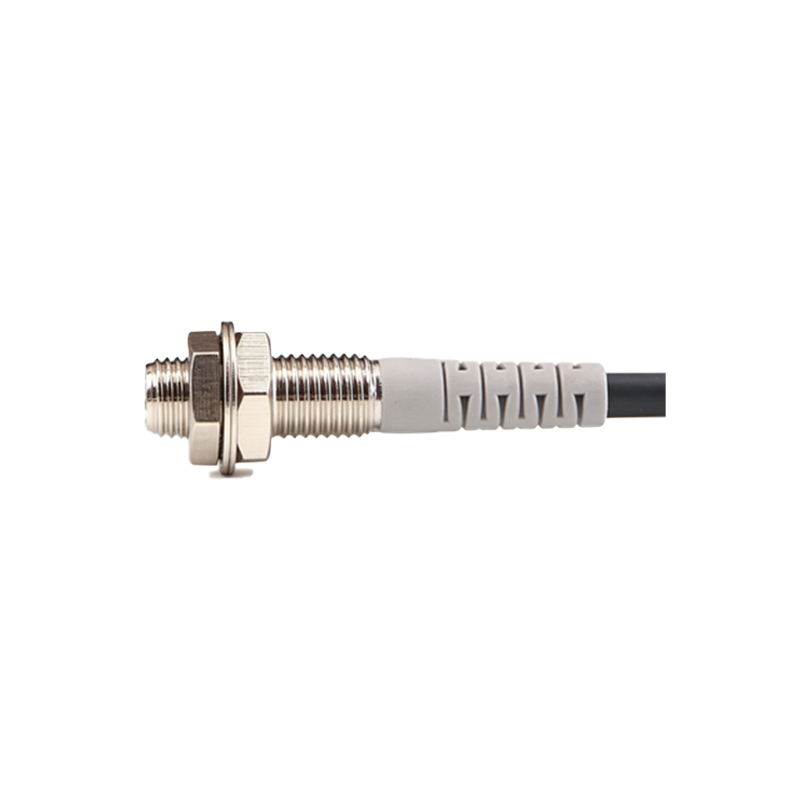
Photoelectric sensors function based on three primary modes: through-beam, retro-reflective, and diffuse reflective. In through-beam mode, an emitter and receiver are placed opposite each other; an object interrupts the light beam, triggering a detection signal. Retro-reflective sensors use a reflector to bounce light back to the receiver, with interruptions indicating presence. Diffuse reflective sensors rely on light reflecting directly off objects, making them suitable for close-range detection. These sensors convert light signals into electrical outputs—typically digital (ON/OFF) or analog—which robots interpret via control units. Key parameters include sensing range, response time, and environmental immunity to factors like dust or ambient light, ensuring reliability in diverse settings.
Electrical Interface and Wiring Techniques
Connecting photoelectric sensors to robots requires careful attention to electrical compatibility. Most sensors output signals using transistor-transistor logic (TTL) or open-collector configurations, with common voltages being 5V, 12V, or 24V DC. Wiring involves linking the sensor's output pin to the robot's input module, such as a programmable logic controller (PLC) or microcontroller. For instance, a three-wire sensor includes power (Vcc), ground (GND), and signal wires, while two-wire models integrate power and signal. Shielding and proper grounding are essential to prevent electromagnetic interference, especially in industrial environments. Additionally, robots may use interface boards or signal conditioners to match voltage levels, ensuring accurate data transmission without damaging sensitive components.
Communication Protocols and Data Processing
Beyond simple wiring, advanced robotic systems employ communication protocols for sensor integration. Protocols like IO-Link, Ethernet/IP, or Modbus enable bidirectional data exchange, allowing robots to configure sensor settings and receive real-time feedback. For example, a robot arm might use analog sensors to measure distance continuously, processing data via an embedded processor to adjust grip force. Microcontrollers in robots, such as Arduino or Raspberry Pi, can read sensor inputs through GPIO pins, with software libraries facilitating calibration and filtering. Signal processing algorithms, like debouncing or averaging, enhance accuracy by reducing noise, ensuring robots respond appropriately to sensor triggers in dynamic tasks.
Applications in Robotic Systems
Photoelectric sensors are ubiquitous in robotics, from manufacturing to healthcare. In assembly lines, they detect part presence for pick-and-place robots, ensuring precise positioning. Autonomous mobile robots (AMRs) use arrays of sensors for obstacle avoidance and navigation, often combining them with LiDAR for mapping. In collaborative robots (cobots), diffuse sensors enable safe human interaction by monitoring proximity. Quality inspection robots leverage color or contrast sensors to identify defects, with high-speed responses minimizing downtime. Case studies show that integrating photoelectric sensors can boost efficiency by up to 30% in automated warehouses, highlighting their role in Industry 4.0 and smart automation.
Challenges and Best Practices
Despite their advantages, interfacing photoelectric sensors with robots presents challenges. Environmental factors like bright lighting or reflective surfaces can cause false triggers, necessitating sensor selection with adjustable sensitivity or modulated light sources. Wiring complexity increases in multi-sensor setups, requiring careful cable management to avoid signal crosstalk. Best practices include regular maintenance to clean lenses, validating sensor alignment, and using fail-safe circuits in critical applications. Testing with simulation software before deployment helps optimize placement and parameters. As robotics evolve, trends like miniaturization and wireless sensor networks are simplifying integration, paving the way for more adaptive and intelligent systems.
Future Trends and Conclusion
The future of robot-photoelectric sensor interfaces lies in enhanced connectivity and AI-driven analytics. Smart sensors with embedded processors will self-calibrate and communicate via IoT platforms, enabling predictive maintenance. Machine learning algorithms will interpret sensor data for adaptive behaviors, such as robots learning to handle irregular objects. Advances in materials may lead to flexible or transparent sensors for novel applications. In summary, understanding the principles of photoelectric sensor interfacing is crucial for engineers designing robust robotic solutions. By mastering wiring, protocols, and applications, professionals can harness these sensors to create safer, more efficient automated systems that drive innovation across industries.