Understanding the Dust Challenge in Industrial Sensing
Dust and particulate matter represent one of the most pervasive and challenging environmental factors in industrial automation. In settings such as mining, wood processing, cement production, and food manufacturing, airborne particles can quickly accumulate on equipment, leading to signal obstruction, false triggers, and ultimately, sensor failure. Traditional through-beam sensors, which rely on a separate emitter and receiver, are particularly vulnerable. Even a thin layer of dust on the lens can attenuate the light beam, reducing the sensing reliability and operational lifespan. This necessitates frequent maintenance, downtime, and increased operational costs. The fundamental issue lies in the optical path being exposed and the requirement for precise alignment, which dust interference directly compromises.
The Design Principle of Trough-Type Sensors
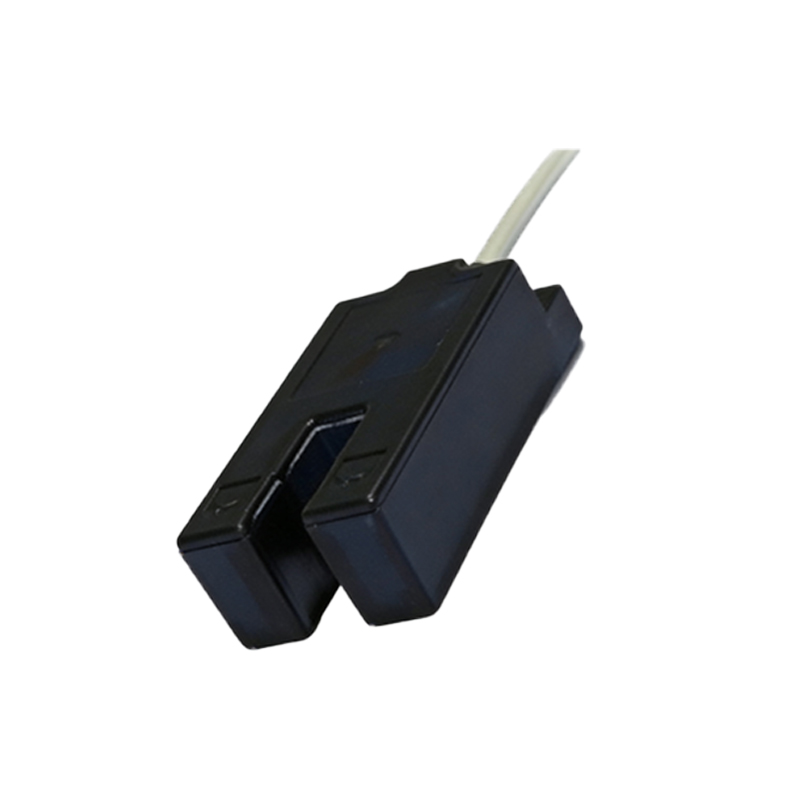
The trough-type, or fork-type, photoelectric sensor integrates the emitter and receiver into a single U-shaped or fork-shaped housing, facing each other across a narrow gap or "trough." This design creates a self-contained optical path. The key to its dust resistance is this enclosed channel. While not hermetically sealed from the environment, the narrow, deep trough inherently limits the direct exposure of the optical components to falling or airborne dust. The light beam travels a very short, protected distance from the emitter diode directly to the receiving phototransistor or photodiode. This compact, opposed arrangement is inherently less susceptible to misalignment and allows for more robust housing designs that can shield the critical optical interfaces from direct particulate accumulation.
Mechanical and Optical Strategies for Dust Mitigation
Beyond the basic trough geometry, several design enhancements fortify these sensors against dust. Mechanically, housings are often constructed from materials that resist static buildup, which attracts dust. The interior surfaces of the trough may be designed with smooth, sloped walls to encourage dust to slide off rather than collect. Optically, manufacturers employ high-intensity modulated LED light sources, typically infrared. Modulation involves pulsing the light at a specific high frequency. The receiver's circuitry is tuned to recognize only this specific frequency, effectively ignoring ambient light and, crucially, scattered or reflected light from dust particles floating in the trough. This allows the sensor to maintain a stable "beam broken" detection logic even in lightly dusty conditions.
The Role of Air Purge and Sealing Technologies
For extremely harsh environments, passive design is supplemented with active and enhanced sealing methods. A common industrial solution is the integration of an air purge port. Clean, dry compressed air can be gently blown through channels within the sensor housing, creating a positive pressure barrier that continuously expels dust from the trough area, preventing ingress. On the sealing front, high-grade ingress protection (IP) ratings, such as IP67 or IP69K, are critical. These ratings ensure the sensor body is dust-tight (the "6" in IP67) and can withstand high-pressure, high-temperature washdowns. This is achieved through specialized gaskets, O-rings, and potted electronics that seal the internal components from both dust and moisture, preserving the integrity of the optical system.
Application-Specific Considerations and Selection Criteria
Selecting the right trough sensor for a dusty application requires careful analysis. Key parameters include the size of the trough aperture relative to the target and the expected dust particle size. A wider gap might be necessary for larger objects but could allow more dust accumulation. The sensing mode is also vital; while the standard through-beam mode is common, some sensors offer background suppression or diffuse reflective modes within the trough for specific detection needs. Material composition matters—sensors for food industry use often require FDA-compliant materials like stainless steel. Engineers must also evaluate the required sensing range within the trough, response time, and output configuration (PNP/NPN, analog, IO-Link) to ensure compatibility with the control system amidst environmental challenges.
Maintenance and Operational Best Practices
Even with robust designs, proactive maintenance ensures longevity and reliability in dusty conditions. Establishing a regular inspection and cleaning schedule is paramount. Using soft, lint-free cloths or approved cleaning tools to gently clear the trough of any accumulated debris is recommended. For sensors with air purge, maintaining a clean, dry air supply at the correct pressure is essential. Monitoring performance through diagnostic indicators or via networked IO-Link sensors, which can provide internal health data, allows for predictive maintenance. Ensuring proper installation, away from direct sources of heavy dust plumes or with protective baffles if necessary, can significantly reduce the sensor's exposure and operational burden.
Conclusion: Ensuring Reliability in Demanding Environments
Trough-type photoelectric sensors offer a fundamentally advantageous architecture for maintaining reliable object detection in dust-prone industrial applications. Their success is not due to a single feature but a combination of intelligent mechanical design, advanced optical signal processing, and rigorous sealing standards. By creating a short, protected optical path and employing technologies like modulated light and air purge, these sensors effectively combat the obscuring and degrading effects of dust. For system integrators and plant engineers, understanding these principles is key to selecting, implementing, and maintaining sensing solutions that minimize downtime and maximize productivity in the most challenging atmospheric conditions.