Introduction to Infrared Photoelectric Sensors
Infrared photoelectric sensors are fundamental components in modern industrial automation, object detection, and safety systems. These devices operate by emitting an infrared light beam and detecting its reflection or interruption to sense the presence, absence, or distance of an object. Their non-contact nature, reliability, and versatility make them indispensable across numerous applications, from conveyor belt monitoring to intricate robotic guidance. The core principle hinges on the interaction between the emitted IR light and the target, with the sensor's receiver interpreting changes in the received light signal. A critical parameter defining their performance and suitability for any given task is the working range, which encompasses both sensing distance and the effective detection area.
Defining the Key Range Parameters
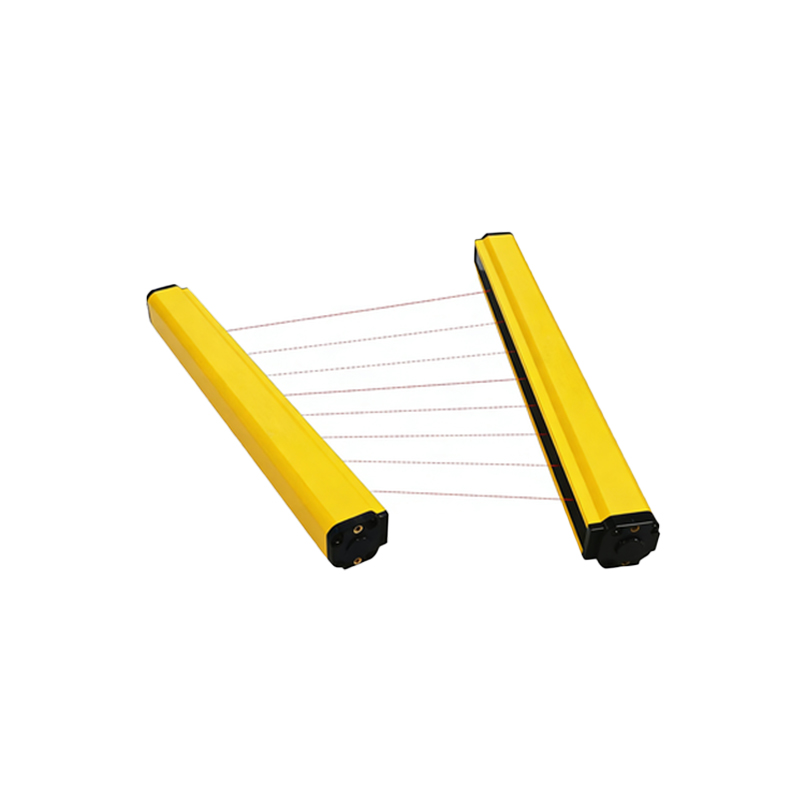
The working range of an infrared photoelectric sensor is not a single figure but a set of interrelated specifications. The primary specification is the sensing distance, often listed as the *standard sensing distance* or *rated operating distance*. This is the nominal distance at which a standard target (typically a matte white surface of a specified size) can be reliably detected under ideal conditions. It is crucial to distinguish this from the assured operating distance, which is a more conservative value (often 70-80% of the standard distance) accounting for factors like supply voltage fluctuations, temperature variations, and sensor aging, guaranteeing stable operation. For diffuse-reflective sensors, this distance is fixed. For thrubeam and retro-reflective types, the maximum sensing distance defines the limit between emitter and receiver.
Factors Influencing the Effective Sensing Range
Several factors can significantly alter the real-world working range from the ideal laboratory specification. The target properties are paramount: color, material, surface finish, size, and angle. A glossy black object absorbs most IR light and is much harder to detect at range compared to a matte white object of the same size. The environmental conditions play a major role; ambient light (especially sunlight containing IR), dust, fog, steam, and oil mist can scatter or saturate the IR beam, reducing effective range or causing false triggers. Electrical noise and voltage stability also impact the sensor's sensitivity and consistency. Finally, the lens design and IR wavelength affect the beam's shape and intensity. A focused, narrow beam achieves longer range but on a smaller spot, while a wide beam covers a larger area at a shorter distance.
Sensor Types and Their Characteristic Ranges
The working range is intrinsically linked to the sensor's operating mode. Thrubeam (Through-beam) sensors, with separate emitter and receiver units, offer the longest possible working ranges, often extending from a few centimeters up to several tens of meters. They are highly reliable for long-distance detection as they rely on beam interruption. Retro-reflective sensors use a single unit and a reflector, achieving ranges typically up to 10-15 meters, though they can be confused by shiny objects that also reflect light. Diffuse-reflective (Proximity) sensors have the shortest range, as they depend on light reflecting directly off the target. Their range is usually from a few millimeters to about 2-3 meters, heavily dependent on the target's reflectivity. Specialized background suppression and fixed-field sensors precisely define a limited, insensitive range beyond the target to ignore distant backgrounds.
Beam Patterns and Detection Field
Beyond linear distance, the working range includes the spatial detection field or beam pattern. This is the three-dimensional zone within which an object can be sensed. It is determined by the lens and emitter design. Common patterns include a small, precise spot for long-range or small-part detection; a narrow, columnar beam for precise positioning; and a wide, fan-shaped beam for area monitoring. Understanding the beam pattern is essential for application design to ensure the target passes through the effective detection zone. Data sheets typically provide beam pattern diagrams showing the divergence angle and spot size at various distances, which defines the sensor's "field of view."
Practical Considerations for Range Selection and Optimization
Selecting a sensor with an appropriate working range requires practical foresight. Always derate the catalog sensing distance. A good rule is to use only 50-70% of the standard sensing distance to build in a safety margin for unfavorable target conditions and environmental degradation. For challenging targets (dark, small, or angled), choose a sensor with a rated distance 3 to 5 times greater than the actual installation distance. Ensure the target is larger than the beam spot at the sensing point. Mitigate environmental interference by using sensors with modulated IR light (to ignore constant ambient light), installing physical shrouds, or selecting models with robust environmental ratings (IP67/IP69K). Regular maintenance to keep lenses clean is vital for maintaining the specified working range over time.
Advanced Technologies Extending Functional Range
Technological advancements continue to push the boundaries of infrared photoelectric sensing. Time-of-Flight (ToF) sensors measure the phase shift or direct flight time of the IR pulse to calculate distance, enabling precise ranging over several meters with background suppression capabilities. Lasers-based IR sensors provide extremely focused, high-intensity beams for very long-range detection or precise measurement of tiny objects. Fiber optic units separate the amplifier from the sensing head, allowing detection in extremely hot, cramped, or hazardous locations while the electronics remain safe, effectively extending the *application* range if not the optical range. These technologies offer solutions where traditional photoelectric sensors reach their limits.
Conclusion and Application Insights
The working range of an infrared photoelectric sensor is a multifaceted specification central to its successful application. It is governed by the sensor type, target characteristics, and operating environment. Engineers must look beyond the nominal sensing distance and consider the assured operating distance, beam pattern, and all mitigating factors that affect real-world performance. By carefully matching the sensor's range capabilities to the application's requirements—and incorporating a significant safety margin—reliable, robust, and long-lasting automation solutions can be achieved. Understanding these principles ensures optimal sensor selection, installation, and performance in the diverse and demanding landscape of industrial automation.