Understanding the Core Operating Principle
At its heart, a photoelectric sensor operates by emitting a light beam (typically from an LED or laser diode) and detecting changes in the received light. The fundamental distinction between sensor types lies in the method used for light transmission and reception. This principle governs their application suitability, ranging from simple presence detection to precise distance measurement. All photoelectric sensors consist of three main components: an emitter, a receiver, and associated control circuitry. The interaction, or lack thereof, between the emitted light and the target object is the key variable that differentiates the sensing modes and, consequently, the sensor types.
Through-Beam Sensors: The Maximum Reliability
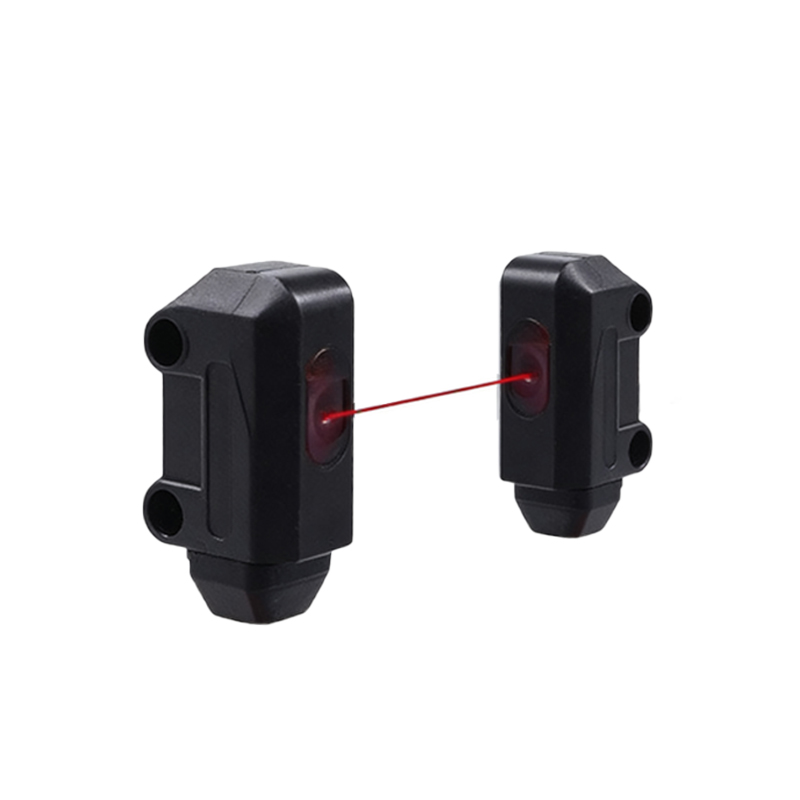
Through-beam sensors, also known as opposed-mode sensors, feature physically separate emitter and receiver units positioned opposite each other. The emitter projects a continuous beam of light directly to the receiver. Detection occurs when an object interrupts this beam. This configuration offers the longest sensing ranges and highest reliability because it relies on the complete absence of light at the receiver. It is less susceptible to environmental factors like target color, reflectivity, or surface finish. However, installation requires precise alignment of two separate units, which can be more complex and costly in terms of wiring and mounting hardware. Typical applications include object counting on conveyors, break detection in packaging, and safety curtains.
Retroreflective Sensors: The Balanced Solution
Retroreflective sensors house both the emitter and receiver in a single housing. They operate by projecting light towards a specialized reflector, often a corner-cube reflector, which returns the beam directly back to the receiver. An object is detected when it blocks this reflected beam. This design simplifies installation compared to through-beam sensors, as only one device needs wiring and mounting, and alignment is with a passive reflector. Sensing range is generally shorter than through-beam but longer than diffuse sensors. A critical consideration is that shiny, reflective objects near the sensor might falsely reflect light back to the receiver, causing an error. Many models incorporate polarization filters to mitigate this by ensuring only light from the specific reflector is recognized.
Diffuse Reflective Sensors: Proximity Sensing
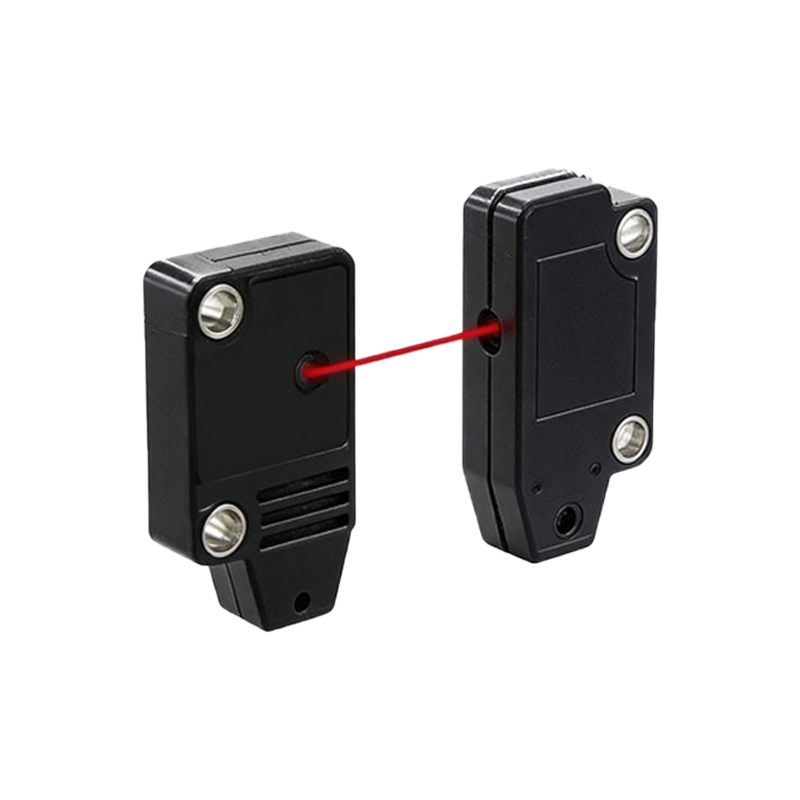
Diffuse reflective sensors, or proximity-mode sensors, also integrate the emitter and receiver into one unit. However, they do not use a separate reflector. Instead, they detect the light diffusely reflected off the surface of the target object itself. Detection is based on the intensity of the reflected light returning to the receiver. This makes them highly convenient for detecting objects at close range without needing a separate component on the opposite side. Their performance is heavily influenced by the target's color, size, texture, and reflectivity. Light-colored objects are detected at longer ranges than dark, absorptive ones. Advanced versions, known as background suppression or convergent beam sensors, use triangulation to detect objects only within a specific field, ignoring more distant backgrounds.
Key Selection Criteria for Differentiation
Choosing the correct photoelectric sensor requires evaluating several parameters beyond just the operating mode. Sensing range is primary; through-beam offers the longest, diffuse the shortest for a given target. The required detection precision influences the choice; background suppression sensors offer high precision for small objects. Environmental conditions are crucial: consider the presence of dust, fog, or ambient light, which may necessitate sensors with modulated LED light and synchronous detection to ignore interference. The physical properties of the target—its size, color, material, and surface—directly point towards the most robust sensor type. Finally, the required output (e.g., digital PNP/NPN, analog, IO-Link) and housing material (metal or plastic for washdown environments) complete the selection matrix.
Specialized Variants and Advanced Features
Beyond the three primary types, specialized sensors address niche applications. Fiber optic photoelectric sensors use flexible light guides to deliver and receive light, allowing sensing in extremely tight, hot, or hazardous spaces. Color sensors differentiate between colors by analyzing reflected light wavelengths. Luminescence sensors detect materials that glow under UV light. Contrast sensors detect mark-on-label differences. Furthermore, modern sensors integrate advanced features like adjustable sensing windows, teach-in functionality for easy setup, and diagnostic LEDs. Laser-based sensors provide a very precise, collimated beam for detecting small objects or exact positioning, often used in diffuse or through-beam configurations for high-accuracy tasks.