Introduction to Photoelectric Sensor Letter Codes
In the realm of industrial automation and electrical engineering, photoelectric sensors are ubiquitous components. To ensure clarity, precision, and universal understanding across datasheets, technical manuals, and system diagrams, a standardized system of letter codes is employed. These codes, often found in model numbers or specification tables, concisely convey critical information about a sensor's function, output type, light source, and housing. Mastering this alphanumeric language is essential for engineers to select the correct sensor for any application, from simple object detection to complex positioning tasks. This guide deciphers the common letter codes used by major manufacturers, providing a key to interpreting sensor specifications efficiently.
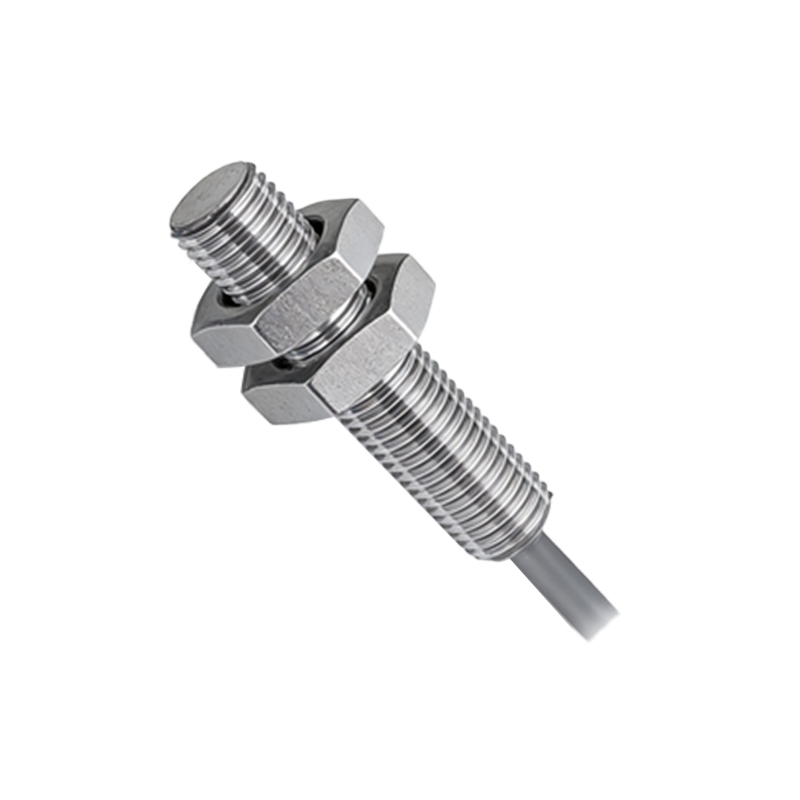
Common Function and Type Designators
The core of a sensor's identity is often indicated by one or two initial letters. These designate the fundamental operating principle. For instance, 'E3Z' or 'E3S' series from common manufacturers typically denote a standard photoelectric sensor. Within that, suffixes further define the type. 'B' frequently stands for a Background Suppression sensor, a type of diffuse sensor that ignores objects beyond a set distance. 'R' is commonly used for Retro-reflective sensors, which use a reflector. 'T' often identifies a Through-beam (or Thru-beam) sensor, consisting of separate emitter and receiver units. 'D' can signify a Diffuse (proximity) sensor. Understanding these base codes is the first step in narrowing down the sensor category.
Output Configuration Codes
The electrical output of a sensor, defining how it interfaces with a controller like a PLC, is another critical aspect coded in letters. The most prevalent codes are 'N' and 'P'. 'N' typically represents a sinking (NPN) output, where the load is connected between the output terminal and the positive supply voltage. Conversely, 'P' denotes a sourcing (PNP) output, with the load connected between the output and common negative. Other codes include 'A' for Analog output (e.g., 0-10V or 4-20mA), which provides a variable signal proportional to the detected distance or light intensity. 'L' may indicate a relay or power output. Some sensors feature dual outputs, indicated by codes like 'NPN/PNP' or specific dual-channel designators.
Light Source and Beam Type Indicators
The type of light emitted by the sensor is a key performance characteristic. 'R' or 'RED' often specifies a visible red light LED, useful for easy alignment. 'G' or 'GREEN' indicates a green light source. 'IR' is universally used for Infrared (invisible) light, common for its immunity to ambient light interference. For laser-based sensors, which offer a precise, narrow beam, codes like 'LS' or 'LV' are standard. Furthermore, the beam pattern might be indicated; for example, a focused beam for long-range detection versus a diffuse beam for wider coverage. Fiber optic units, which use a separate amplifier, often have codes beginning with 'E3X' or 'E32', with suffixes indicating the fiber head type (e.g., thru-beam or diffuse).
Housing and Connection Specifications
The physical form and connection method are also encoded. 'M' frequently refers to a M8 or M12 standard quick-disconnect connector, a very common industrial form factor. 'C' might indicate a cable version instead of a connector. Housing material is sometimes implied; 'S' can denote a stainless steel housing for harsh environments, while standard plastic housings may not have a specific letter. Shape indicators exist too; for example, 'T' or 'BL' might refer to a rectangular or block-style housing, whereas 'CYL' indicates a cylindrical barrel shape. Thread size, such as M18 or M30, is usually part of the numerical model, not a letter code.
Special Feature and Application Suffixes
Finally, additional letters highlight special features that tailor the sensor to specific applications. 'F' is a crucial code, often standing for a Fiber optic model or sometimes for a Feature like teach-in functionality. 'Q' or 'HQ' might indicate high-speed response or a Quick-disconnect. 'W' could denote a Wide-beam model or a model designed for Washdown (high-pressure cleaning) environments with specific ingress protection ratings like IP67 or IP69K. 'T' might be used for models with a Timer function built-in. 'A' could also mean Auto-sensitivity adjustment. Engineers must consult the specific manufacturer's catalog, as these suffix meanings can vary slightly between brands.
Practical Example: Decoding a Model Number
Let's analyze a hypothetical model: E3Z-T81A 2M. 'E3Z' identifies it as a photoelectric sensor series. 'T' tells us it's a Thru-beam type. '81' is a numerical designator for its specific size and electrical characteristics. 'A' likely indicates an Analog output or a specific housing variant. '2M' specifies a 2-meter cable length. Without the letter codes, this is just a string of characters. With the code knowledge, an engineer instantly knows this is a thru-beam sensor with an analog output, suitable for distance measurement or detecting transparent objects, and can immediately assess its suitability for a given task.
Conclusion and Best Practices
While the letter code system provides a powerful shorthand, it is not 100% universal. Different manufacturers may use similar letters for slightly different features. The single most important practice for any engineer is to always refer to the specific manufacturer's datasheet or technical guide for the definitive explanation of their coding system. However, the conventions outlined here form a strong foundational vocabulary. By internalizing these common photoelectric sensor letter codes—function type, output, light source, housing, and features—engineers can dramatically accelerate the specification, procurement, and integration process, ensuring robust and reliable automation system design.