Introduction to Photoelectric Sensing Technology
Photoelectric sensors are widely used in industrial automation for detecting the presence, absence, or position of objects. These sensors operate by emitting a light beam—typically infrared, visible, or laser—and detecting changes in the received light due to an object interrupting or reflecting the beam. Common types include through-beam, retro-reflective, and diffuse reflective sensors, each suited for specific applications based on accuracy, range, and environmental conditions. While their primary function is often binary detection, advancements in sensor technology have expanded their capabilities to include measurement tasks, such as gauging object dimensions. This raises the question: can photoelectric sensors effectively measure object length? The answer lies in understanding their operational principles, limitations, and integration with supplementary systems.
Principles of Length Measurement with Photoelectric Sensors
Measuring object length using photoelectric sensors relies on time-based or position-based methods. In time-based approaches, a sensor detects the leading and trailing edges of an object as it moves past a fixed point. By combining the object's speed with the time interval between these detections, the length can be calculated using the formula: Length = Speed × Time. This method requires precise speed data, often from encoders or conveyors, and high-response sensors to minimize error. Alternatively, position-based methods use multiple sensors arranged linearly along the object's path. As the object passes, sensors trigger sequentially, allowing length determination based on known distances between sensor positions. For higher accuracy, laser triangulation or time-of-flight sensors may be employed, which measure distance by analyzing reflected light patterns or flight time, respectively. These techniques enable non-contact measurement, reducing wear and suitable for fragile or fast-moving items.
Factors Influencing Measurement Accuracy
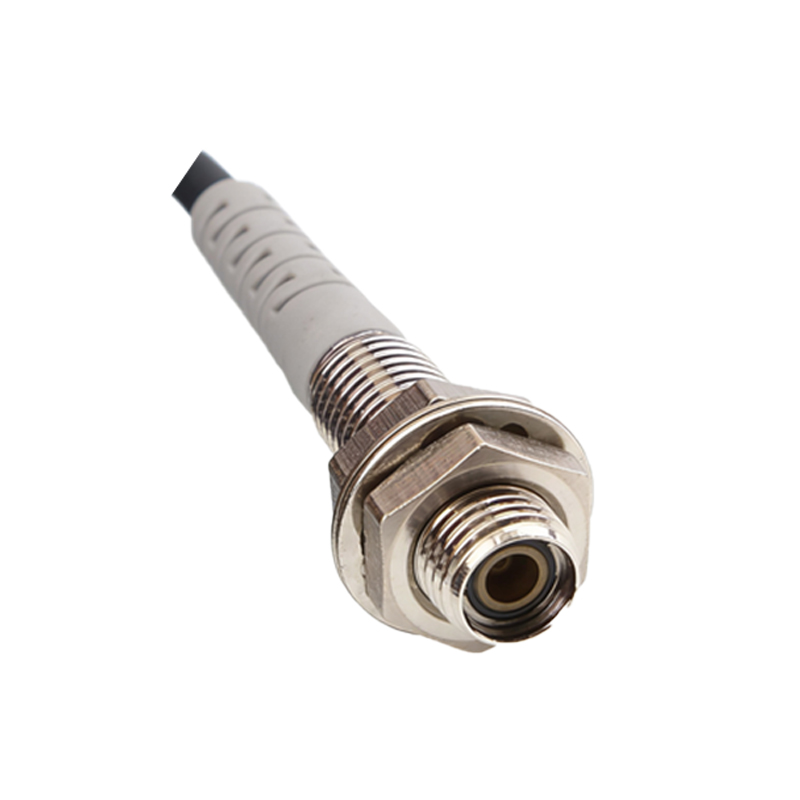
Several factors impact the accuracy of length measurements with photoelectric sensors. Sensor resolution is critical, as it defines the smallest detectable change in position; higher resolution sensors, such as laser-based models, offer finer measurements. Environmental conditions like ambient light, dust, or vibrations can interfere with light beams, causing false readings—shielding or using modulated light sources mitigates this. Object properties also matter: transparent, glossy, or irregularly shaped objects may reflect light unpredictably, requiring sensors with background suppression or custom calibration. Additionally, system integration plays a role; synchronization between sensors, speed sensors, and data processors must be precise to avoid latency errors. Regular maintenance, including lens cleaning and alignment checks, ensures consistent performance. By addressing these factors, engineers can achieve tolerances within millimeters for many industrial applications.
Applications in Industrial Automation
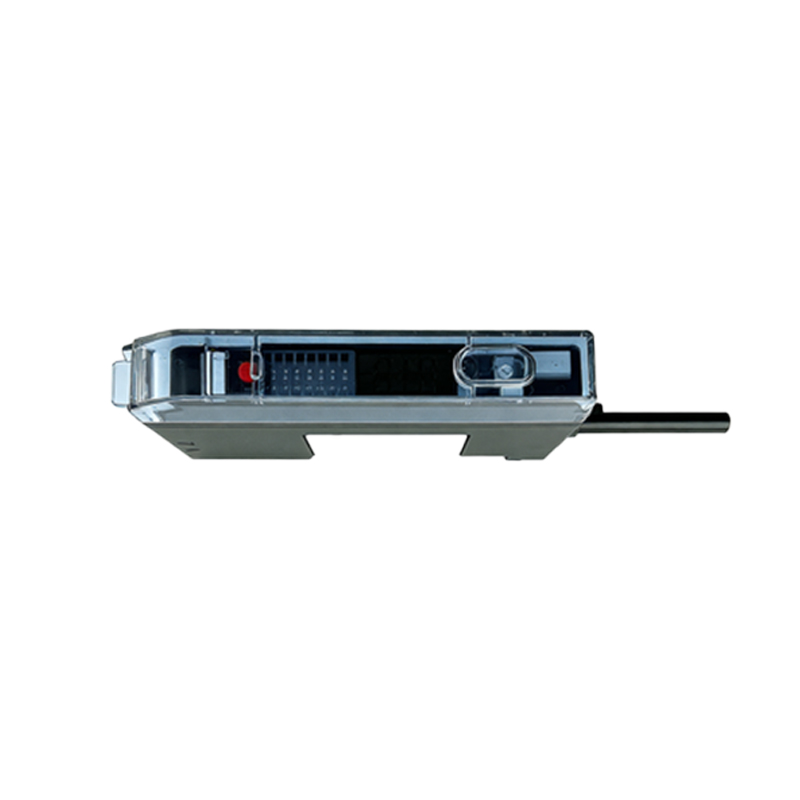
Photoelectric sensors for length measurement are deployed across various industries. In packaging, they verify box or label dimensions on conveyor lines, ensuring compliance with specifications. Manufacturing lines use them to cut materials like metal or fabric to precise lengths, often integrated with PLCs for automated control. In logistics, sensors measure parcel sizes for sorting and shipping cost calculation. Automotive assembly benefits from checking component lengths, such as pipes or wires, to prevent defects. These applications highlight the sensors' versatility, but success depends on selecting the right type—for instance, through-beam sensors for long ranges or diffuse sensors for reflective surfaces. Case studies show that combining photoelectric sensors with vision systems or encoders enhances reliability, enabling real-time adjustments in high-speed processes.
Limitations and Alternative Solutions
Despite their utility, photoelectric sensors have limitations in length measurement. They may struggle with very small objects (sub-millimeter) due to resolution constraints, or with high-speed applications where response time is insufficient. Environmental extremes, like heavy fog or extreme temperatures, can degrade performance. For more complex measurements, such as 3D profiling, alternative technologies like vision cameras, LIDAR, or ultrasonic sensors might be preferable. Vision systems offer detailed imaging for multi-dimensional analysis, while LIDAR provides high-precision 3D mapping. However, photoelectric sensors remain cost-effective and simple for linear measurements in controlled settings. Engineers should evaluate trade-offs between accuracy, speed, cost, and environmental robustness when choosing a solution, potentially hybridizing sensors for optimal results.
Future Trends and Innovations
The future of photoelectric sensors in length measurement is shaped by technological advancements. Smart sensors with embedded IoT capabilities allow for real-time data analytics and predictive maintenance, improving accuracy through self-calibration. Miniaturization enables integration into compact devices, while enhanced algorithms reduce noise and error. Emerging trends include the use of AI to interpret sensor data for adaptive measurements, and the development of multi-spectral sensors that operate in diverse light conditions. As Industry 4.0 evolves, these sensors will increasingly connect to digital twins and cloud platforms, facilitating automated quality control. Research in nanomaterials may lead to more sensitive detectors, expanding applications in micro-manufacturing. By staying abreast of innovations, industries can leverage photoelectric sensors for more efficient and precise length measurement.