Introduction to Two-Wire Magnetic Proximity Switches
Two-wire magnetic proximity switches represent a fundamental and widely adopted sensing solution in industrial automation. Unlike their three-wire counterparts, these devices simplify installation by operating with just two connecting wires, which carry both the power supply and the switching signal. The core principle involves a hermetically sealed reed switch actuated by an external magnetic field. When a permanent magnet or a ferromagnetic actuator (like a gear tooth or a cam) approaches the sensor, the magnetic field causes the reed contacts inside to close or open, thereby changing the circuit state. This simple, contactless operation makes them exceptionally reliable for detecting position, presence, or movement without physical wear.
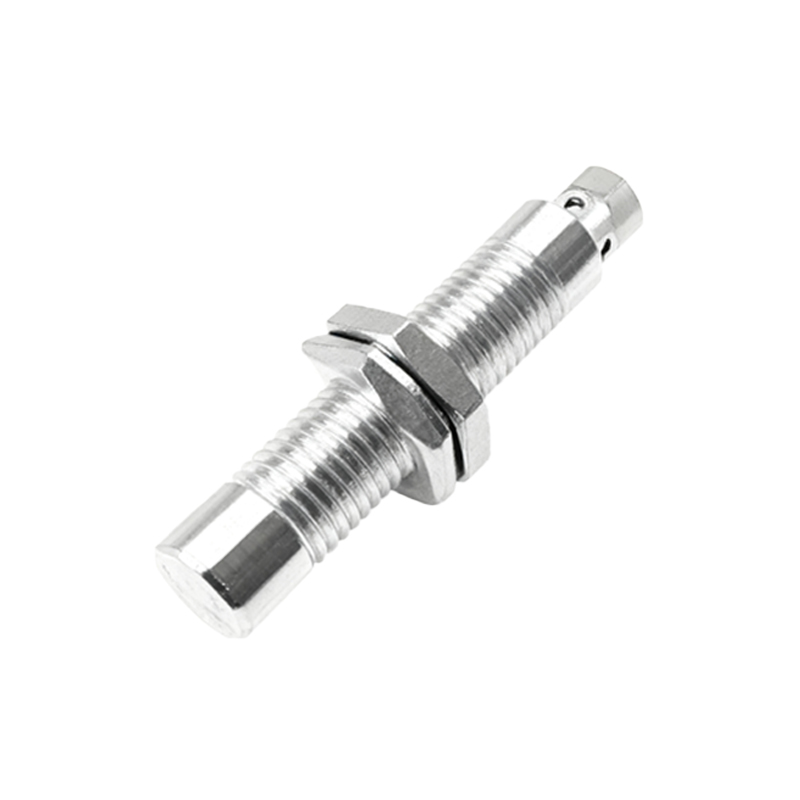
Core Operating Principle and Internal Design
The heart of a two-wire magnetic sensor is the reed switch, consisting of two ferromagnetic reeds enclosed in a glass tube filled with an inert gas. These reeds serve as both the magnetic flux conductors and the electrical contacts. Under the influence of an external magnetic field from a target, the reeds magnetize, attract each other, and make contact, completing the electrical circuit. When the magnet moves away, the reeds' spring force separates them, breaking the circuit. In a two-wire AC or DC configuration, the sensor is connected in series with the load. A small leakage current (often called residual current) must flow through the sensor even in its "off" state to power its internal electronics, a key consideration for compatibility with PLC inputs and relay coils. The robust, sealed construction ensures immunity to dust, moisture, and corrosion.
Key Advantages in Industrial Settings
The primary advantage of two-wire magnetic switches is installation simplicity, reducing wiring time, cost, and potential errors. They require no separate power wire, leading to cleaner control cabinets. Their inherent ruggedness allows operation in extreme temperatures, high-vibration environments, and hazardous locations where explosive atmospheres may exist. Since the sensing action is magnetic, they are unaffected by non-ferrous contaminants like oil, coolant, or dust that often plague optical sensors. Furthermore, they offer a long operational life—often tens of millions of cycles—because the reed contacts are sealed from environmental degradation. The binary switching signal is straightforward to integrate into legacy and modern control systems alike.
Common Applications Across Industries
These sensors find ubiquitous use. In automotive manufacturing, they monitor cylinder position, detect gear teeth speed, and confirm door or hood closure. In material handling, they act as limit switches on conveyors or verify the position of pallets and lifts. Packaging machinery utilizes them for registration mark detection on film webs and carton counting. A critical application is in safety systems, such as interlock switches on machine guards; separating the magnet from the sensor body breaks the circuit, triggering a machine stop. They are also prevalent in hydraulic and pneumatic cylinders for end-of-stroke detection, and in utility meters for tamper detection or flow counting.
Critical Selection Criteria and Installation Tips
Selecting the correct two-wire magnetic switch requires careful analysis. First, determine the supply voltage (AC or DC) and ensure the sensor's voltage range matches. The load current rating must not be exceeded, and the residual current in the "off" state must be low enough not to inadvertently activate the connected load (like a PLC input). Switching frequency or response time must suit the application speed. Sensing distance, typically a few millimeters, is specified relative to a standard magnet; using a different magnet alters performance. Environmental ratings for IP (Ingress Protection) and temperature are paramount. For installation, ensure correct orientation between the sensor and magnet, as the magnetic field has a specific operating axis. Use non-ferrous mounting brackets to avoid shielding the magnetic field, and maintain the recommended gap despite potential machine vibration.
Comparison with Three-Wire and Other Proximity Sensors
While two-wire sensors offer simplicity, three-wire sensors (PNP or NPN) provide a dedicated output wire, allowing for zero residual current and often faster switching speeds, making them suitable for more complex electronic controls. Compared to inductive proximity sensors, magnetic switches only detect magnetic materials or permanent magnets, not all metals. However, they outperform inductive sensors in sensing through non-ferrous barriers like aluminum, plastic, or stainless steel housings. Hall-effect sensors, another magnetic sensing technology, offer more precise position detection and can operate at higher frequencies but generally require three or four wires and more complex circuitry. The choice ultimately hinges on the specific requirements for cost, wiring, target material, and environmental conditions.
Maintenance and Troubleshooting Guidelines
Magnetic