Introduction to Photoelectric Sensors in CT Systems
Photoelectric sensors are integral components in modern Computed Tomography (CT) systems, serving as critical elements for precise detection and imaging. These sensors operate on the principle of converting light signals into electrical signals, enabling the capture of detailed anatomical data. In CT technology, they are primarily utilized to detect X-ray photons after they pass through a patient's body, facilitating the reconstruction of cross-sectional images. The accuracy and sensitivity of photoelectric sensors directly influence image resolution, noise levels, and overall diagnostic quality. As CT systems evolve towards higher speeds and lower radiation doses, the role of advanced photoelectric sensors becomes increasingly vital, driving innovations in medical imaging and industrial non-destructive testing.
Through-Beam Photoelectric Sensors
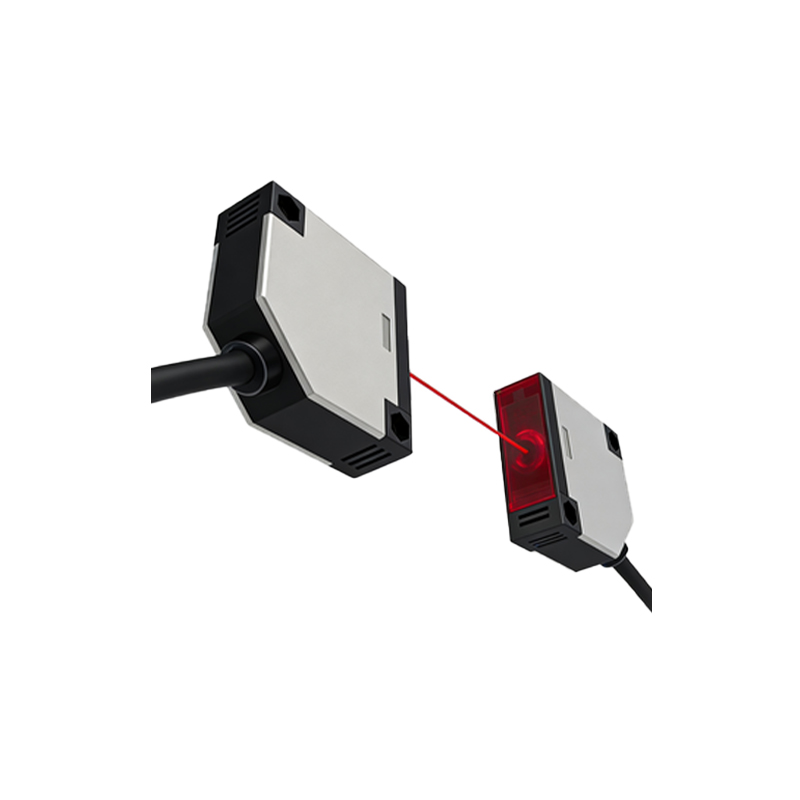
Through-beam photoelectric sensors, also known as opposed-mode sensors, consist of separate emitter and receiver units aligned in a direct line. In CT applications, these sensors are often employed in gantry positioning and alignment systems to ensure precise mechanical movement during scanning. The emitter projects a focused light beam, which is received by the detector on the opposite side; any interruption in the beam indicates an object's presence or positional shift. This configuration offers high reliability and long sensing ranges, making it suitable for safety interlocks and motion control in CT machines. However, alignment requirements can be stringent, necessitating regular calibration to maintain optimal performance in clinical environments.
Retroreflective Photoelectric Sensors
Retroreflective photoelectric sensors combine the emitter and receiver in a single housing, using a reflector to bounce the light beam back to the detector. These sensors are commonly integrated into CT systems for object detection, such as patient positioning on the scan table or monitoring accessory attachments. The reflector allows for easier installation compared to through-beam sensors, as only one unit needs mounting. In CT technology, retroreflective sensors help automate workflows by detecting when a patient is correctly aligned, reducing setup time and minimizing operator error. They are particularly useful in high-throughput settings like emergency radiology, where speed and accuracy are paramount.
Diffuse Reflective Photoelectric Sensors
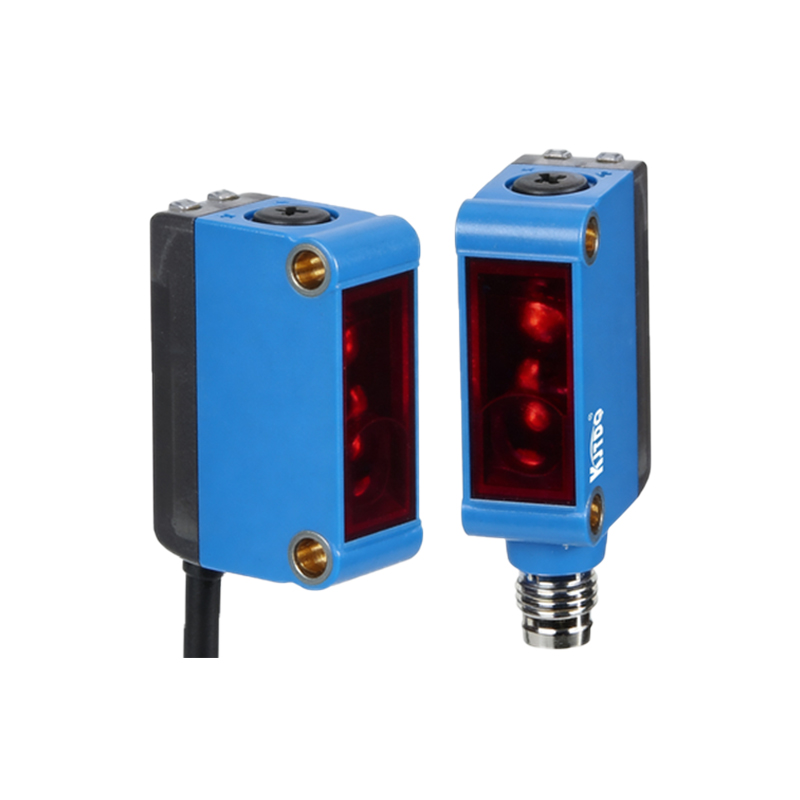
Diffuse reflective photoelectric sensors, or proximity sensors, detect objects by measuring light reflected directly from the target surface. The emitter and receiver are housed together, and detection occurs when the sensor's light hits an object and scatters back. In CT systems, these sensors are applied for non-contact detection of components within the gantry, such as cooling system parts or filter assemblies, without requiring a separate reflector. Their compact design allows integration into tight spaces, aiding in maintenance monitoring and fault detection. However, performance can vary based on object color and texture, necessitating careful selection for consistent operation in diverse CT applications, from medical diagnostics to industrial inspection.
Fiber Optic Photoelectric Sensors
Fiber optic photoelectric sensors utilize optical fibers to transmit light between the emitter and receiver, enabling detection in confined or hazardous areas. In CT technology, these sensors are deployed within the gantry's internal mechanisms, where space is limited and electromagnetic interference from X-ray tubes may disrupt electronic components. The fibers provide immunity to noise and allow flexible routing, making them ideal for monitoring rotating parts or high-temperature zones. For instance, they can track the position of the X-ray tube or detector array during helical scans, ensuring synchronization for accurate image reconstruction. Their durability and resistance to environmental factors enhance the reliability of CT systems in demanding operational conditions.
Laser-Based Photoelectric Sensors
Laser-based photoelectric sensors employ focused laser beams for high-precision detection, offering superior resolution and range compared to standard LED-based sensors. In CT applications, these sensors are used for alignment and calibration tasks, such as verifying the focal spot of X-ray sources or measuring detector panel flatness. The coherent light of lasers enables precise measurements at micron-level accuracy, critical for maintaining image quality in advanced CT modalities like spectral imaging. Additionally, laser sensors assist in quality assurance protocols, detecting minute deviations in system components that could affect diagnostic outcomes. Their implementation supports the trend towards automated calibration, reducing downtime and improving consistency across CT scans.
Applications in CT Imaging and Safety
Photoelectric sensors contribute significantly to both imaging performance and safety in CT systems. For imaging, they enhance data acquisition by ensuring detector elements accurately capture X-ray photons, minimizing artifacts and improving contrast resolution. In safety, sensors monitor gantry motion, preventing collisions with patients or operators, and oversee cooling systems to avoid overheating. For example, through-beam sensors may serve as emergency stop triggers, while diffuse sensors detect foreign objects in the scan field. As CT technology advances with AI integration and real-time imaging, photoelectric sensors will continue to evolve, supporting innovations like adaptive scanning and predictive maintenance for enhanced healthcare outcomes.
Future Trends and Developments
The future of photoelectric sensors in CT technology is shaped by trends toward miniaturization, higher sensitivity, and smart connectivity. Emerging sensors with nanomaterials and quantum dots promise improved photon detection efficiency, enabling lower radiation doses without compromising image clarity. Wireless and IoT-enabled sensors could facilitate remote monitoring and diagnostics, allowing technicians to assess CT system health in real-time. Furthermore, integration with machine learning algorithms may lead to self-calibrating sensors that adapt to varying scan conditions. As the demand for portable and specialized CT systems grows, such as in point-of-care or veterinary settings, compact and robust photoelectric sensors will play a pivotal role in expanding access to high-quality imaging solutions globally.