What is a 2mm Inductive Proximity Sensor?
An inductive proximity sensor is a non-contact electronic device designed to detect the presence or absence of metallic objects without physical contact. The "2mm" specification refers to its nominal sensing distance or range. This means the sensor is precisely calibrated to reliably detect a standard target (typically a square of mild steel, Fe 360) when it enters a zone approximately 2 millimeters from the active sensing face. This short range is a defining characteristic, offering high precision and immunity to environmental interference. The core principle is based on electromagnetic induction. The sensor generates an oscillating electromagnetic field from a coil wound around a ferrite core at its tip. When a metallic object enters this field, eddy currents are induced on the object's surface. These currents draw energy from the sensor's oscillator, causing a change in its amplitude. This change is detected by the sensor's circuitry, which then triggers a solid-state switch to change its output state (ON/OFF), signaling the object's detection.
Key Components and Operating Principle
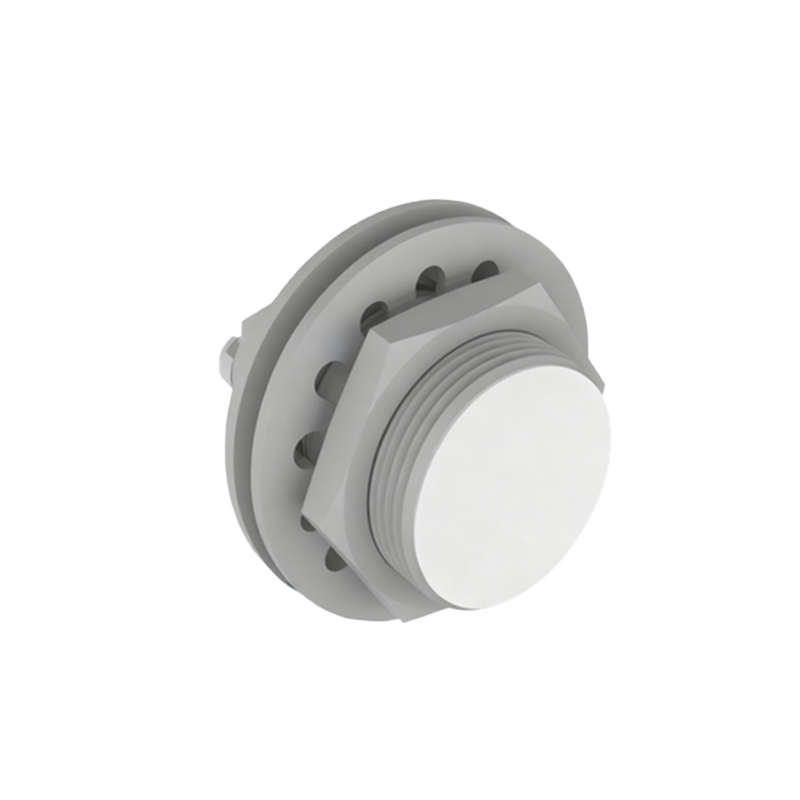
The internal architecture of a 2mm inductive sensor is engineered for compactness and reliability. The primary components include an oscillator circuit generating the high-frequency field, a coil and ferrite core assembly forming the sensing face, a signal conditioner or demodulator to interpret the amplitude change, and an output switching device (typically an NPN or PNP transistor). Some advanced models incorporate a Schmitt trigger to provide hysteresis, ensuring a stable output and preventing rapid switching due to minor target vibrations. The entire assembly is housed in a robust casing, often made of nickel-plated brass, stainless steel, or PBT plastic, to withstand industrial environments. The operating principle is purely electromagnetic, making these sensors exceptionally resistant to contaminants like dust, oil, and coolant splashes, as these non-metallic substances do not affect the electromagnetic field.
Typical Applications in Industrial Automation
The 2mm sensing range makes these sensors ideal for applications demanding high positional accuracy and repeatability in confined spaces. Common uses include end-position detection of cylinders and actuators, where the sensor detects the piston's metal band or a small flag. They are extensively used in precision assembly machines to verify the presence of tiny metal components like screws, springs, or bearing balls. In packaging machinery, they count small metal parts or detect the position of metallic foils. CNC machine tools employ them for tool presence detection, ensuring a tool is correctly seated in the holder before spindle start. Their small physical size, often in cylindrical M5, M8, or M12 threaded barrels or rectangular block styles, allows for installation in tight locations where larger sensors cannot fit.
Factors Influencing Sensing Performance
While rated for 2mm, the actual effective sensing distance can be influenced by several factors. The target material is paramount; ferrous metals like steel are detected at the full nominal distance (Sn), while non-ferrous metals like aluminum, brass, or copper have a reduced effective sensing range, typically 30% to 60% of Sn due to different eddy current characteristics. The target size and shape also matter; the standard target is a 1mm thick square of steel with sides equal to the sensor's diameter or three times the nominal range. Smaller targets may not be detected at the full 2mm. Environmental factors like extreme temperatures can affect performance, and the presence of other metals in the immediate background or alongside the sensor (mounting in a metal bracket) may require a non-flush or shielded design to prevent false triggering.
Output Types and Electrical Connections
Inductive proximity sensors with a 2mm range are predominantly available in DC versions (10-30V DC) with two primary output configurations: NPN (sinking) and PNP (sourcing). An NPN sensor switches the negative (0V) line to the load, common in Asian-market PLCs, while a PNP sensor switches the positive voltage line, standard in European systems. The output can be normally open (NO) or normally closed (NC). A 3-wire design (V+, V-, Signal) is most common, though 2-wire AC/DC and 4-wire (dual-output) models exist. The choice depends entirely on the control system's input card requirements. Many modern sensors feature short-circuit, overload, and reverse polarity protection, along with LED status indicators for easy diagnostics.
Selection Criteria and Installation Best Practices
Selecting the right 2mm inductive sensor requires careful consideration. First, confirm the target material and required effective sensing distance. Choose the housing material (metal for ruggedness, plastic for sensing in metal environments) and shape (barrel