Inductive Proximity Sensors
Inductive proximity sensors are fundamental devices for detecting metallic objects without physical contact. They operate on the principle of electromagnetic induction. The sensor generates an oscillating electromagnetic field from its coil. When a conductive metal target enters this field, eddy currents are induced on the target's surface. This causes a change in the oscillation amplitude within the sensor, which is then processed by the internal circuitry to trigger a solid-state output switch. These sensors are exceptionally robust, ideal for harsh industrial environments involving dirt, oil, or coolants. They are primarily used for detecting ferrous metals like steel and iron, though some specialized versions can detect non-ferrous metals like aluminum, copper, or brass at reduced sensing ranges. Common applications include position sensing of machine parts, limit switching, and counting metallic objects on conveyor belts.
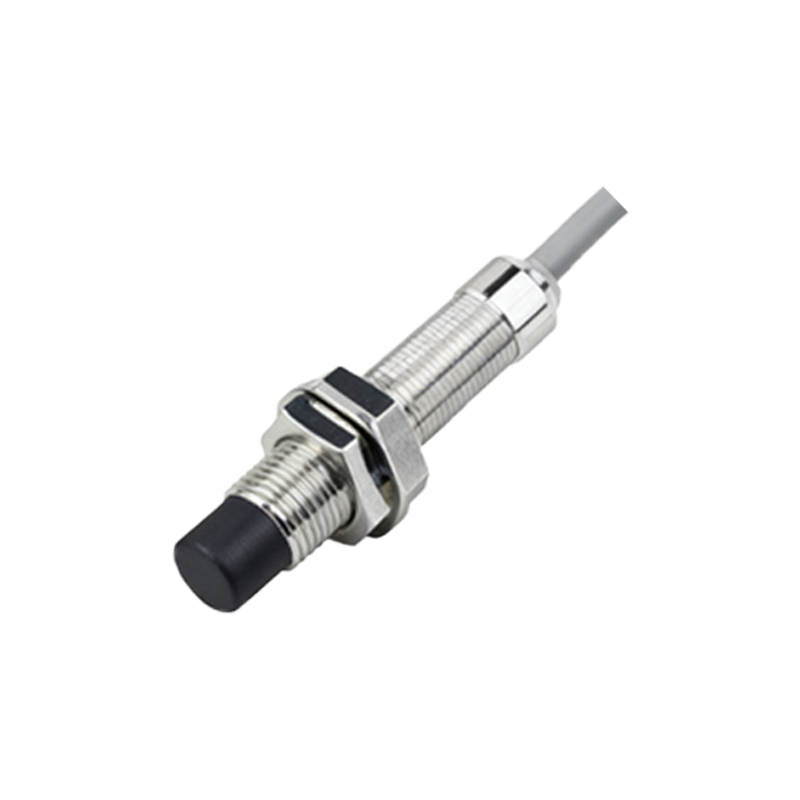
Capacitive Proximity Sensors
Capacitive proximity sensors are versatile devices capable of detecting a wide variety of materials, including metals, plastics, glass, wood, and liquids. Their operation is based on changes in capacitance. The sensor face and the detected object act as two plates of a capacitor. The sensor generates an electrostatic field. When any material with a dielectric constant different from air enters this field, it alters the capacitance of the system. The sensor's circuitry detects this change and switches the output. A key feature is their adjustable sensitivity, often via a potentiometer, allowing them to be tuned to ignore certain materials or detect through thin non-metallic barriers. This makes them perfect for applications like liquid level detection in tanks, presence detection of plastic bottles or wood panels, and monitoring granular materials in hoppers.
Ultrasonic Proximity Sensors
Ultrasonic proximity sensors measure distance to an object or detect its presence using sound waves beyond the human hearing range. They operate on the time-of-flight principle. The sensor emits high-frequency ultrasonic pulses from a transducer. These pulses travel through the air, hit a target object, and reflect back to the sensor. An internal electronic timer measures the elapsed time between emission and reception of the echo. Since the speed of sound in air is known, the sensor's microprocessor can accurately calculate the distance to the object. These sensors are excellent for detecting objects regardless of color, transparency, or material, as long as the surface is sound-reflective. They are used for precise distance measurement, bulk level sensing of powders or solids, and detecting clear objects like glass bottles where optical sensors might fail.
Photoelectric Sensors
Photoelectric sensors, or photoeyes, use a beam of light to detect the presence, absence, or distance of an object. They consist of a light emitter (usually an LED) and a receiver. There are three main operating modes. Through-beam sensors have separate emitter and receiver units; detection occurs when the object interrupts the light beam. Retro-reflective sensors use a single unit and a reflector; detection occurs when the object blocks the reflected beam. Diffuse or proximity-mode sensors have the emitter and receiver in one housing, detecting light reflected directly off the target object. Advanced versions use modulated LED light (often infrared) to overcome ambient light interference. Photoelectric sensors offer long sensing ranges and can detect virtually any material. They are ubiquitous in packaging, material handling, and assembly automation for tasks like object counting, web break detection, and label sensing.
Magnetic Proximity Sensors (Reed Switches)
Magnetic proximity sensors, commonly implemented as reed switches or Hall-effect sensors, detect the presence of a magnetic field. A reed switch contains two ferromagnetic reeds sealed in a glass tube filled with inert gas. When a permanent magnet or electromagnet approaches, the reeds magnetize, attract each other, and make contact to close the circuit. Hall-effect sensors are solid-state devices that output a voltage proportional to the strength of an applied magnetic field. These sensors are completely non-contact and can operate through non-magnetic barriers like aluminum, plastic, or stainless steel walls. This makes them ideal for safety applications, such as detecting whether a guard door is closed, or for position sensing in pneumatic cylinders where the magnet is embedded in the piston. They are known for their reliability, long life, and insensitivity to environmental contaminants.
Selection Criteria and Application Considerations
Choosing the correct proximity sensor requires careful analysis of the application parameters. The primary factor is the target material: inductive for metals, capacitive for nearly all materials, and ultrasonic/photoelectric for non-contact distance or presence. Other critical considerations include the required sensing range, which varies dramatically between sensor types; the operating environment (temperature, humidity, exposure to chemicals or washdowns); the required output type (PNP/NPN analog, digital, or IO-Link for smart sensors);